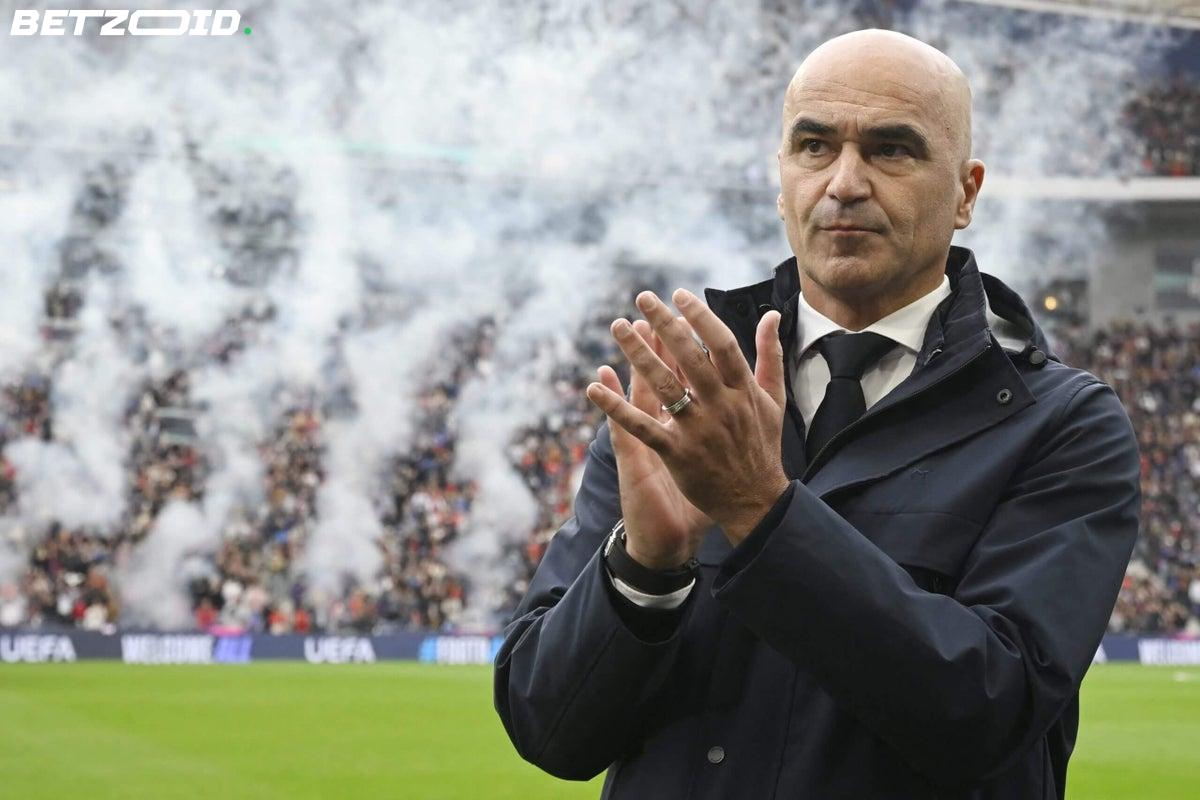
Roberto Martinez doesn't do things by accident. The Portugal coach flew his squad to Mexico City and Atlanta not just to play friendlies, but to stress-test every logistical headache the 2026 World Cup is going to throw at them — altitude, indoor pitches, cross-country flights, traffic, closed-roof heat. He called what he saw at last summer's Club World Cup "many red flags." Now he's walking his players straight into them.
That's the real story behind Tuesday's friendly against the USMNT at Mercedes-Benz Stadium. The 0-0 draw with Mexico last Saturday wasn't just a tune-up — it was reconnaissance. The indoor pitch in Atlanta mirrors Portugal's first two group-stage matches, both at Houston's NRG Stadium. They're rehearsing, not just playing.
The plan: base camp, short hops, and 50 days away from home
Martinez's World Cup blueprint is built around a specific psychological insight that most coaches underestimate: being away from family for seven weeks is a performance issue, not just a personal one. "We're talking about managing a player being away from their family for 50 days," he said. "They have one night away from their families" for most club games. Asking them to leave newborn children for nearly two months and still perform at peak level requires deliberate management, not just good training sessions.
So Portugal will train in Portugal first, then fly to South Florida. They'll base camp about an hour north of Miami, fly to Houston the day before each of their first two matches, and return immediately after. The third group game is in Miami anyway. The plan is to make one place feel like home — replicating what Qatar 2022 offered with its compact geography. Every player knows their bed, their routine, their environment. That predictability matters more than people think, especially deep into a tournament when the pressure compounds.
Before any of that, every player gets seven days off at the end of their season. Switch off. Beach. Family. Then they reassemble.
Portugal's group-stage odds will partly hinge on how well that plan holds up against DR Congo or Jamaica, then Uzbekistan in Houston, and Colombia in Miami. The scheduling is manageable on paper. The question is whether the mental freshness Martinez is engineering actually translates once the knockout rounds arrive and the margins shrink.
Three pillars, one clear message on Ronaldo
Martinez described his Portugal environment around three ideas: clarity, no I in team, and constant improvement.
- Clarity: Every player knows exactly what their role is — on the pitch and off it. Martinez argues this is the most commonly neglected responsibility in coaching and leadership generally. You can't assume people know what's expected. You have to say it, then say it again.
- No I in team: "From now on, you mean nothing. You need to do what the team needs." That's the message. It sounds blunt, but Martinez was careful to add nuance — individual purpose still matters, because it keeps players motivated when results turn. The key is aligning personal goals with collective success, not erasing them.
- Constant improvement: No ceiling, no comfort zone. He used Ronaldo as the clearest example — a player who won the Champions League and the Ballon d'Or and still came in the next day treating it like day one.
On Ronaldo specifically, Martinez is unambiguous. The 41-year-old is nursing a hamstring injury suffered at Al Nassr and missed both the Mexico and US trips. Martinez says it's minor — "back in a week or two" — and that the World Cup centre-forward spot "belongs to Cristiano and Gonçalo Ramos." No ambiguity, no Pochettino-style every-spot-is-open messaging. Ronaldo's place is held.
Whether that's the right call is a genuine debate. Ramos looked like Portugal's striker of the future when he replaced Ronaldo at Qatar 2022 and scored a hat-trick. Ronaldo hasn't played at that level since. But Martinez has watched him up close for three years and clearly believes the intangibles — the obsession with marginal gains, the hunger that doesn't dim after trophies — are worth building around. "You cannot measure the hunger of an individual," he said. That's either a coach who knows something we don't, or one who's too close to the legend to see the limitation clearly.
Tuesday's friendly won't settle that question. But Portugal's squad depth in midfield — Bruno Fernandes, Vitinha, João Neves — means they don't need the Ronaldo question answered until June. By then, Martinez will have spent months engineering exactly the environment he's described. Whether the pillars hold under World Cup pressure is the only thing that matters.