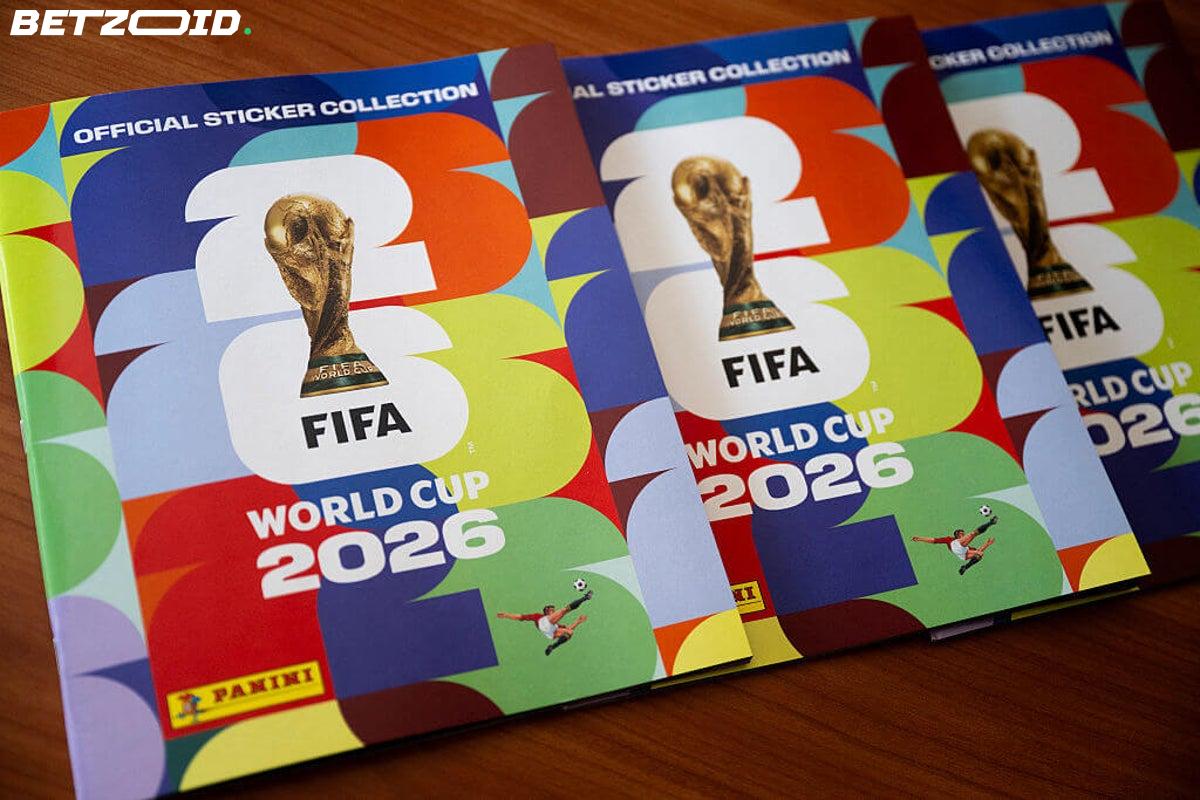
"Global football should be our biggest business." That's Fanatics CEO Michael Rubin, and he now has the licensing deal to back it up. FIFA and Fanatics have agreed a long-term exclusive partnership that hands Topps — owned by Fanatics — the rights to produce all World Cup trading cards, stickers, and trading card games starting in 2031.
That ends one of the longest-running partnerships in sports collectibles history. Panini has been the FIFA sticker licensee since 1970, covering every World Cup except 1994. Nearly 60 years of those little foil packets, the desperate album-swapping in school playgrounds, the impossible shinies — all moving to a new home after the 2030 tournament wraps up.
What Fanatics is actually bringing to the table
This isn't just a logo swap on the sticker packets. Topps plans to introduce Debut Patch cards for World Cup sets — a concept already proven in the NFL, NBA, and MLB. The mechanic is exactly what it sounds like: a player wears a specially made patch on their jersey during their first World Cup match, that patch is removed, authenticated, and embedded into a signed trading card. FIFA president Gianni Infantino confirmed match-used patch programs will begin as early as this year's 2026 World Cup, years before the licensing deal officially kicks in.
Rubin frames the FIFA deal as the central plank of Fanatics' global expansion. Right now, roughly 85 percent of their collectibles business sits inside the United States. The World Cup is how you fix that.
As part of the contract, Fanatics will distribute more than $150 million in collectibles to children globally over the lifetime of the deal — a notable piece of the arrangement that gives the partnership some community substance beyond the commercial headline.
Panini's precarious position
Losing the FIFA license in 2031 lands at a genuinely difficult moment for Panini. The company had been exploring a sale, with its own pitch documents showing nearly $720 million in net sales from 2022 World Cup products alone — a single-event company record. Panini projects $1.48 billion in World Cup-related net sales for 2026 and $1.5 billion for 2030. Those numbers explain exactly why it pulled back from sale talks late last year: the 2026 tournament was supposed to inflate the company's valuation before any deal went through.
Shareholders have since engaged Citigroup to evaluate strategic options, with a statement ruling out a sale to any competitor while keeping open the possibilities of maintaining current ownership, a public listing, or bringing in a strategic partner. Meanwhile, Panini remains in an active lawsuit accusing Fanatics of anticompetitive behaviour after losing its NBA and NFL licenses. Fanatics has filed a countersuit of its own.
- Fanatics expects to generate over $4 billion in collectibles revenue in 2026
- Panini projects company-wide net sales of approximately $2.47 billion in 2026
- Topps has already secured future rights for England, Brazil, Germany, Italy, Argentina, and the United States national teams
- Fanatics Fest 2025 has been moved to coincide with the World Cup final on July 19 at MetLife Stadium
- Fanatics was named exclusive retail operator for all 2026 World Cup stadium and fan festival locations in December
For the collectibles market, the shift matters well beyond nostalgia. Panini's World Cup revenue projections give you a sense of the stakes — and Fanatics, with its patch programs and digital infrastructure, is betting it can grow that number further by applying what's worked in American sports leagues to a genuinely global audience. Whether Topps sticker albums ever feel like Panini sticker albums is a different question entirely. Some things don't survive the rebrand.