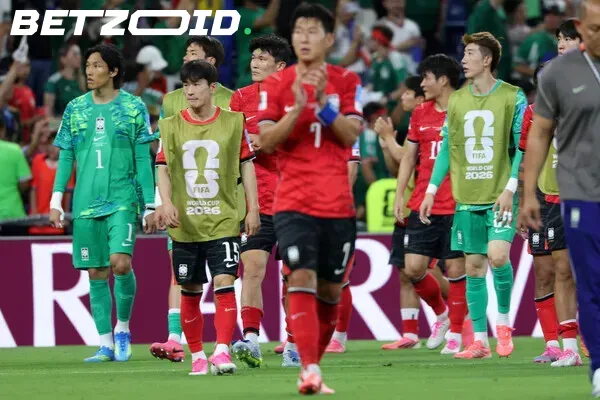
Korea lost 1-0 to South Africa and got knocked out of the World Cup. But the real story isn't that final group game — it's everything that made it inevitable.
When a team concedes the opener and responds by playing even more conservatively, that's not bad luck. That's a coaching decision. Head coach Hong Myung-bo, reappointed despite going winless at the 2014 World Cup in Brazil, had built his entire approach around defensive structure and grinding out narrow wins. Against South Africa, when the situation demanded urgency, his team froze. Korea had the attacking quality to push back. They didn't use it.
Commentator Kim Dae-gil pointed out the team "expended too much energy in its first two group games" — which is a diplomatic way of saying the squad was running on empty when it mattered. That's a conditioning and rotation failure. That's on the coach.
The problems run deeper than the dugout
KFA president Chung Mong-gyu's tenure since 2013 has produced a shiny 400 billion won football facility in Cheonan and improved sponsorship revenue. What it hasn't produced is competent leadership. Internal reforms modeled on corporate restructuring went nowhere. Key positions went to the wrong people. The "Made in Korea" unified game philosophy — launched in 2024 to align youth and senior national teams — quietly lost momentum as internal and external pressure mounted.
Japan, for comparison, published a structured development plan in 2005, stuck to it, and now sends 23 of their 26 World Cup squad members to European clubs. Head coach Moriyasu has been in the job over six years, providing genuine continuity. Korea cycles through crises.
Then there's the political noise. Government audits questioning Hong's appointment process. Lawmakers summoning the head coach to the National Assembly — not to discuss infrastructure reform or long-term strategy, but to berate him publicly. YouTubers running sensationalist takedowns that filtered back into the dressing room. None of it made the team better. All of it made the environment worse.
What this costs Korea going forward
Chung has pledged to resign, but there's no clarity on what leadership follows — or whether it'll be any different. The KFA's structural rot isn't a personnel problem you fix with one new hire. Pro baseball is eating into the resources and attention that football needs. The pipeline for the next generation is underfunded and under-strategized.
Korea's odds of competing at the next World Cup as a genuine threat — not just a participant — depend entirely on whether the incoming KFA leadership can do what the last decade of leadership couldn't: build something that lasts past the next tournament cycle.
Right now, there's no evidence that's coming.