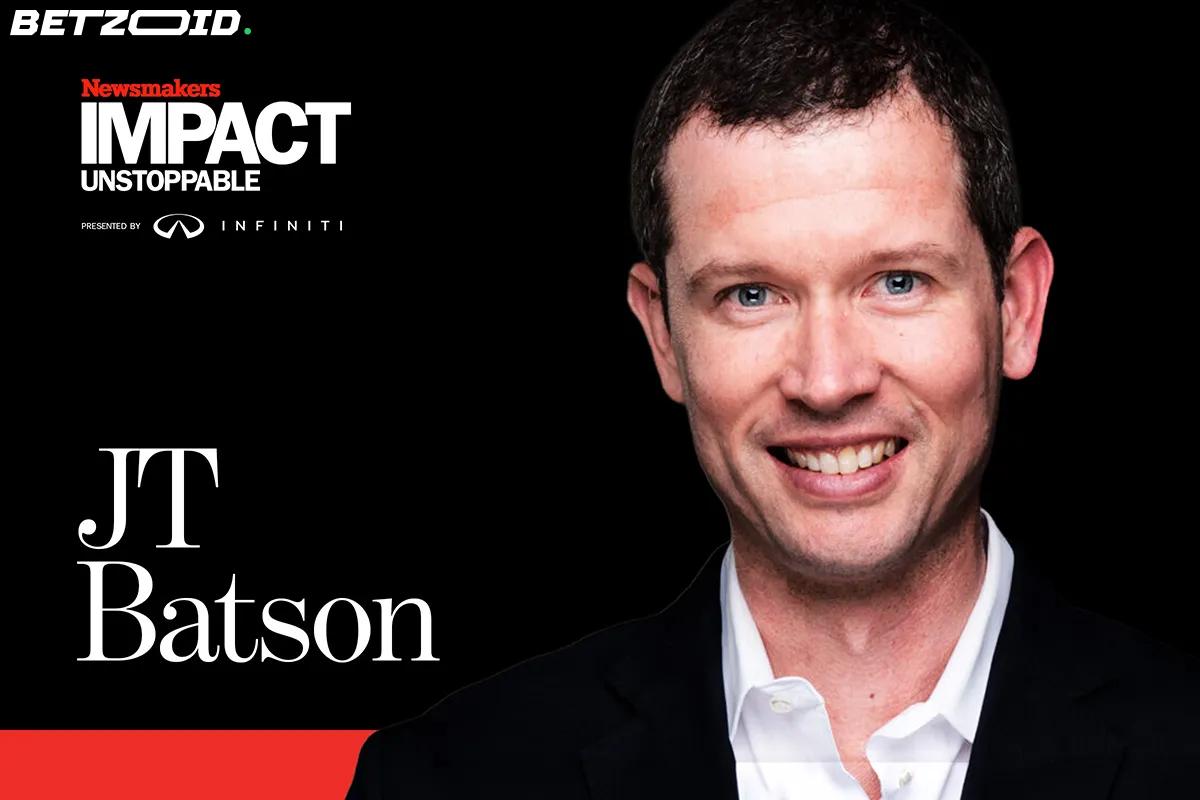
"Winning in soccer ultimately means winning World Cups." That's U.S. Soccer Federation CEO JT Batson, and he means it — not as a throwaway line, but as the organizing principle behind everything U.S. Soccer is building toward this summer and beyond.
With the 2026 FIFA World Cup kicking off across the United States, Canada, and Mexico, Batson spoke to Newsweek about what this tournament actually needs to deliver. On-field performance is listed first among U.S. Soccer's three priorities — and Batson is clear that the men's team needs to perform. Not just show up. Perform.
Mauricio Pochettino is the man tasked with making that happen. Batson was directly involved in his hiring, and he frames both Pochettino and USWNT head coach Emma Hayes in similar terms: world-class coaches who also believe in the long game. "They know that the job is to win," Batson said, "but they're also committed to the long-term success of U.S. soccer." That dual mandate — result now, infrastructure always — is the throughline of the whole conversation.
The real World Cup target isn't a quarterfinal
Batson isn't chasing a single tournament run. He wants the 2026 World Cup to trigger "tens of millions more Americans" picking up the sport. That's the actual legacy metric. Attendance records will fall — that's basically guaranteed with a 48-team tournament spread across 16 stadiums in North America. The harder question is what happens in parks, schools, and gyms five years from now.
The Soccer at Schools initiative, backed by Bank of America, is trying to put the game in every school in the country. The Places to Play program is about making sure a kid doesn't need a car or a subscription to access the sport. Batson draws a direct comparison to basketball: every public park has a hoop, and that accessibility is why the sport produces talent at every level. Soccer, in the U.S., has historically been a suburban, organized-league game. Breaking that pattern is the actual structural challenge.
"For soccer to be everywhere, we have to truly be everywhere," he said. "You're playing on a blacktop surface, you're on an old tennis court, you are playing in a high school gym."
Access, affordability, and 100 million people without tickets
The affordability criticism around the 2026 World Cup has been real and pointed. Batson doesn't dodge it entirely, but his focus shifts quickly to the 100-plus million American soccer fans who won't be anywhere near a stadium. FanFest events, extended bar hours in host cities, jersey launches with Nike that have already broken sales records — it's an attempt to build a national moment rather than a ticketed experience.
"99.9% of the people who follow the World Cup are always going to be watching on television," Batson noted. The organizational energy is going into making that televised experience feel communal, local, and generational — the same way Batson himself watched the 1990 World Cup in a friend's living room.
- USMNT performance at the tournament is U.S. Soccer's stated top priority for summer 2026
- The Soccer at Schools initiative, with Bank of America, aims to reach every U.S. school
- Over 100 million American soccer fans are expected to follow the tournament without attending a match
- The USWNT has won four World Cups; a fifth is the target at Brazil 2027
- U.S. Soccer oversees coaching education for every coach in the country
Pochettino's men will need to back all of this up on the pitch. A deep run turbocharges everything — the grassroots numbers, the coaching enrollment, the Places to Play funding conversations. A group-stage exit does the opposite. Batson knows it. The three priorities exist in that order for a reason.