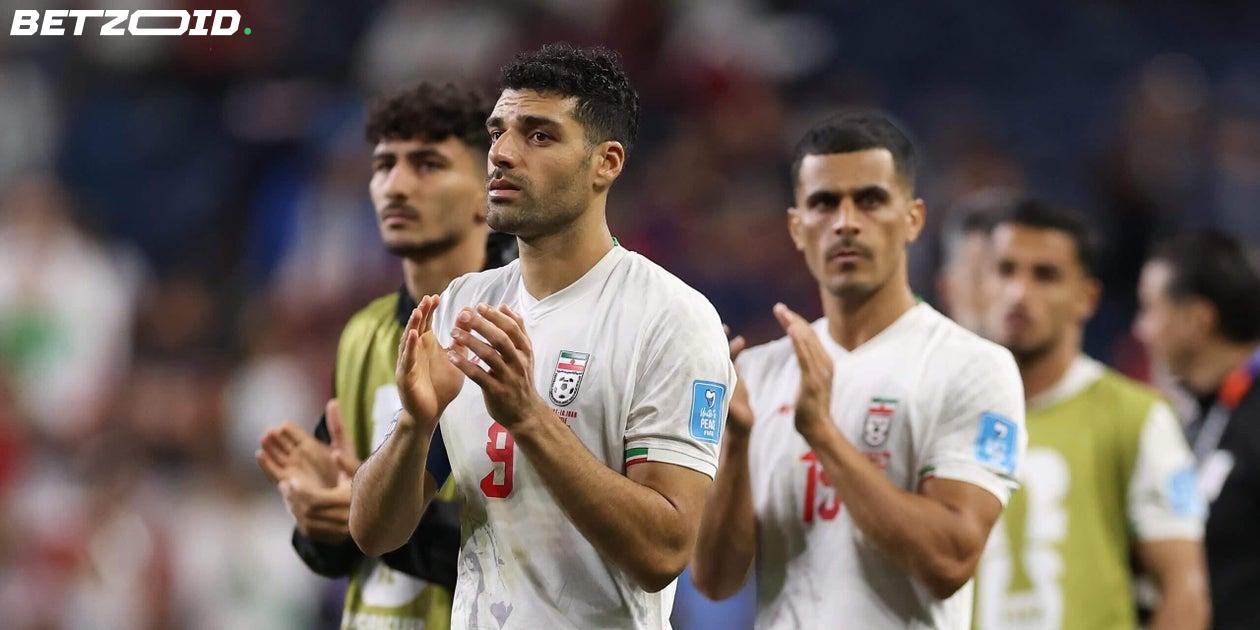
"It's a disaster World Cup," said Mehdi Taremi. He wasn't wrong — and the tragedy is that Iran might have actually gone through.
Three VAR calls. A missed penalty. Four separate moments during the final day of group games when Iran were mathematically alive and progressing. They finished with two points from three matches and flew home from Tijuana at 4am, eliminated by Algeria's failure to beat Austria in Kansas City. Gianni Infantino had told them after the opening draw with New Zealand that it was "just the beginning." Taremi didn't let him forget that line.
"Mr Infantino came to our changing room after the first game against New Zealand and said, 'It's just the beginning'... but the group stage finishes tomorrow," Taremi told reporters after the 1-1 draw with Egypt. The bitterness was earned.
Based in Mexico, watched like suspects
Iran spent the entire tournament camped in Tijuana, Mexico — a late switch from Tucson, Arizona, only confirmed on June 8 after U.S.-Israeli military strikes threw their participation into doubt. Four of their fifteen staff members were initially denied U.S. visas entirely. The Iranian Football Federation's secretary-general and vice-president couldn't even get in. One staff member who had attended the previous five World Cups without issue was blocked from crossing the border and watched the matches from Tijuana.
Those who were granted access could only enter the United States the day before each game. No extra recovery time. No early preparation in the match city. Taremi himself was stopped for questioning at border control in Los Angeles after the New Zealand game, and again at Tijuana airport — alongside assistant coach Saeed Alhoei — before the Seattle fixture. Iran had to make a swift exit after each game, against their wishes, leaving immediately after the final whistle every single time.
Head coach Amir Ghalenoei was furious, and made no attempt to hide it. "Technically, we are the most oppressed team in the history of the World Cup," he said directly to Infantino after the New Zealand match. "Maybe it was an injustice to this team." Infantino, for his part, had already tried to lighten the mood in the dressing room by joking he could play as a forward in the next game. Given Taremi was about to be stopped at a border checkpoint, the room probably didn't find it as funny as the FIFA president did.
VAR, penalties, and what might have been
Strip away the political chaos and there's a genuine football tragedy buried in here. Taremi's first-half goal against Belgium was ruled out by VAR for the slenderest of offside margins. A legitimate winner against Egypt was chalked off the same way — by a toe — in stoppage time, before Iran rattled the crossbar. Taremi also missed a penalty in that game. Against Belgium, Iran couldn't break down ten men after Nathan Ngoy's red card in the 66th minute.
Seven points was theoretically achievable. They got two. Some of that is tactics — players privately questioned Ghalenoei's selections, particularly the use of inexperienced right-back Arya Yousefi on the left wing when senior wingers were available. And Sardar Azmoun, who has 57 goals in 91 international appearances, wasn't even in the squad after a social media post was deemed critical of the Iranian government. He reportedly refused to publicly apologise to the regime to earn his place back. Ghalenoei said he "wished" Azmoun had been there.
Iran were the oldest squad at this World Cup. Taremi is 33, Azmoun 31, Jahanbakhsh 32. With limited young talent breaking through into European football, this was probably their best shot for a cycle or two. They knew it. One player described the group — New Zealand, Belgium, Egypt — as the most winnable Iran had faced in four tournaments.
U.S. Homeland Security Secretary Markwayne Mullin said he did a "happy dance" and "sung a song or two" when Iran were eliminated. Iran's response was pointed: "It reflects a level of pettiness that cannot even tolerate the presence of a football team competing on the world's biggest stage."
In Tijuana, locals gathered outside the Marriott at 6:30am to wave the team off. The leaflet read: "We want to say goodbye to them as only the people of Tijuana know how to do it — with affection, respect and gratitude." Nobody in Washington organised anything similar.