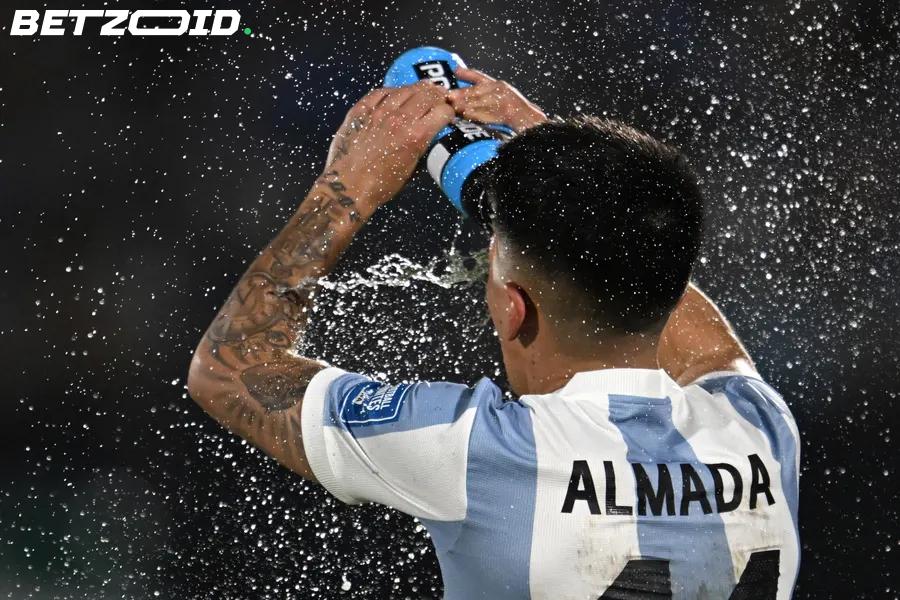
FIFA has mandated three-minute hydration breaks at the midpoint of every half across all 104 games at the 2026 World Cup. The official line is player welfare. The financial reality is that broadcasters were cleared in March to sell advertising during those exact stoppages.
Follow the money. That's not cynicism — it's just arithmetic. A mandatory break in every game of a 104-match tournament doesn't happen in climate-controlled domed stadiums because players are overheating. FIFA's own justification — that applying the rule universally creates a "standardised approach" — is thin cover for what is clearly a structural change to the sport's broadcast format.
From referee's discretion to guaranteed airtime
Water breaks at World Cups aren't new. They've existed since 2014 in Brazil, triggered by a Wet-Bulb Globe Temperature reading above 32°C. The Netherlands vs. Mexico round of 16 match in Fortaleza, with temperatures hitting 39°C, was the first official cooling break. Entirely reasonable under those conditions.
What's different now is that the break is no longer conditional. Hot, cold, indoors, outdoors — it happens regardless. That shift from discretionary to mandatory is the tell. It converts an occasional safety measure into a predictable, schedulable advertising slot. Fox in the U.S. is already cutting to full-screen commercials. Some European broadcasters are running ads during breaks for the first time in their history.
Not everyone is playing along. Telemundo has committed to staying on the live feed — showing team huddles, replays, and analysis instead of sponsors. That's a meaningful editorial choice, and one that'll resonate with viewers who prefer football served straight.
What it means for the game itself
There is a genuine tactical dimension here worth acknowledging. Coaches now get a structured mid-half window to talk to their players — something closer to a timeout in American football or basketball. That's a real change to in-game strategy, and one that managers at this tournament will be thinking about. Whether a team's in-game adjustments improve or a lead gets protected in that three-minute window could influence outcomes in tight knockout matches.
The broader picture is one European media has started calling the "Americanisation" of football — halftime coach interviews, a Shakira and Madonna halftime show at the final, quarterly-style commercial breaks. Ironic, given that soccer doesn't crack the top four sports by TV viewership in the United States.
Football's appeal has always lived in its continuity. Ninety minutes, two halves, no stoppages designed around ad schedules. That's changing now, at least at the World Cup level — and the reason has very little to do with how hot it is in New Jersey.