No sporting body on the planet generates more money, more influence, or more scandal than FIFA. With the 2026 World Cup approaching — 48 teams, three countries, eye-watering ticket prices — it's worth understanding exactly what this organisation is and why so many people have a problem with it.
120 years old and still picking fights
FIFA was founded on May 21, 1904, in Paris, when seven national associations — Belgium, Denmark, France, the Netherlands, Spain, Sweden, and Switzerland — decided international football needed a governing body. England wasn't even in the room.
The first men's World Cup followed in 1930, held in Uruguay. FIFA's headquarters landed in Zürich in 1954, where they remain. The women's World Cup launched in 1991 in China, with the United States winning the inaugural edition. That tournament expands to 48 teams from 2031.
For 2026, the men's tournament has already made that jump — 48 nations across the US, Canada, and Mexico. Bigger spectacle. Bigger revenue. Bigger controversy over who gets to afford a ticket.
Gianni Infantino: The man in charge since 2016
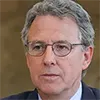
Italian-Swiss administrator Gianni Infantino took the FIFA presidency in 2016, arriving from UEFA where he'd spent 15 years. He pushed through the 48-team World Cup expansion, launched the revamped 32-team Club World Cup, and oversaw the global rollout of VAR.
He's also 56 and has spent nearly a decade generating as many headlines for the wrong reasons as the right ones. His proximity to figures like Donald Trump and Vladimir Putin has raised eyebrows consistently. His handling of human rights concerns around the 2022 Qatar World Cup — ranging from labour abuses to social and cultural restrictions — drew sustained criticism from fans, players, and human rights groups alike.
FIFA then awarded the 2034 World Cup to Saudi Arabia. The reaction was predictable, because the concerns were identical.
From FIFAgate to "extortionate" tickets
The 2015 "FIFAgate" scandal remains the defining low point. US and Swiss authorities arrested and indicted multiple senior FIFA officials on charges including money laundering and racketeering. It gutted the organisation's credibility at the top level and led to a years-long overhaul of its governance structures.
The scandal didn't exactly fade quietly. It reinforced a long-running accusation: that FIFA's decision-making, particularly around tournament hosting rights, is shaped more by political relationships and financial incentives than by football merit or human rights standards.
The "sportswashing" charge has followed every controversial hosting decision since. Qatar used the World Cup to reshape its international image. Saudi Arabia will do the same in 2034. FIFA provides the platform, collects the fees, and argues it's spreading the game globally.
For the 2026 edition, a fan group calculated that following one team through the entire tournament will cost nearly five times what it did in Qatar in 2022 — and branded FIFA's pricing strategy "extortionate." When your own supporters use that word before a ball has been kicked, something has gone wrong with the relationship between the organisation and the people it supposedly serves.
- Founded: May 21, 1904, Paris
- Headquarters: Zürich, Switzerland
- Current president: Gianni Infantino (since 2016)
- First men's World Cup: 1930, Uruguay
- First women's World Cup: 1991, China
- 2026 World Cup: 48 teams across USA, Canada, Mexico
- 2034 World Cup: awarded to Saudi Arabia
FIFA governs the biggest sporting event on earth. It also has a conviction-level scandal in its recent past, a president with close ties to authoritarian leaders, and a pricing model that's pricing out the fans who built the sport. The 2026 World Cup will break viewership records. None of that makes the criticism go away.