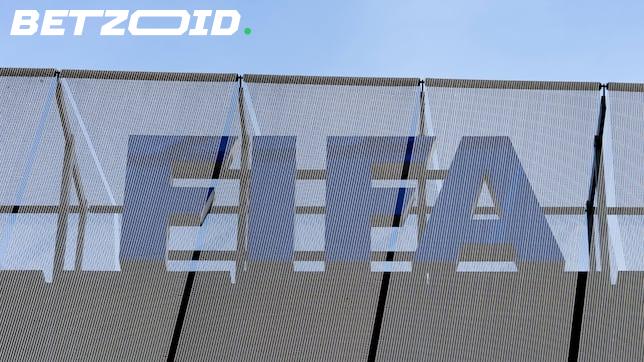
FIFA president Gianni Infantino faced renewed questions over his leadership on Thursday as a tense meeting of the organization's Council in Zurich exposed continuing divisions over the governance of world soccer. Infantino apologized for mistakes surrounding the abandoned FIFA Forward Enterprise (FFE) project, a controversial proposal that would have opened up part of FIFA's commercial operations to private investors. The project was abandoned in July after opposition from several confederations.
The Council agreed to establish a working group, bringing together representatives from FIFA's confederations, to examine the organization's governance framework. Infantino insisted the FFE proposal had never been a finalized agreement, but English Football Association chair Debbie Hewitt said important questions remained unanswered, particularly concerning the documentation behind the project.
The Council also approved increased development funding, with FIFA announcing plans to invest $6.35 billion across its 211 member associations, confederations and other stakeholders. Other matters addressed at the meeting included the decision to suspend a one-match ban imposed on USMNT striker Folarin Balogun during the 2026 World Cup, and FIFA's Peace Prize, which was awarded to President Donald Trump.
The Sport Integrity Global Alliance (SIGA), an independent international organization dedicated to improving governance and integrity in sport, issued a statement welcoming the prospect of reform while warning that FIFA must not allow an internal review to replace genuinely independent scrutiny. SIGA acknowledged that the decision to establish a governance working group could represent a positive development, but stressed that the effectiveness of any reforms would depend on the independence and transparency of the process.
"An internally led working group may contribute meaningfully to the development of institutional reforms. But internal consultation and independent scrutiny serve different purposes. One cannot substitute for the other," SIGA said.
The organization said that, based on the information available when its statement was issued, it had been unable to establish whether FIFA had formally approved a separate independent external review. SIGA was careful not to interpret the absence of confirmation as proof that FIFA had rejected such a review, but it called on FIFA to publish the Council's decisions and provide further details about the working group's composition, responsibilities, timetable and reporting arrangements.
Five conditions for a credible investigation
SIGA outlined five requirements it believes any credible review of FIFA's governance must meet: independence from the beginning, a sufficiently broad mandate, unrestricted access to relevant evidence, transparency over the process and its findings, and the implementation of reforms subject to independent follow-up. The organization said these principles reflect standards it has promoted for more than a decade through its Universal Standards on Sporting Integrity and its Independent Rating and Verification System.
- Independence from the beginning
- A sufficiently broad mandate
- Unrestricted access to relevant evidence
- Transparency over the process and its findings
- Reforms subject to independent follow-up
SIGA also highlighted the importance of transparency in decisions involving FIFA's financial resources, including development funding, saying such decisions should be supported by documented financial analysis, effective institutional oversight and independent verification. The organization explicitly avoided suggesting that any particular funding proposal was improper, emphasizing that individual decisions should be assessed on their merits and on the available evidence.
Infantino's re-election bid and UEFA opposition
The governance dispute comes as Infantino prepares to seek another term as FIFA president in March 2027. UEFA has emerged as a leading source of opposition to his leadership, with senior figures exploring the possibility of supporting an alternative candidate. Days earlier, UEFA had detailed the criteria it wants for a candidate to challenge Infantino, describing a "respected and unifying figure" following a meeting of its 55 member federations, while UEFA president Aleksander Ceferin confirmed he will stand for re-election for a fourth term.
SIGA insisted that its intervention should not be interpreted as support for either side in the developing political confrontation. The organization described itself as independent of the competing institutional and electoral interests within world soccer, saying its priority was ensuring that FIFA emerges from the controversy with stronger governance arrangements and effective checks on the exercise of power.
"The real test is not whether a reform process has begun, or whether further explanations have been promised. It is whether a genuinely independent process is established without unnecessary delay and produces meaningful, independently verifiable and lasting institutional change," SIGA said. The organization concluded by offering to contribute its expertise and governance standards to any credible independent review.