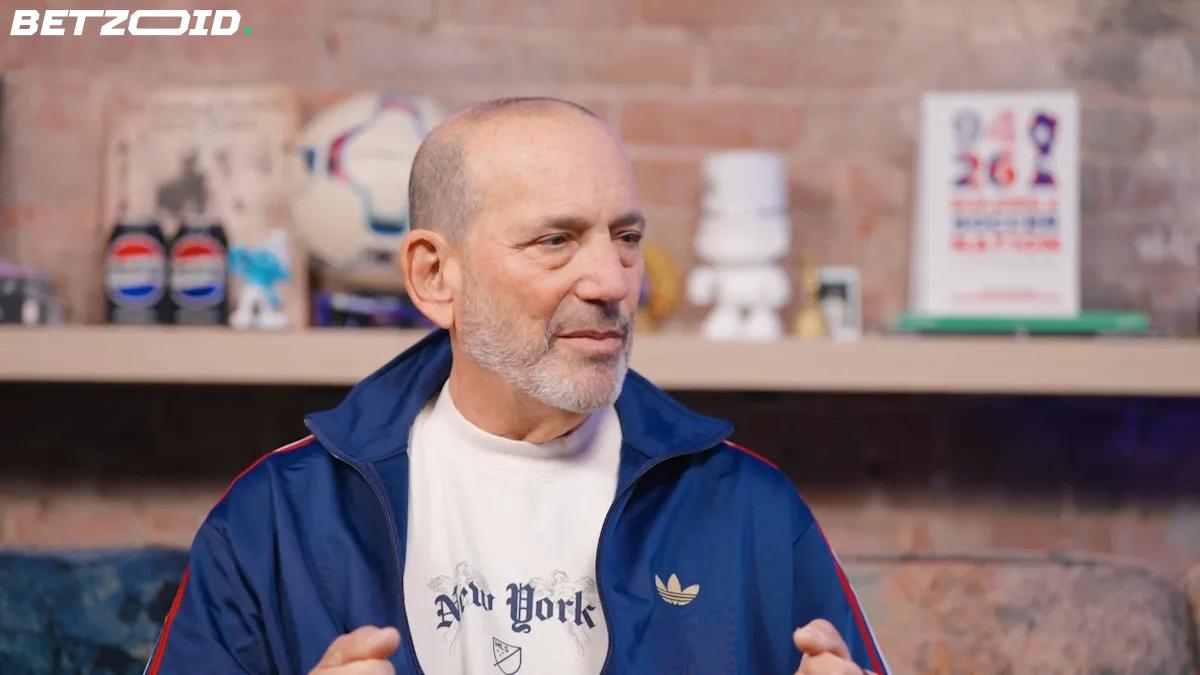
"The best player in the history of the game is gonna come off the field and put on an Inter Miami jersey." Don Garber said it plainly, and he still sounds like he can't quite believe it happened on his watch.
The outgoing MLS Commissioner sat down with Kyle Martino for a wide-ranging conversation that covered 31 years of American soccer history — from Lothar Matthäus complaining about middle seats on Continental Airlines to Lionel Messi playing every minute of every game in pink in South Florida. It's a long road. Garber walked every inch of it.
The Messi deal almost didn't happen
Garber was candid about how close it came to falling apart. Barcelona wanted Messi back. The Saudis had the crown prince's money. Joan Laporta was actively lobbying against the move. Jorge Mas, Inter Miami's co-owner, just kept saying "I got it" — and eventually, he did.
The comparison to David Beckham's 2007 arrival at the Galaxy is instructive. Beckham was a cultural event. Messi is something different. "He's not the marketing guy for the league," Garber noted. "He's humble. He just plays every minute of every game." At 37, that's either madness or discipline so extreme it looks like madness. Probably both.
With 45 MLS players featuring at the 2026 World Cup — and MLS ranking sixth globally for minutes played across national teams — the league isn't just a retirement destination anymore. That changes how you price futures on MLS expansion, on broadcast rights, on stadium development. The trajectory is real.
What Garber actually leaves behind
Garber's honest about what the job actually was: not running a league, but building the conditions for a league to exist. Stadiums worth billions. A commercial market that ESPN didn't believe in until they bought in. A supporter culture that, yes, he admits they borrowed from Serie A.
The NYC FC stadium took three mayors and twelve years. "Some other guy will kick out the first ball," Garber said, without much bitterness. That's the reality of infrastructure-scale ambition — you rarely get the ribbon-cutting.
His advice to the next commissioner is blunt: work harder than you thought possible, align the owners around a shared vision, and be the sport's loudest advocate. The hardware is built. Now comes the software — player development pathways, loan structures that keep young Americans in meaningful minutes rather than rotting on European benches, salary cap incentives tied to USMNT player development.
"We need to have the money to pay them, and we need to have the league that player can develop in." That's the gap. MLS has the stadiums and the star. What it still needs is a credible pipeline that doesn't require every American prospect to take a gamble on European grass time they may never see.
Garber's leaving. The league he built is, by any honest measure, unrecognizable from the one he inherited. Whether his successor can close the remaining gap between MLS and the world's top divisions is the only question that matters now.