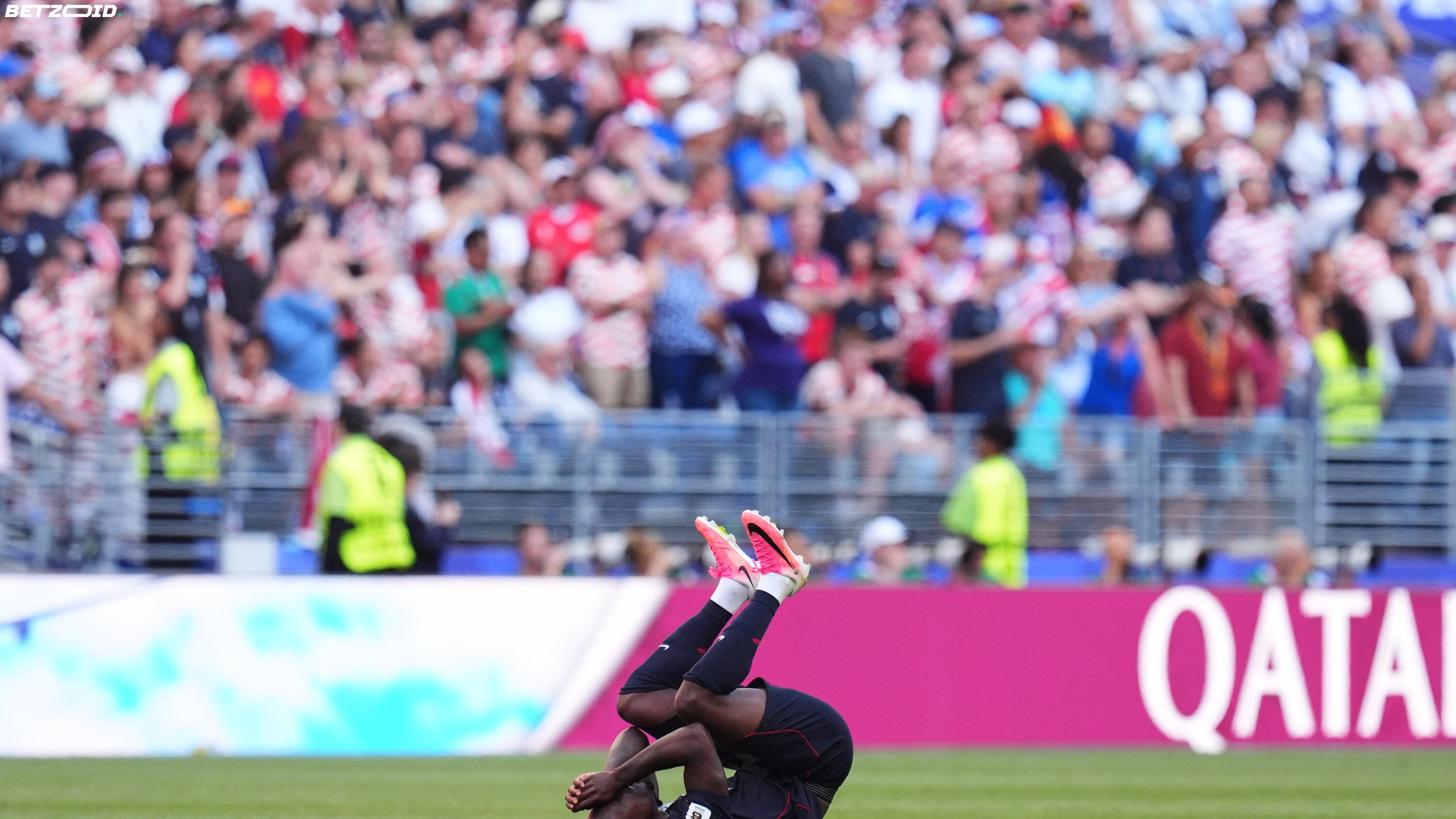
The scoreboard read 4-1 to Belgium. The U.S. players hung their heads in Seattle, and just like that, America's World Cup was over. But here's the thing — the sport didn't leave with them.
This tournament has already rewritten records before the final whistle. The Americans' win over Bosnia and Herzegovina averaged 24 million viewers on Fox — the most-watched English-language World Cup match in U.S. history. Add another 9 million on Telemundo. Total attendance across 72 matches has cleared 4.6 million, blowing past the 3.5 million set at the 1994 U.S. tournament across fewer games. The numbers are real, and they matter beyond the result against Belgium.
Soccer's long game is working
16.8 million outdoor soccer players aged six and up in 2025. Third-largest team sport in the country by participation, behind basketball and baseball. And from 2024 to 2025, it grew 15.8 percent — faster than any other team sport. For a sport already operating at that scale, that's not gradual momentum. That's acceleration.
MLS commissioner Don Garber put it plainly: "The growth of the sport is not dependent on that. The success of the World Cup in general has been driving the sport forward in ways that are almost as important as the success of the U.S. team." He's right, even if it stings to admit after a 4-1 exit.
The tournament even generated genuine international controversy. After President Trump pushed FIFA to review a red card issued to forward Folarin Balogun, FIFA lifted the one-game suspension — infuriating Belgium and several other federations. Whatever you think of the politics, it put the U.S. squad on front pages that normally ignore soccer entirely. Giovanni Reyna noticed. "It's really, really cool to see the country rally around this sport, which seems like the strongest they ever have."
MLS still has work to do
The optimism has a ceiling, and it's MLS. Eric Wynalda, the first American to play in the Bundesliga, said it bluntly: "We are not in a spot where we should look at the U.S. national team's success and for one second think this is because of Major League Soccer." His critique — that the league operates as "location-based entertainment" rather than a player development engine — is one the league hasn't fully answered yet.
Average MLS attendance last season sat at around 22,000 per game. That's ahead of the NBA (18,000) but well behind the NFL (70,000) and still trailing MLB (29,000). The league has real fans. It does not yet have elite players at scale — 45 MLS players appeared on World Cup rosters, including eight for the U.S., but critics like Wynalda see that as a low bar.
Garber knows it. The league is shifting to a fall-to-spring calendar in 2027, aligning with global football. Promotion and relegation — the system that keeps leagues honest — is at least being discussed. And MLS is staging three matches between the World Cup semifinals and final, keeping its product in front of the audience the tournament built.
Alan Rothenberg, who ran U.S. Soccer in 1994, still believes: "20 years from now, soccer is going to be challenging American football as the No. 1 sport in the United States, surpassing baseball, basketball and hockey." Bold call. But he said the same kind of thing in 1994, and the sport is still here, still growing.
Garber's parting line for the tournament: "Our attitude is, 'Thanks world, we'll take it from here.'" Whether MLS can back that up is the only question left that matters.