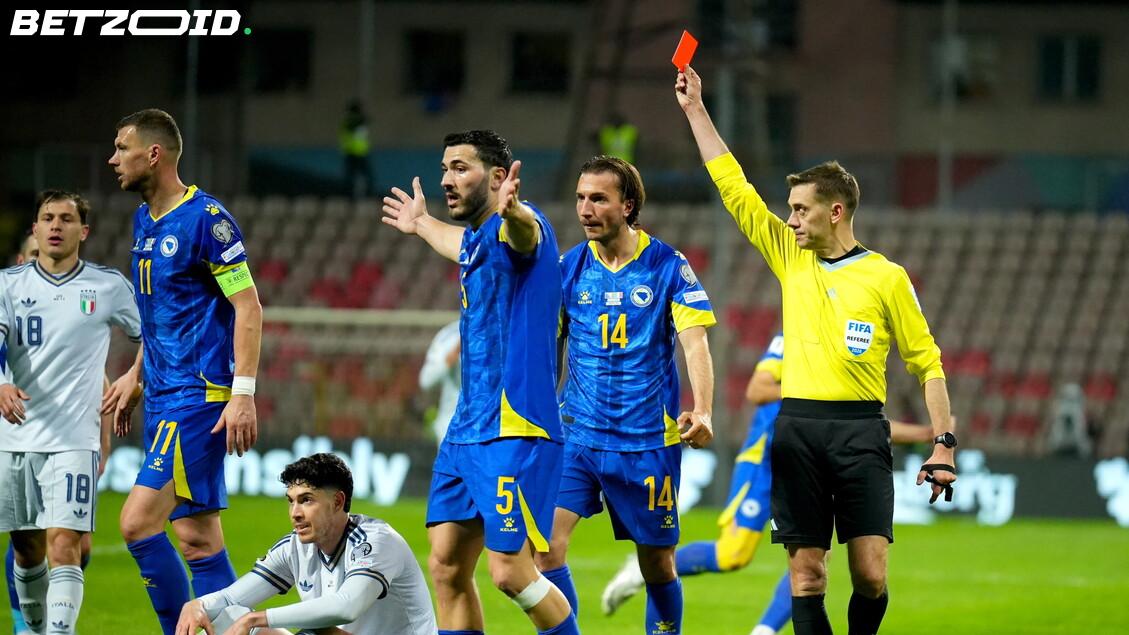
"When you miss the World Cup three times, it's a defeat." Italian Sports Minister Andrea Abodi didn't soften it, and he shouldn't have. Tuesday's shoot-out loss in Bosnia confirmed the most embarrassing run in Italian football history — and now the man running the federation may not survive the fallout.
Abodi has asked Italian Olympic Committee President Luciano Buonfiglio to "evaluate all the compatible technical options" for placing the FIGC under a form of administration. That's political language for: Gabriele Gravina's time might be up.
Gravina tries to deflect, Abodi isn't buying it
After the defeat, Gravina pointed outward. The crisis goes beyond the federation, he argued — Italian football doesn't have the same freedoms as non-professional sports, the political world hasn't done enough. It was the kind of statement designed to distribute blame rather than absorb it.
Abodi was having none of it. "It's not enough to pass the buck by saying that more was expected from the institutions. I expect a more focused response from the FIGC."
He then invoked precedent, pointedly. Former FIGC chief Giancarlo Abete resigned after Italy's group-stage exit at the 2014 World Cup. Carlo Tavecchio did the same after the play-off loss to Sweden in 2017. The message was clear: the honourable move has a template, and Gravina should know what it looks like.
What comes next
When asked whether former CONI President Giovanni Malagò could be installed as a federation administrator, Abodi said "the time for names has not yet come" — but the fact the question is being asked publicly tells you everything about where this is heading.
Italy are now the only former World Cup champions to miss the tournament three consecutive times. Four-time winners. A nation that produced Maldini, Pirlo, Buffon, Del Piero. Absent from three straight World Cups. Any odds you're calculating on Italian football's recovery — coaching markets, federation futures, the next qualifying cycle — have to factor in that this institution is potentially about to be restructured from the outside in.
"The entire history of the last 20 years must be evaluated," Abodi said. "What we must do is not make the same mistake again."
Twenty years of damage. One shootout in Sarajevo to finally force the reckoning.