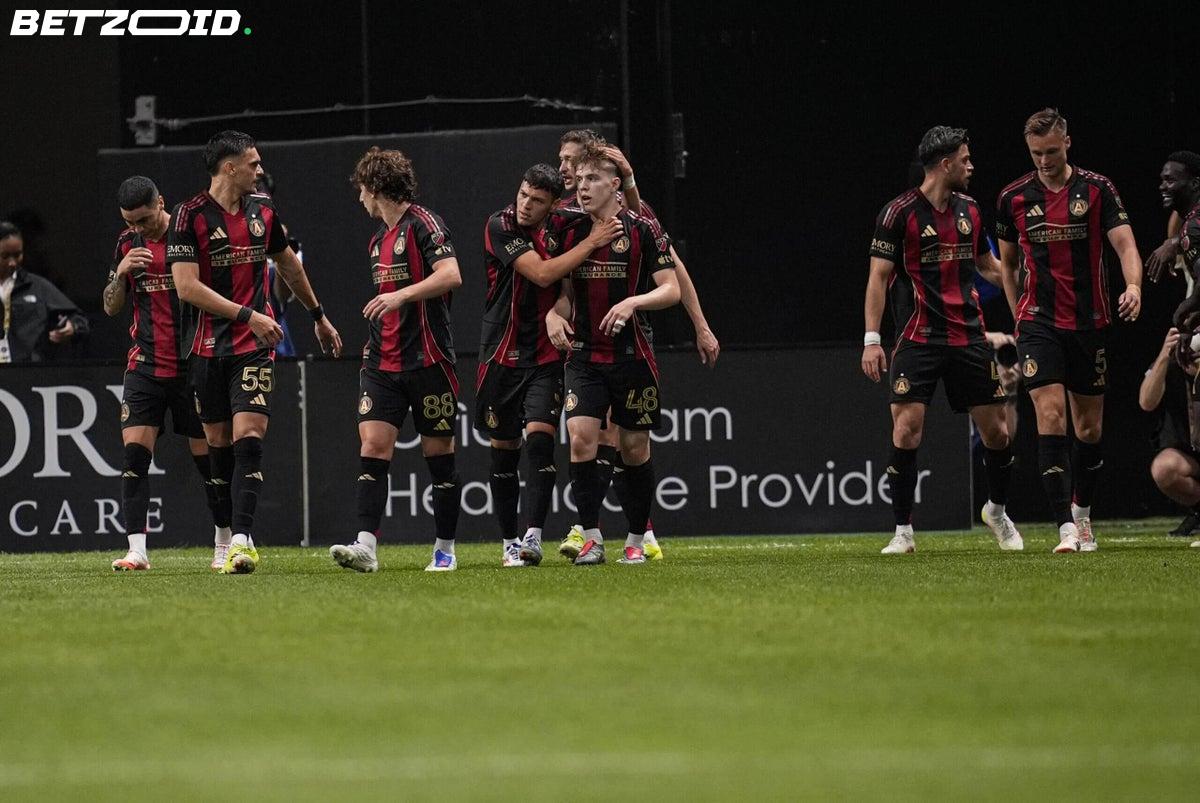
"The field was a disaster. It jumped up on you as you ran." Emiliano Martínez wasn't mincing words after Argentina's Copa América opener in Atlanta in 2024 — and he wasn't wrong. The temporary grass surface at Mercedes-Benz Stadium was patchy, inconsistent, and felt, in his words, like playing on a trampoline. Cristian Romero called it "a shame." Lionel Scaloni questioned why the surface had been laid just days before kickoff.
Almost two years later, Atlanta has responded by tearing the whole thing out and starting from scratch.
Below the surface
The old setup — giant grass patches dropped onto an asphalt base — is gone. Crews removed the asphalt and multiple layers of rock underneath, then went below ground to install natural sod properly. Atlanta United has already played three MLS regular-season games on it as a live test. That's a deliberate choice, not an afterthought.
The grass itself is a rye-bluegrass blend with a synthetic stitch woven through the backing for structural stability — firm enough to hold, but still breaks away naturally with a cleat. The drainage has been upgraded, the irrigation system improved, and state-of-the-art grow lights installed to keep the grass alive inside a domed stadium where the roof stays permanently closed. That last point matters more than it sounds: once Atlanta's summer heat kicks in, opening the roof would kill the grass. So the whole system — lighting, cooling, irrigation — is engineered around keeping it shut.
FIFA's head of pitch infrastructure, Ewen Hodge, visited in February. His explanation of the sand layer installed beneath the turf cuts to the heart of the Martínez complaint: "Once we get a more even water application across that whole thing, the whole surface starts to hold and bind together longer." The trampoline effect was essentially a binding problem. They've fixed the binding.
No news is good news
The Club World Cup in 2025 was the proof of concept. Atlanta hosted six matches. Players and coaches said nothing — publicly, at least — about the pitch. Adam Fullerton, the stadium's VP of operations, put it plainly: "Sometimes no feedback is good. If people are talking about it in a negative way, you're going to hear about it right away."
Atlanta will host eight World Cup matches in 2026, including a round-of-16 and a semifinal. The U.S. men's national team plays Belgium there this Saturday, then Portugal three days later — the first real public stress test of the rebuilt surface. In May, FIFA takes over and installs its own field across all turf-based U.S. venues.
Hodge's objective is simple: "We don't hear anything about it." After the Copa América headlines, that might be the best possible outcome Atlanta can aim for.