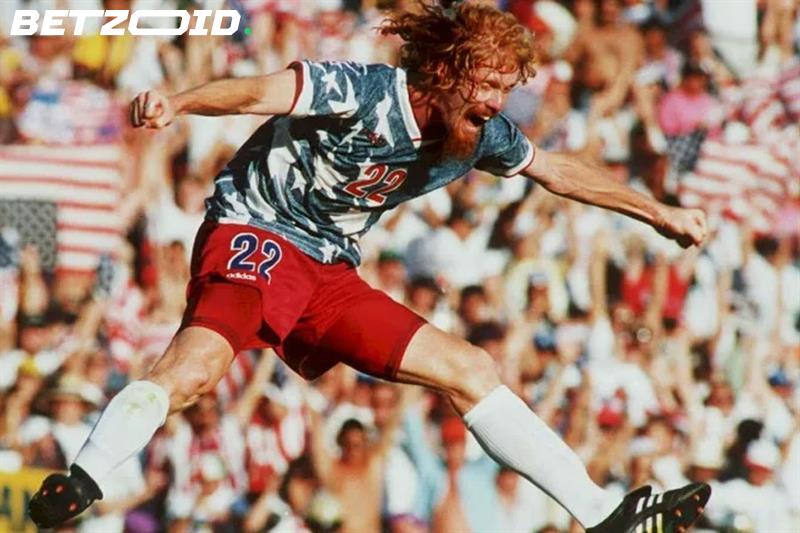
"We can no longer have low expectations." Alexi Lalas said it plainly, and nobody in a position to argue pushed back. Thirty-two years after the red-bearded defender helped put American soccer on the map, the World Cup is back on US soil — and the grace period is officially over.
The 2026 tournament, co-hosted with Mexico and Canada, arrives at a moment when US soccer has genuine infrastructure behind it: a professional league that draws genuine stars, a fanbase of 100 million people, and academies that have slowly begun to produce players worth watching. The question of whether the sport has truly broken through in America has been asked after every tournament since 1994. This time, there's no comfortable answer if the team flames out early.
Lalas, now a TV commentator, put the floor at the round of 16. Stu Holden, the former midfielder turned broadcaster, went further: "It's based in realism now that we should expect this group can get to a fourth and final." That's a semifinal. On home soil. Against the best teams in the world.
The pipeline problem hasn't gone away
MLS attendance beats most European leagues. Lionel Messi plays in South Florida. Manchester City's CMO Nuria Tarre says 32 million Americans claim an interest in her club alone. The commercial momentum is real.
But Jozy Altidore cuts through the noise. "Academies abroad are by far more robust," he said. "It's almost like a factory — Messi leaves Barcelona, here comes Yamal. It's not an accident." The United States still doesn't have that conveyor belt. Money has gone into elite facilities. Whether it's reached the grassroots level that actually produces top players is a different question.
Altidore's point is structural, not cynical. Environments that challenge players rather than coddle them — that's what builds international-level footballers. The USA hasn't cracked that yet, and no amount of World Cup hype changes it before the tournament kicks off.
What success actually looks like
Carli Lloyd, who knows what a home World Cup can do having won one, frames the stakes differently from the pundits. "The measure of success with this team is going to be how much they inspire the country. That is the power that they have — and that is in their control."
That's a more honest benchmark than a specific round, and also a more complicated one. The 1994 tournament packed stadiums and lit a spark in youth football that burned for years. The 1999 Women's World Cup went deeper — Brandi Chastain's penalty celebration became a cultural moment that transcended sport. The 2026 men's team is chasing something in that territory.
The USA face Belgium in a friendly on Saturday — a useful early-stage test against a side still capable of exposing defensive uncertainty. Any slip in those odds of progressing comfortably through the group stage will feel sharper with the host-nation weight already sitting on this squad.
Soccer is now the third most popular sport in the United States, according to figures released in January. That's a genuine milestone. But milestones don't win knockout rounds. As Lalas put it: anything less than the last 16 is a failure. Nobody's disagreeing.