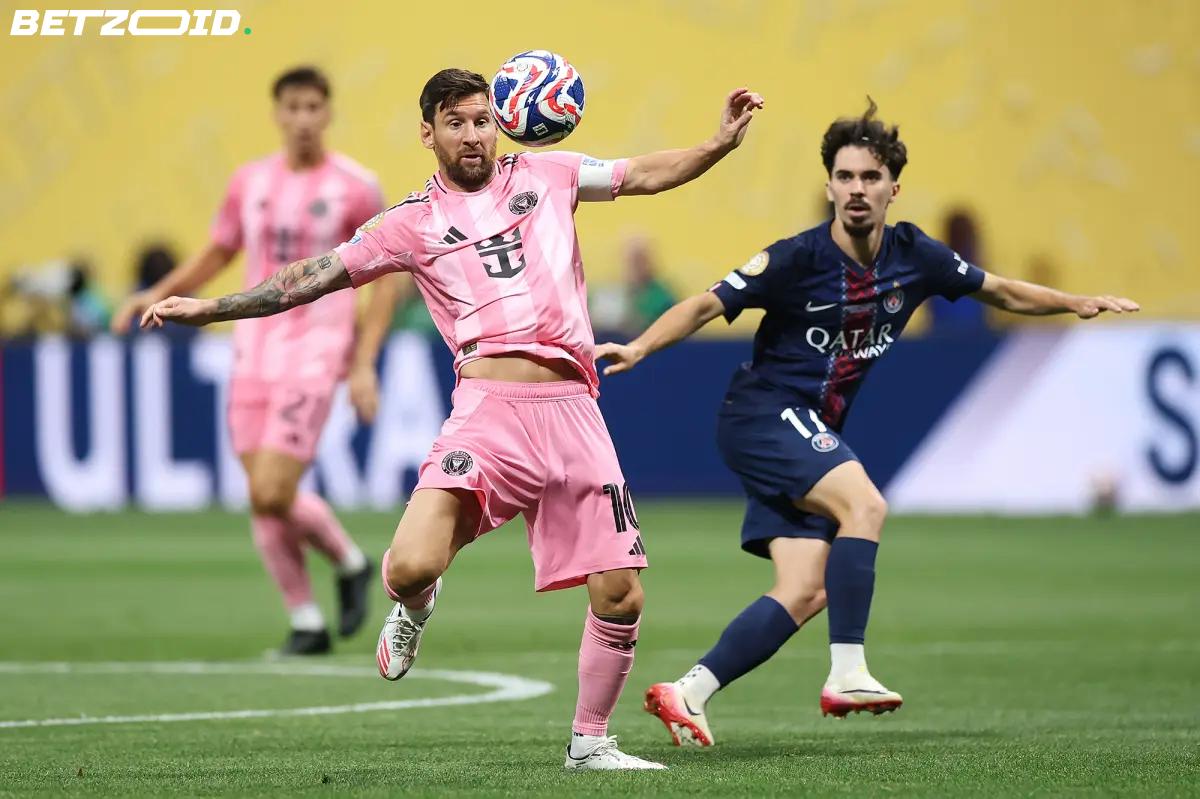
Hotel elevators stopping on every floor. Fans smashing every button. Crowds swarming lobbies at midnight in Plano, Texas. That's what Lionel Messi's first road trip with Inter Miami looked like in 2023 — and it never really calmed down after that.
Paul Tenorio, one of the sharpest soccer writers in the US, spent a year documenting what Messi's arrival actually meant for MLS. His book, The Messi Effect: How the Global Legend Changed the Future of American Soccer, lands a clear verdict: "By most any measure, Messi in Major League Soccer has been an overwhelming success."
That success came despite Messi being almost the opposite of what a league in growth mode typically needs from its star. He rarely gives interviews. He almost never speaks publicly, let alone in English. His aversion to media, as Tenorio writes, became "one of the defining features of his time in MLS." And yet none of it mattered.
What he brought that no one else could
MLS has imported stars before. Wayne Rooney. Steven Gerrard. Zlatan Ibrahimović. Thierry Henry. Kaká. All global names. All, by the time they arrived, operating well below their peak. The difference with Messi is that he came in still being measured against Maradona and Pelé — and somehow held up against that standard.
"You don't have the luxury of having a bad season or not winning a trophy somewhere," Tenorio says. That's the weight Messi carries that no other MLS signing ever has.
And it translated commercially in ways the league couldn't have scripted. Stadiums sold out across the country. MLS landed in global conversations it had no business being in. Apple TV and Adidas built revenue-sharing deals around him. His contract — reported at $150 million over two and a half years — was a bargain compared to the $230 million annually Cristiano Ronaldo collects in Saudi Arabia. Messi chose the US anyway.
In October 2025, he extended his deal through 2028, this time with equity in the club — the same arrangement David Beckham received on retirement. Tenorio reads that clearly: "It's an acknowledgement that Messi is a once-in-a-generation opportunity in the way Beckham was too."
The question MLS can't ignore
Messi will be 41 when his current deal expires. He's already ruled out coaching and punditry. And when he goes, MLS faces the same structural problem it's always had — just with higher stakes than ever before.
"What's keeping those fans there once he's gone?" Tenorio asks. It's the only question that matters now.
The honest answer is: not enough, unless the league changes. Tenorio's argument is direct — MLS needs to overhaul its roster rules to build genuine squad depth, not just sign one marquee name and paper over the gaps. Better overall quality means more competitive matches, which means bigger audiences, better media deals, and a cycle that actually sustains itself.
For anyone tracking Inter Miami's odds or MLS expansion markets, that structural uncertainty is real. The league's commercial trajectory beyond 2028 hinges on whether it can manufacture genuine competition — not just sell tickets to watch one man.
With Argentina heading into the 2026 World Cup on home soil as defending champions, Messi's final act isn't really about MLS anymore. It's about history. Eight Ballon d'Ors. A World Cup. A career that doesn't have a clean comparison anywhere in the sport.
"When we think about the impact David Beckham had on American soccer," Tenorio says, "it's not the two MLS Cups he won with the LA Galaxy — it's Inter Miami, and Messi going there."
That has changed the face of the league. Whether the league can hold that face without him is a different question entirely.