Ferran Torres scored the only goal as Spain beat Argentina 1-0 in extra time to claim their second World Cup. It was a final that won't live long in the memory. What will last is the $9 billion FIFA is walking away with.
The tournament — 48 teams, 104 matches, six weeks, three host nations — was the most commercially aggressive World Cup ever staged, and it delivered exactly what Gianni Infantino promised it would. FIFA's own estimates put revenues above $9 billion for 2026, the most lucrative sporting event in history.
The machine behind the spectacle
Stadium utilization hit 99% in the group stage. Median ticket prices topped $900, with the ceiling pushing past $10,000. Analysts at Football Benchmark called demand "remarkably resilient" — which is a polished way of saying fans paid whatever was asked and kept coming. For anyone who had backed the over on attendance figures or tournament engagement metrics, this was a clean win.
The expanded format — up from 32 teams and 64 matches in 2022 — gave broadcasters more content to buy, advertisers more eyeballs to chase, and FIFA more of everything. It's a simple equation that Infantino has been running for years, and North America proved the ideal environment to stress-test it at scale.
Infantino is already eyeing 64 teams for 2030. Kieran Maguire, associate professor in football finance at the University of Liverpool, put it plainly: "This is the opportunity for the World Cup to become the Olympics of football in the sense that it becomes open to far more nations." More nations also means more votes at FIFA congress. Maguire noted that FIFA "gives lots of money to small countries, who in turn vote for him to be re-elected as president." The circle closes neatly.
Trump, red cards, and a peace prize
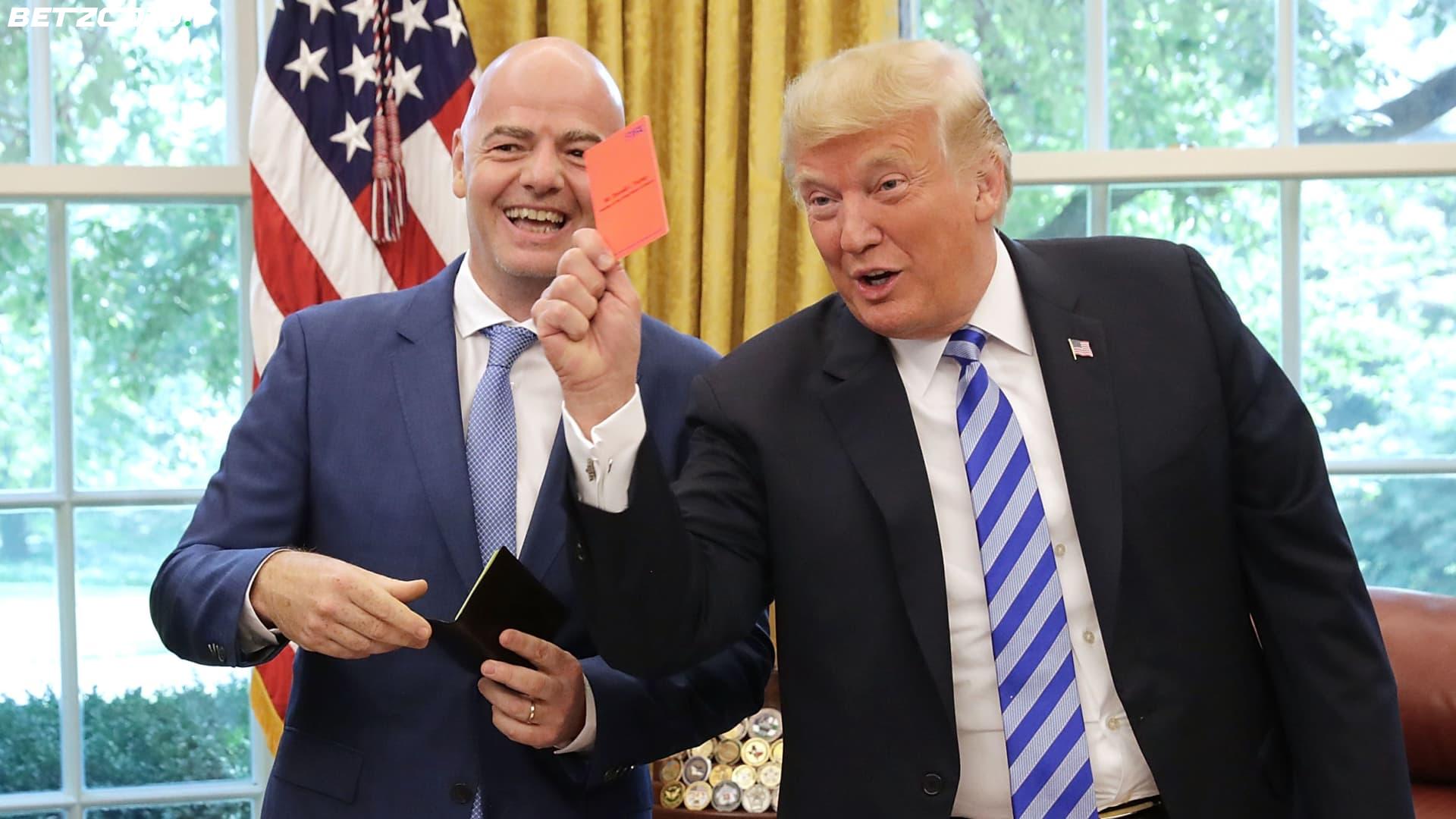
President Trump was a recurring presence throughout the tournament, which the U.S. co-hosted with Mexico and Canada. His relationship with Infantino attracted scrutiny on multiple fronts — FIFA awarded Trump its inaugural peace prize last year, and Trump's 2025 financial disclosure revealed Infantino had gifted him 10 tickets, valued at $15,000, to the FIFA Club World Cup final.
Then came the Folaron Balogun episode. After USMNT forward Balogun received a red card against Belgium and was handed a one-game suspension, Trump called Infantino to request a review. The suspension was rescinded. "I didn't know what the hell a red card was," Trump said. That explanation has not quieted the noise.
As for the final itself — Enzo Fernández saw red for a second yellow in extra time, leaving Argentina with 10 men and Spain with the margin they needed. Torres's goal was the difference. A 27-minute half-time show featuring Madonna, Justin Bieber, BTS and Shakira drew its own criticism. FIFA's 2030 tournament already has a $6 billion budget set aside and will coincide with the competition's centenary. Infantino has framed it as "an even more attractive event for broadcasters." Attractiveness, in FIFA's language, has always meant one thing.