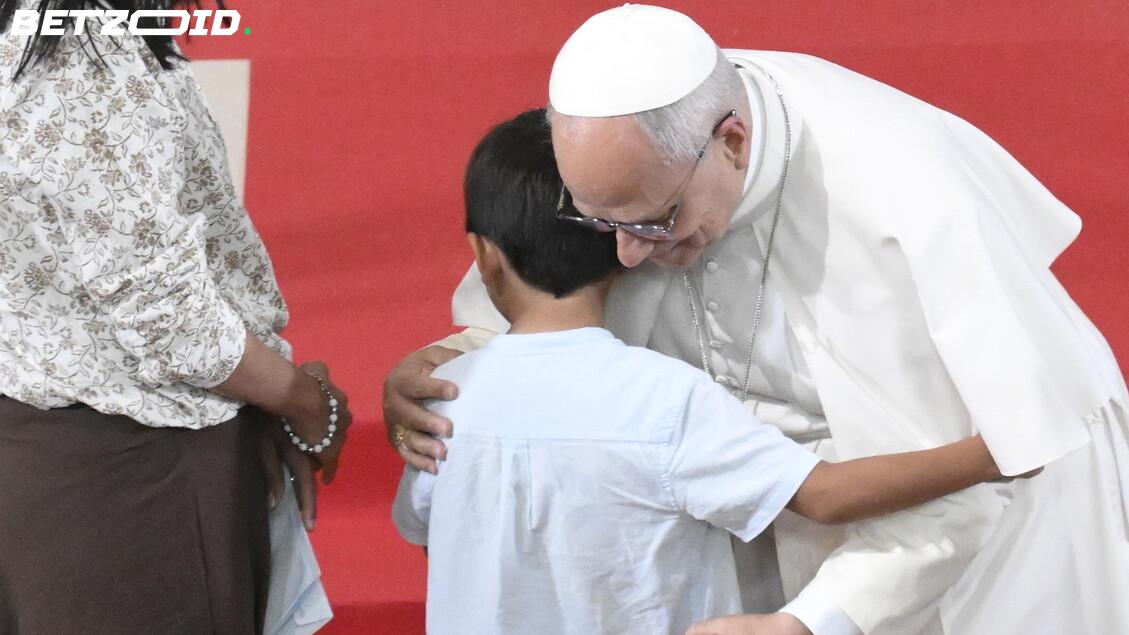
"Those who don't know how to pass the ball, even if they have talent, haven't yet understood the game." Pope Leo XIV said that in Barcelona on Wednesday — the day before the 2026 World Cup kicked off — and it lands a bit differently when half the world is about to watch 32 nations try to prove otherwise.
Leo was speaking to diocesan charitable organizations, but he aimed the football metaphor squarely at the tournament beginning on his doorstep. The World Cup, he argued, is a mirror: life, like the game, is "not a competition to show off alone, but a journey we learn to walk together."
Not just philosophy — actual football
There's something worth sitting with here beyond the spiritual framing. The teams that tend to win World Cups — Spain in 2010, Germany in 2014, France in 2018 — weren't built around one untouchable talent hoarding the ball. They were systems. Collective. The ones built around a single star carrying dead weight rarely go the distance.
It's a point that has real implications for how you read the 2026 tournament. Several of the favorites arrive with world-class individuals but genuine question marks over team cohesion. Whether that ego-vs-system tension resolves itself in group stages or explodes in a knockout round is one of the most interesting threads to follow over the next few weeks.
Leo also didn't soften the flip side: "Those who don't know how to live with others and for others haven't yet understood life." That's a harder line than most pre-tournament speeches you'll hear from coaches, politicians, or pundits.
The 2026 World Cup begins Thursday. The Pope has already set the terms of the debate.