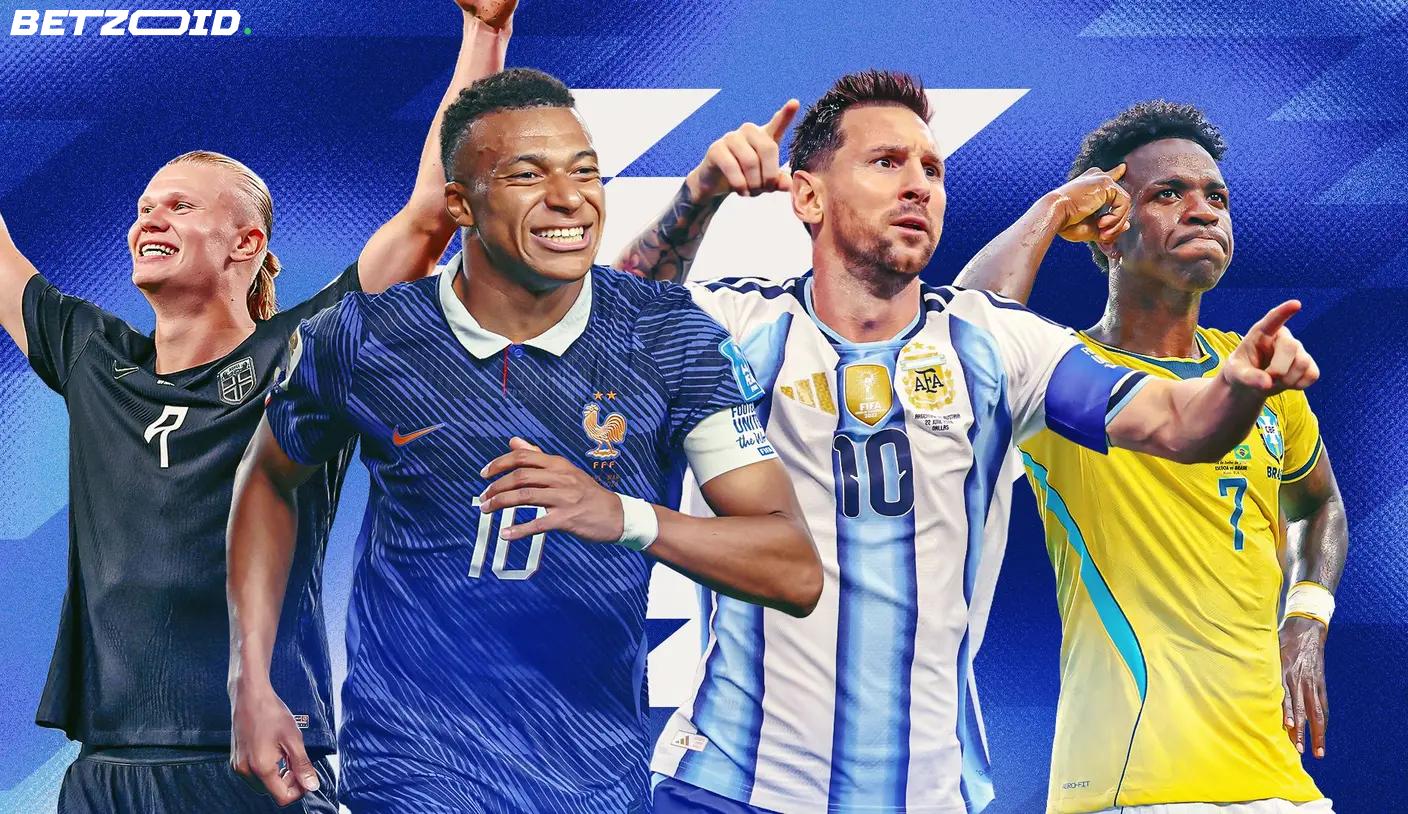
Six goals. Messi has six goals at the 2026 World Cup, and he's been on the pitch for roughly 40% of Argentina's group stage minutes. At 39, with legs that aren't what they were, he is still the player you cannot take your eyes off.
His free kick against Jordan in the 80th minute — the one that gave a nervous Argentina a clean group stage — probably should have been saved. The keeper got a hand to it. It went in anyway. That's Messi now: doing less, but making the moments count. The Golden Boot race didn't produce a more fitting symbol.
Why this one feels different
The history here is worth knowing. Since Ronaldo won the Golden Boot in 2002 and lifted the trophy with Brazil, no top scorer has won the World Cup. Mbappé bagged it in 2022 off the back of a final hat-trick and still lost. Kane claimed it in 2018 and faded badly when England needed him most. Rodriguez, Muller, Klose — all Golden Boot winners, none champions. The individual prize and team success have barely overlapped in over two decades.
That context should dampen the Golden Boot excitement slightly. It doesn't.
Because what this tournament has — for arguably the first time in years — is a genuine multi-player race with legitimate contenders in form. Messi at six. Mbappé at four goals and two assists across two games, still looking slightly disconnected from France's system but clearly building. Haaland scored four in Norway's first two matches before being rested for the third. Vinicius Jr. has four in three, which already doubles his best effort at a Copa America. Kane has goals but not yet the positions. Ronaldo has the positioning but not — and this is being kind — much else that resembles team football at this point.
Seven elite forwards. One trophy. Nobody particularly inclined to share the spotlight.
The path forward for the big three
Messi's route through the bracket looks manageable on paper. Cape Verde surprised Spain, but Argentina are a different animal. After that, Australia or Egypt, then likely Ghana, Colombia, Switzerland, or Algeria. He already broke the all-time World Cup goals record this tournament. Double figures before the quarterfinals is a real possibility, not an exaggeration.
Mbappé's France still aren't clicking, which is strange given the personnel. The full backs are disciplined, the midfield works, Dembélé runs harder in a France shirt than he does anywhere else. But Mbappé looks like a man playing in a system still finding its shape. Sweden are next. That should help. His big-game record at this level — two goals in the 2018 round of 16, a hat-trick in the 2022 final — suggests the later rounds are where he genuinely arrives.
Haaland is the wildcard. Four goals in two games before being rested tells you everything about his efficiency. Norway don't need to be favourites against anyone for Haaland to be a problem. If they find a run, his Golden Boot odds shorten fast.
Outside the top three, don't sleep on Folarin Balogun, who is in form for the USA, or Brian Brobbey, who has been relentless for the Netherlands. Neither is favourite, but both are scoring in a tournament where that's the only currency that matters.
The Ballon d'Or shadow hangs over all of this, too. Kane needs Champions League success that Bayern haven't provided. Mbappé's Real Madrid didn't win a trophy. Messi is playing in MLS, which has never exactly been a launchpad for Ballon d'Or campaigns. A Golden Boot and a World Cup win would force the argument though. It might be the only path he has left.
None of them can all win the tournament. Most of them won't. But if even two or three of these forwards sustain this output into the knockout rounds, 2026 will have its defining individual story. Right now, Messi is writing the first chapter — and betting markets backing anyone else to outscore him over the next three weeks should have a very good reason.