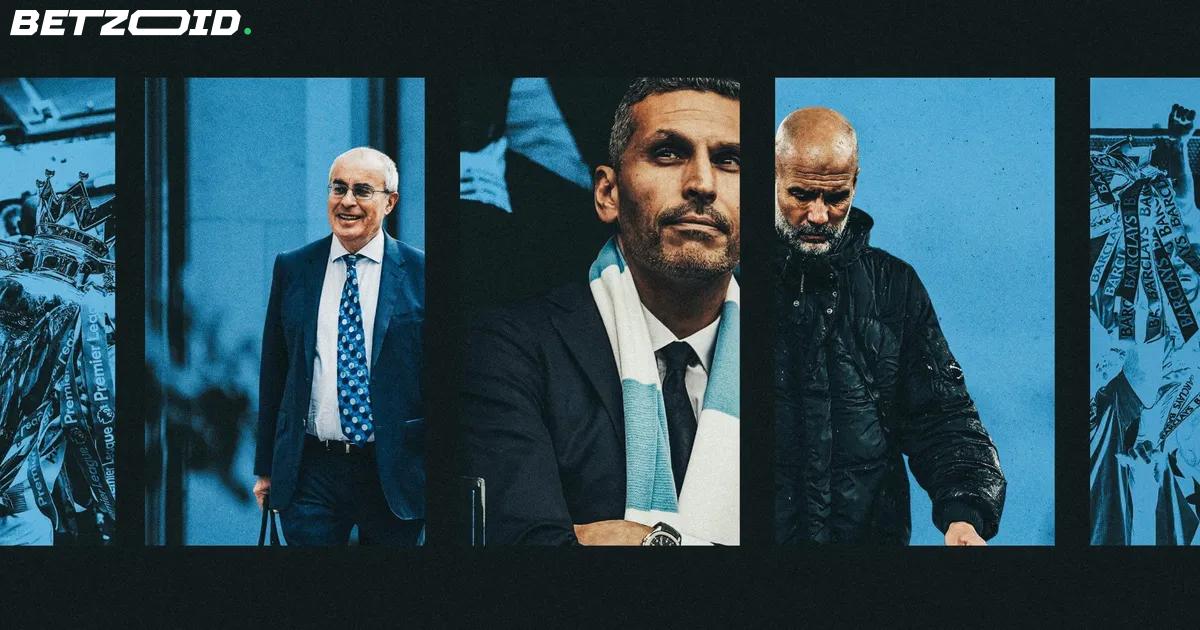
Manchester City have spent much of the last decade dominating the Premier League, but for three and a half years the club has also been fighting a very different battle. On Friday, it emerged that City had been found guilty of virtually all of the 115 charges brought against them, according to sources briefed on the matter who spoke anonymously as they were not authorised to discuss it publicly.
City are yet to be sanctioned. Both financial and sporting sanctions remain on the table, and the club are almost certain to appeal the verdict, a process that could take several months to resolve.
How did we get here?
The Premier League charged City with more than 100 breaches of its financial rules in February 2023, referring the club to an independent commission over 115 alleged breaches between 2009 and 2018. The case followed a UEFA investigation that began in 2019 and led to a two-year Champions League ban in 2020 -- a ruling City successfully overturned at the Court of Arbitration for Sport.
The charges stem from a series of articles published by the German outlet Der Spiegel, based on documents from the whistleblower platform Football Leaks. It was alleged that City manipulated the value of several commercial deals to get around Financial Fair Play rules, with Abu Dhabi-based companies allegedly helping to artificially boost revenues. It was also reported that former manager Roberto Mancini was paid more as an advisor to Al Jazira, another club owned by City's owner Sheikh Mansour, than for his role at the Etihad Stadium.
City have consistently denied wrongdoing. "The accusations of financial irregularities are entirely false," the club said when UEFA opened its investigation in 2019 -- a position that has not changed.
Who owns Manchester City?
City were bought in 2008 by Sheikh Mansour bin Zayed bin Sultan Al Nahyan, vice president and deputy prime minister of the United Arab Emirates and part of Abu Dhabi's ruling family. The purchase, reported at around £200million through his Abu Dhabi United Group, ended a turbulent spell under previous owner Thaksin Shinawatra and brought investment that has since climbed to £1.3billion.
Critics, including Amnesty International, have described the takeover as "sportswashing" -- using football to boost Abu Dhabi's international standing. Sheikh Mansour himself called it a "sound business investment," while chairman Khaldoon al Mubarak said in 2009 that owning City was about "showing the world the true essence of who Abu Dhabi is." Sheikh Mansour has attended only two City games in 16 years, leaving day-to-day running of the club to Khaldoon and chief executive Ferran Soriano. City insist the club is not state-run or state-funded, though the links between Sheikh Mansour, the club's sponsors and Abu Dhabi have long blurred that distinction.
The scale of City's finances and fanbase
Few Premier League clubs can match City for turnover. Revenue hit a record £715million in 2023-24 before dipping slightly to £694million in 2024-25 -- marginally behind Liverpool, with only Real Madrid, Barcelona, Bayern Munich and Paris Saint-Germain generating more among Europe's clubs that season.
City's average Etihad Stadium crowd has topped 50,000 every season since 2014-15 (barring the COVID-affected year), prompting an extended North Stand that has now opened and will push capacity beyond 60,000. Even so, City's fanbase remains smaller than that of United, Liverpool and Arsenal, among others. Nielsen has estimated City now have 32 million followers in the United States alone.
Manchester United and the changing rivalry
United, whose Old Trafford ground sits around four and a half miles from the Etihad, have long been considered England's biggest club, with 20 league titles and three European Cups. City spent much of their history in United's shadow -- a banner once hung at Old Trafford counting the years since City's last trophy, which reached 34 before their 2011 FA Cup win.
City's spending changed that dynamic. Sir Alex Ferguson famously called them "noisy neighbours" in 2009, and the on-field balance has since flipped: United currently sit in the bottom half of the Premier League after a turbulent period since Ferguson's 2013 retirement.
The trophy haul and the Guardiola era
Since the takeover, City have won 19 major domestic trophies, including eight Premier League titles in 14 seasons, plus the 2023 Champions League. Adding the Community Shield, UEFA Super Cup and FIFA Club World Cup takes the total to 26 trophies under the current ownership -- roughly two per season since 2011. The high point came in 2022-23, when City won the Premier League, Champions League and FA Cup treble.
Pep Guardiola, appointed in 2016, delivered much of that success: six Premier League titles and the 2023 Champions League. He left at the end of last season, having won both domestic cups and pushed Arsenal to the wire in the league, and was succeeded by his former assistant, Enzo Maresca. Guardiola has since become a City Football Group global ambassador, with a stand at the Etihad named after him.
Unprecedented territory
Nothing in English football has matched the scale of City's case. Everton and Nottingham Forest were both docked points in 2023-24 for breaching the Premier League's Profit and Sustainability Rules, and Chelsea were fined £10.75million and given a suspended one-year transfer ban in March over third-party payments. But 115 charges spanning nine years is unprecedented, and the six years it has taken to reach a verdict reflects the case's complexity.
With sporting and financial sanctions both still possible and an appeal expected to follow, City's case is far from over.