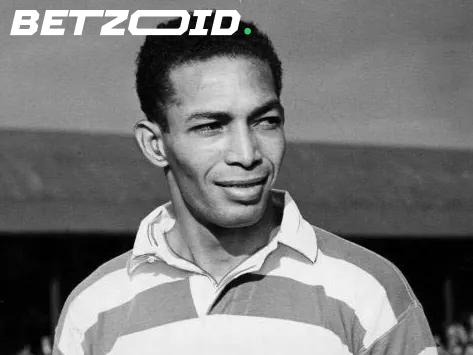
Gil Scott-Heron's father played for Celtic. That fact alone stops most people in their tracks — and it should, because the full story behind it is one Scottish football has never quite given its due.
Seventy-five years ago today, on August 18, 1951, Gilbert Saint Elmo Heron pulled on the Hoops and scored in a 2-0 League Cup win over Morton at Celtic Park. He became the first Black footballer to play a competitive match for Celtic, and one of the first to feature in Scottish football at all. The occasion deserved a bigger crowd of memory than it gets.
A pioneer before he ever reached Glasgow
Heron's path to Celtic Park was unlike anything the club had seen. Born in Kingston, Jamaica in 1922, he won awards as one of the island's finest young footballers before moving to Cleveland, Ohio after his parents separated. British citizenship through his Jamaican birth got him enlisted with the Royal Canadian Air Force during the Second World War. He kept playing through all of it.
By 1946 he was making history in the United States, becoming the first Black professional soccer player in the country when he debuted for the Detroit Wolverines. This was the same era that gave America Jackie Robinson in baseball and Jesse Owens' legacy on the track. Heron belongs in that conversation. He rarely gets placed there.
Celtic spotted him on a North American tour in 1951 and signed him on the spot. In five appearances for the club, he scored twice — the opener against Morton and the only goal in a 1-0 League Cup win over Airdrie. Teammate Charlie Tully remembered his yellow shoes. Bobby Collins and Sean Fallon became close friends. By all accounts, he made an impression that went well beyond his goals tally.
The legacy he left behind
After Celtic, he had stints with Third Lanark and Kidderminster Harriers before finishing his career back in America with the Windsor Corinthians. But it was his time in Glasgow he kept returning to, both in memory and in verse — he wrote about his spell in Scottish football in a poem called 'The Great Ones'.
His son put it plainly in the early 2000s: 'My father still keeps up with what Celtic are doing. You Scottish folk always mention that my Dad played for Celtic, it's a blessing from the spirits!'
Gil Scott-Heron, of course, went on to become the Godfather of Hip-Hop. 'The Revolution Will Not Be Televised' came out in 1971 and is still being quoted today. The talent ran in the family.
Gil Heron died in Detroit in November 2008. The barriers he broke — in America, in Canada, in Scotland — were real, and the resistance he faced to break them was relentless. Seventy-five years on from that Morton game, his name deserves to be spoken more often than it is.