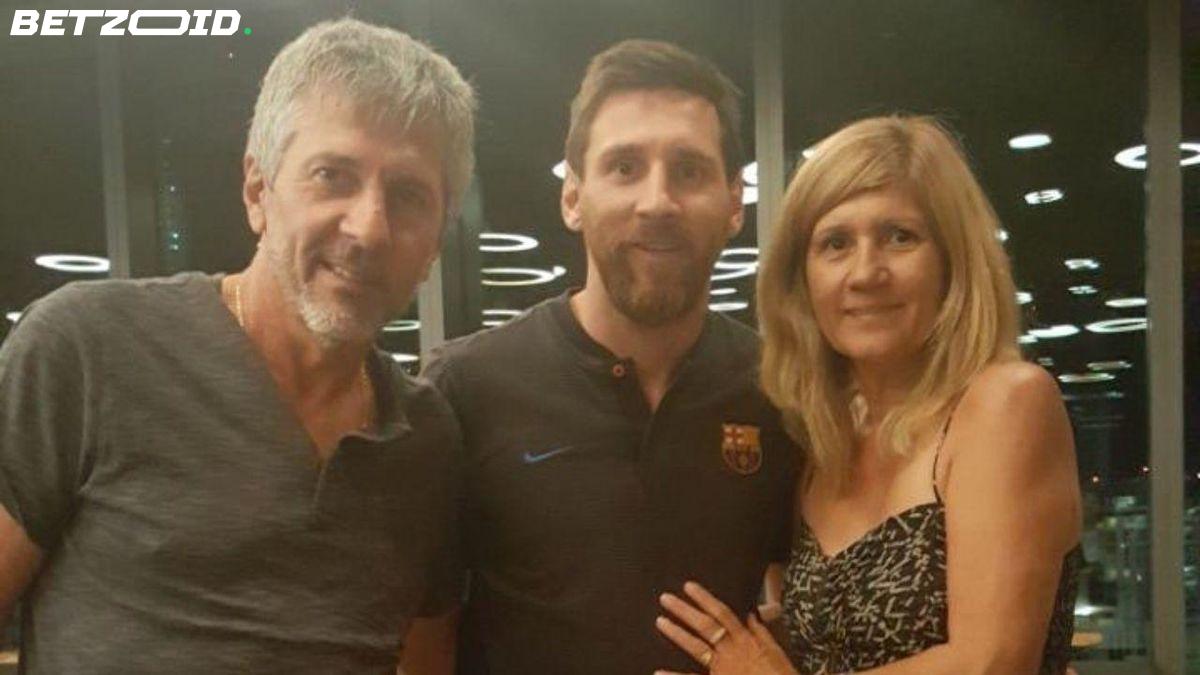
Jorge Messi died on August 8 at Sanatorio Centro in Rosario, Argentina, following a prolonged illness. He was 68. The man who first put a ball at Lionel's feet, dragged his family to Barcelona on a gamble, and eventually ran his son's entire professional operation — gone.
Dr. Carlos Mackey, the clinic's medical director, confirmed the death while keeping further details private out of respect for the family.
Newell's Old Boys released a statement that cut through the usual club formality: "The pillar and the person who, with vision, rigor and affection, supported the career of the best player of all time." That's a local club speaking about a man who shaped global football. It lands differently when it comes from the streets where it all started.
From Grandoli to the Camp Nou — Jorge Was There for All of It
Before Pep Guardiola. Before eight Ballons d'Or. Before the 2022 World Cup. There was Jorge coaching a kid named Leo at Grandoli, a local club in Rosario. When Lionel was diagnosed with a growth hormone deficiency — treatment costs that a working-class family in Argentina couldn't carry — Jorge made the call. He took his son to Spain. FC Barcelona picked up the treatment costs in exchange for getting Lionel into La Masia at 13.
That bet paid off in ways no one could have fully projected at the time.
Lionel would later describe what it cost emotionally: seeing his mother "only every four months," carrying homesickness through his teenage years in a foreign country. "There were moments when I was really sad," he told Grant Wahl in 2016. "But I never thought of leaving." Jorge stayed in Barcelona with him. The rest of the family eventually returned to Argentina. That separation — quiet, unglamorous, sustained over years — is a large part of why Messi became Messi.
Agent, Manager, and Defender When It Mattered Most
As Lionel's career grew, Jorge's role evolved. He became his son's agent and business manager — the person controlling the contracts and negotiations behind one of sport's most valuable names. When Argentine fans turned on Lionel after the 2010 World Cup exit in the quarterfinals, Jorge didn't stay quiet. He called the backlash "unfair" and pointed to the disconnect between how Barcelona treated his son and how parts of Argentina did. It was a sharp, protective response from a man who knew exactly what his son had sacrificed.
Lionel has a portrait of his mother Celia tattooed on his left shoulder blade. The bond with both parents ran deep — built through years of distance, sacrifice, and the kind of unglamorous daily commitment that never makes the highlight reels.
"My parents instilled in me respect, hard work and humility," Messi told France Football. "I grew up with these values. When I arrived in Barcelona at the age of 13, I found the same values at La Masia."
Jorge Messi was 68. He leaves behind his wife Celia, four children, and the career of the player most people alive will never see matched.