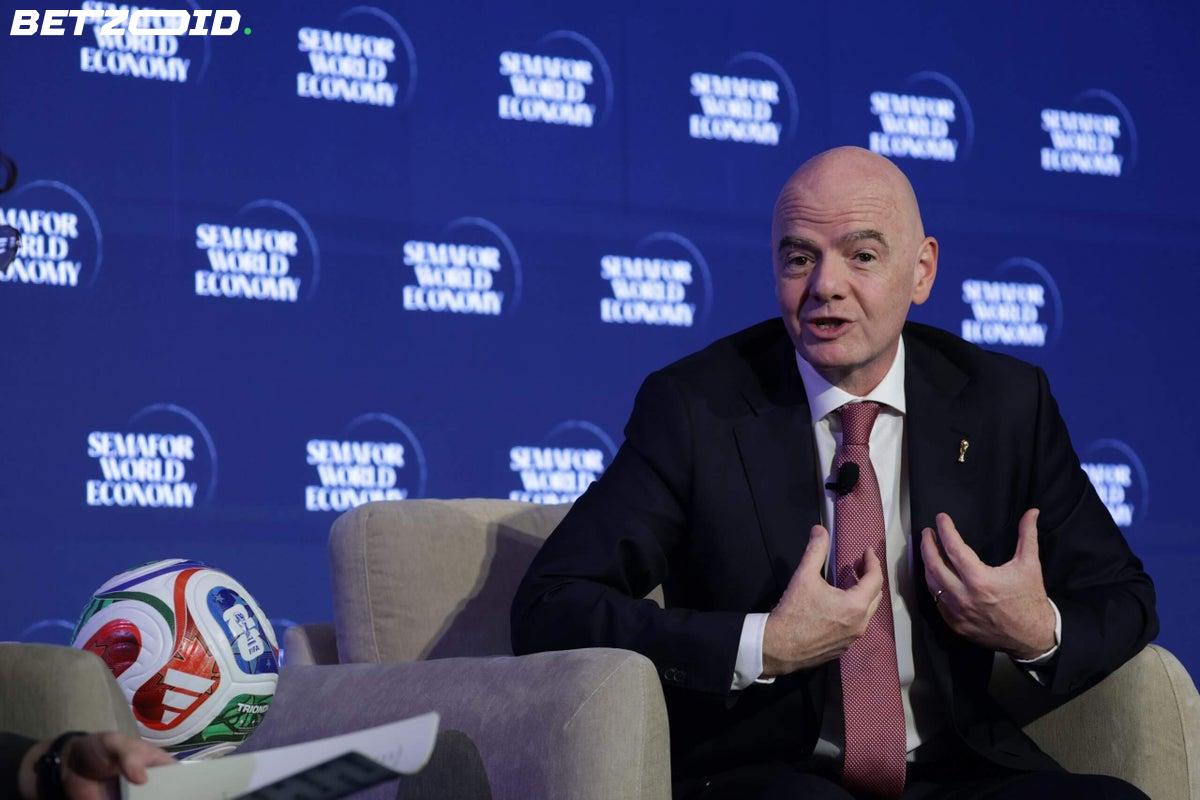
"Maybe, but it's the market." That was Gianni Infantino's answer when pushed on World Cup ticket prices at a global economics forum on Friday. Short, dismissive, and probably exactly what frustrated fans didn't want to hear.
The FIFA president had a longer version too. Speaking at the Semafor World Economy 2026 Annual Convening, Infantino leaned on FIFA's non-profit status as his primary defence, pointing out that the organisation generates meaningful revenue in just one month every four years and then spends those billions across 211 member nations — three quarters of which, he claims, couldn't run organised football without FIFA grants.
"The World Cup takes place one month every four years, so we generate money in one month. The 47 months until the next World Cup, we spend that money." Structurally, that's a fair point. Whether it justifies the pricing model fans have actually encountered is a different question entirely.
Dynamic pricing, new categories, and a complaints filing in Brussels
The problem isn't just that tickets are expensive — it's how the pricing has worked in practice. FIFA's dynamic model has seen roughly 40 of the tournament's 104 matches become more expensive during the "last-minute sales phase" than they were at any earlier point, according to fans who shared screenshots after gaining access. New ticket categories have appeared mid-process, adding confusion on top of sticker shock.
Infantino pointed to a $60 ticket tier available for "hardcore fans", including for the final. But fans' groups across Europe were quick to note that almost none of those tickets were actually accessible when the overseas sales window opened in October. FIFA added more in December — after the backlash, not before.
It's gotten serious enough that Football Supporters Europe and consumer rights group Euroconsumers filed a formal complaint to the European Commission in March, alleging FIFA abused its monopoly position through excessive prices and opaque purchasing conditions. That's not a protest banner outside a stadium. That's a legal process.
Infantino's comparison to NFL games and concerts landed poorly. The NFL doesn't have a monopoly on access to American football's biggest event the way FIFA does on the World Cup. You can't choose a rival provider.
Travel bans add another layer of uncertainty
Ticket prices aren't the only problem. Since Trump's return to office in January 2025, the U.S. has imposed travel bans on nationals from several countries — four of which have qualified for the World Cup: Senegal, Ivory Coast, Iran, and Haiti.
Infantino said FIFA is in "constant discussions" with the U.S., Canadian, and Mexican governments to ensure players, officials, family members, and fans from affected nations can attend. He referenced the FIFA Pass — an expedited visa appointment system for ticket holders — as a solution that "works quite well". Whether that holds for fans from countries currently under entry restrictions remains genuinely unclear.
New York City mayor Zohran Mamdani said in January he planned to raise the issue directly with Trump. That's a city mayor lobbying the president so that World Cup fans can actually enter the country hosting the World Cup.
Anyone pricing up outright winner markets for the 2026 tournament should factor in the possibility that fan sections for some nations may be significantly thinner than expected — atmosphere at tournament football matters, and lopsided crowds can shift the feel of a match in ways that affect performance.
Infantino also admitted he "didn't know" before this process that reselling tickets in the U.S. is legal. For the man running the sport's biggest event on American soil, that's a fairly significant gap in preparation.