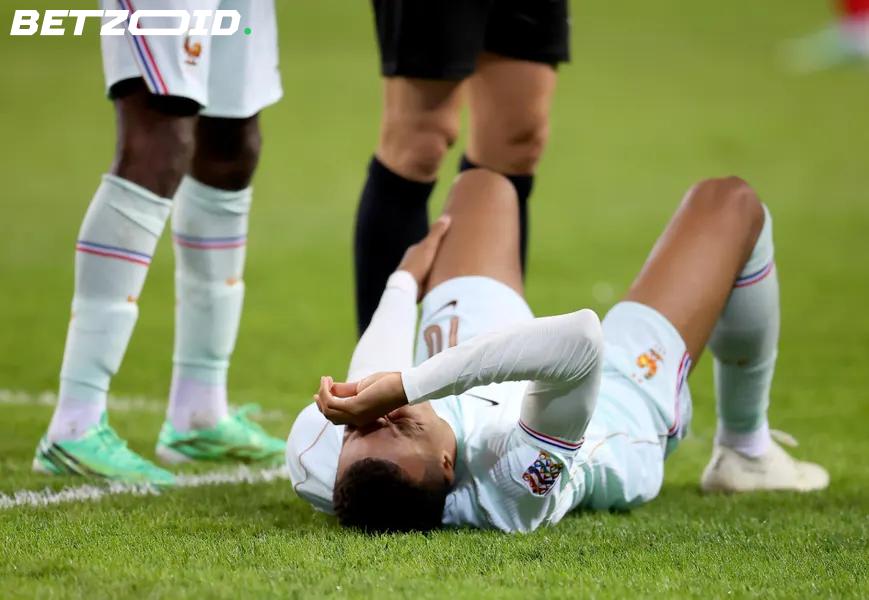
The September international break was meant to pass without incident for Real Madrid. Instead, the club came out of it with Kylian Mbappé sidelined after a scare with France, Ibrahima Konaté injured in training before he'd even played a minute under his national team's new coach, and Federico Valverde nursing a knock from a derby that stopped him leaving the country at all.
None of those injuries happened on Real Madrid's own physio table, under the club's own protocols, or on its own schedule. Real Madrid coach José Mourinho summed up the frustration ahead of this unusually long, three-week September break: "International matches worry me, it's a long time and I'm less concerned about players who go with their national teams to play than those who are selected but don't play, those are the ones I worry about the most."
Beyond simply losing players to long-haul travel, clubs lose control over training routines, nutrition and workload management during these windows. Injuries during or shortly after international duty have become commonplace, and increasingly it's an issue that shows up on the balance sheet.
The Cost for European Clubs
According to the latest Men's European Football Injury Index from insurance broker Howden, player injuries have cost European clubs €3.45 billion ($3.94 billion) over the past five years.
The research found Paris Saint-Germain reported the highest injury cost of any club, with Real Madrid ranked second and Barcelona third. That ranking predates this season's injury list, but it reflects a structural exposure that Real Madrid carries as one of the most heavily-insured, highest-wage squads in the world, separate from any individual player's bad luck in a given month.
What Actually Makes Up the Bill
The most direct cost of an injured player is covering their wages during the absence. A club keeps paying full salary whether a player is on the pitch or in a scan room, meaning for top earners it's a fixed cost with zero output attached.
FIFA's Club Protection Program is designed to reimburse clubs when a player is injured on international duty, but the scheme has caps and conditions that rarely cover the full commercial value of a Galáctico-level absence. The gap between what FIFA pays out and what the injury actually costs the club is where most of the real exposure sits.
On top of wages comes replacement cost, since squad depth has a price and a club either accepts a drop in quality or goes to the market, where emergency cover in windows like January is rarely cheap or efficient. Then there's the sporting cost: points dropped because a first-choice player is missing can affect league position, which affects Champions League qualification, which in turn affects broadcast and prize-money revenue worth millions.
When It Goes Much Further
While Real Madrid might count itself fortunate that its recent absentees are out for a couple of weeks at most, other clubs have faced far longer-term damage. Bayern Munich's Alphonso Davies tore his ACL just 12 minutes into a CONCACAF Nations League third-place match against the USMNT in March 2025, having already played all 90 minutes of a semi-final defeat to Mexico three days earlier.
The injury required surgery and around six months out, and the fallout went beyond the medical side. Davies' agent publicly accused Canada head coach Jesse Marsch of pressuring an unfit player into featuring, while Bayern's director of sport, Max Eberl, said in a statement: "during international breaks there's always the risk that players will return injured, this time it's hit us particularly hard".
Another case with lasting institutional impact involves Abdelmajid Oulmers. The Moroccan midfielder, then playing for Belgian club Royal Charleroi, suffered a serious injury on international duty in 2004 despite the club having explicitly warned FIFA beforehand that he was already carrying a knock. Royal Charleroi sued FIFA for compensation, and the legal pressure that followed directly led to the creation of FIFA's Club Protection Program in 2012, the scheme that major clubs still rely on today whenever a player returns from international duty injured.