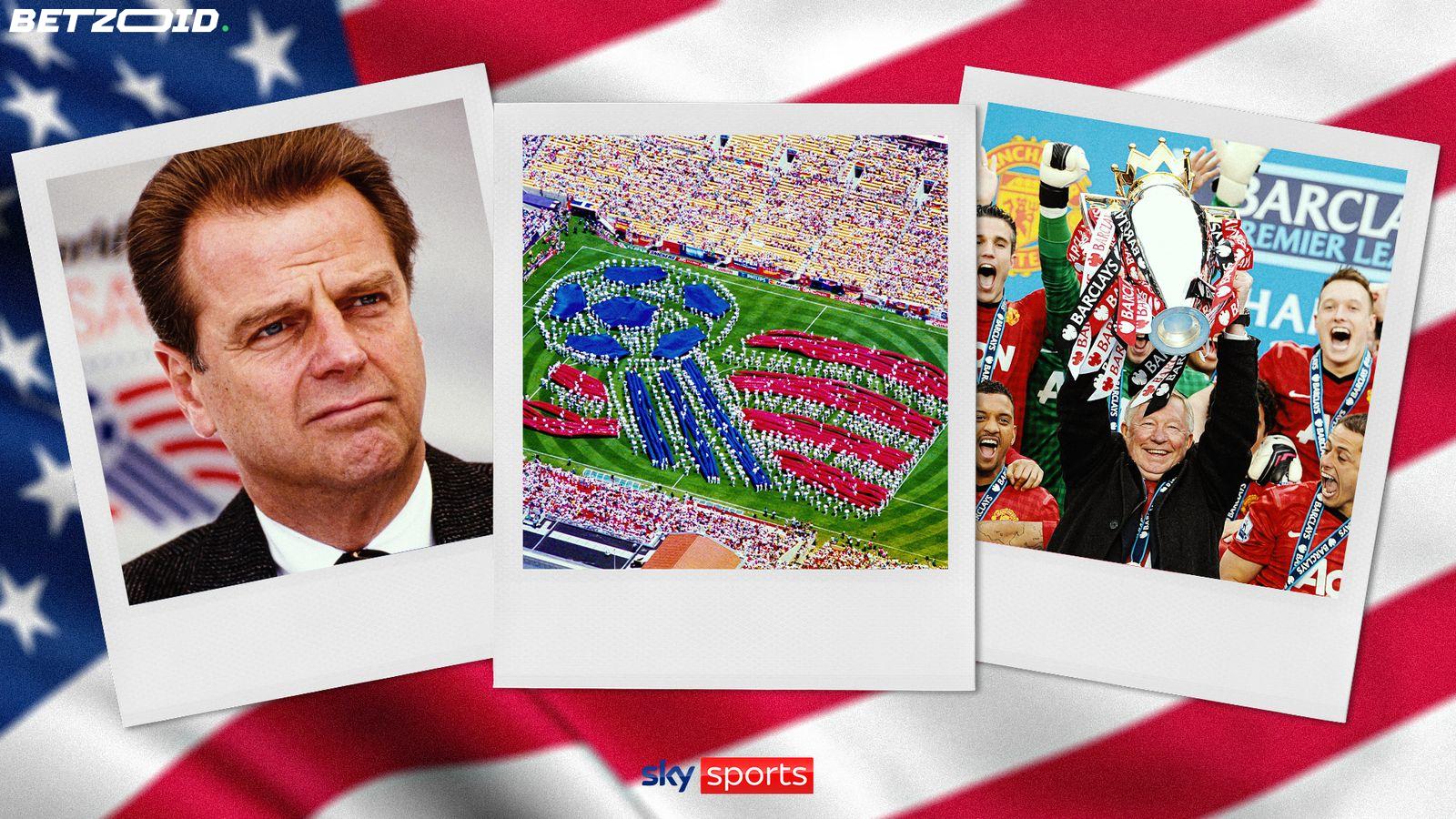
"Taking the World Cup to the United States is like taking the World Series to Brazil." That was a FIFA delegate's verdict in 1990. Thirty-two years later, football has overtaken baseball to become America's third-most popular sport. The jilted delegate had a point at the time — he just couldn't see what was coming.
Alan Rothenberg could. When he was elected chief of the US Soccer Federation in the summer of 1990, he was operating out of a portable cabin in Colorado Springs with six full-time staff and a World Cup to host in four years. The federation was, by his own admission, "essentially a volunteer organisation." The domestic top flight had been dead for five years. The national team had missed nine of the previous ten World Cups.
The pitch was simple even if the execution wasn't: sell the World Cup as a must-see event to a country that had never cared about football, and use the momentum to build everything else around it. "Americans love a big event," Rothenberg told Sky Sports, drawing on his experience organising the 1984 Los Angeles Olympics. "The inspiration was to convince the American public that this was an event they couldn't miss."
Vegas draws, Diana Ross, and 90,000 people watching Colombia vs Romania
The campaign started six months before a ball was kicked — with a World Cup draw in Las Vegas hosted by Robin Williams, who spent the evening cheerfully calling Sepp Blatter "Sepp Bladder." Barry Manilow and Julio Iglesias performed. Oprah Winfrey introduced the opening ceremony. Diana Ross missed a penalty from three yards in front of a goal that split open anyway.
It was deliberately, unapologetically American. And it worked.
More than 90,000 turned up to the Rose Bowl to watch Colombia against Romania in just the tournament's second game. The US beat Colombia to reach the knockouts — their first World Cup win since 1950 — before losing 1-0 to eventual champions Brazil in a defeat that somehow felt like a moral victory. The final attendance figure: 3.6 million tickets sold across the tournament. It remains the best-attended World Cup in history, despite featuring fewer matches than every edition since.
The financial proof of concept was enough to launch MLS two years later, though the league's early years were messy. Shootouts to settle draws. A 45-minute countdown clock. Gimmicks designed to Americanise the game that managed only to alienate the fans who already loved it while failing to attract new ones. The league was drifting toward the same graveyard as the NASL until the US national team's run to the 2002 World Cup quarter-finals gave it an unexpected lifeline. The gimmicks were scrapped within a year. Attendances climbed.
The Premier League changed everything
Even then, the growth was gradual and uneven. Roger Bennett — co-host of Men In Blazers and a Liverpool native who moved to the States around the time of '94 — watched the slow conversion up close. At the 2006 World Cup, ESPN hired a baseball commentator who introduced "Charlie Beckham" to viewers. That actually happened.
"America has fallen in love with football World Cup to World Cup," Bennett says. "But there was a sizeable, enormous community of football lovers — they'd just never really been woven together."
What finally wove them together, according to Bennett, wasn't another tournament. It was a television rights deal. "When they started seriously broadcasting the Premier League in 2013, it changed everything. Americans, for the first time, were able to follow along with the greatest football viewing experience."
The logic tracks. A generation of American fans connected to Liverpool from Los Angeles or Arsenal from Alabama through the internet — and then the live broadcasts gave them something to anchor to every weekend. MLS crowd attendances have topped 11 million in both the 2024 and 2025 seasons, up more than 50 per cent over the last decade. The league that was running countdown clocks in the 1990s now has fans flying to England to watch Premier League games in person.
For anyone tracking the betting markets around the 2026 World Cup — co-hosted by the USA — the context matters. American interest in this tournament won't need manufacturing the way Rothenberg had to manufacture it in 1994. The infrastructure, the fanbase, and the appetite are already there. "I don't think the American public need more convincing," Rothenberg says. The question now is just how high the ceiling goes.