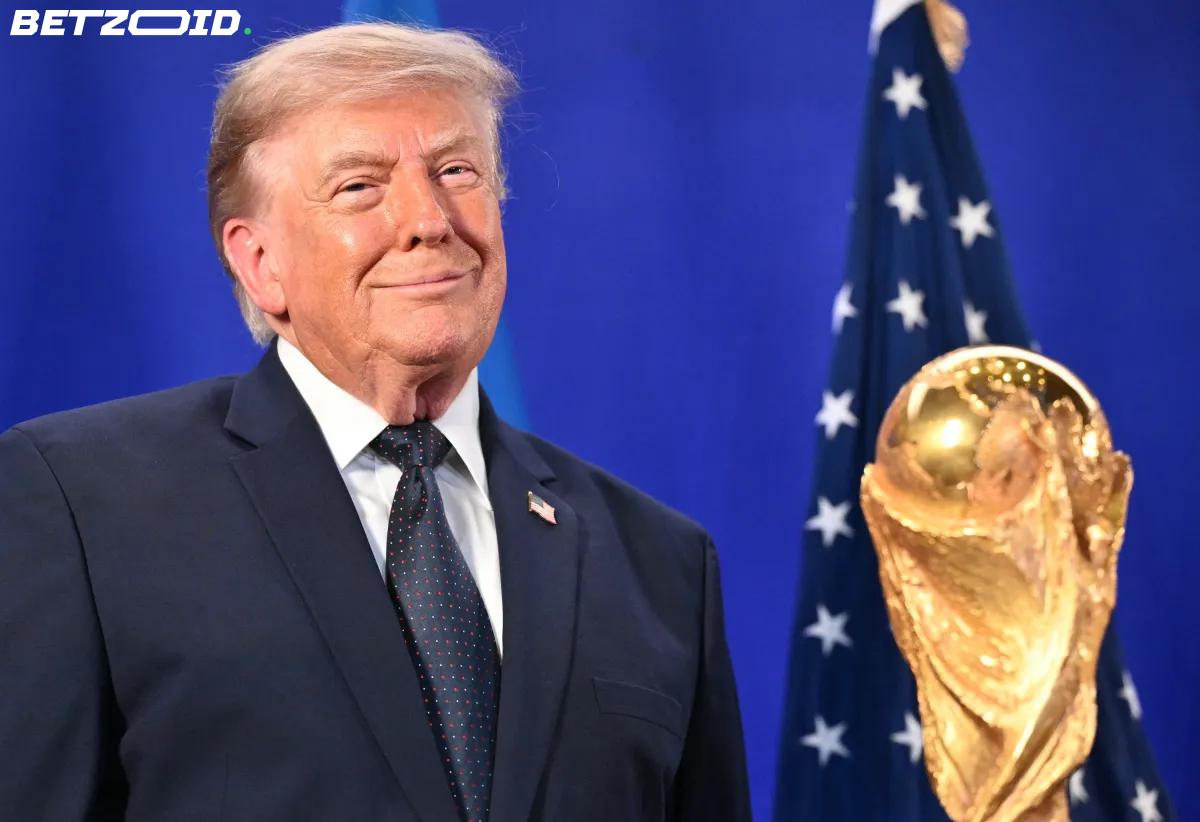
Six weeks ago, the 2026 FIFA World Cup looked like a slow-motion car crash. By Sunday evening, Donald Trump will be walking onto the MetLife Stadium pitch to hand the trophy to either Spain or Argentina — and almost nobody saw that image coming when the tournament kicked off.
The pre-tournament narrative wrote itself: a 48-team field, immigration crackdowns, eye-watering ticket prices, and a FIFA president publicly cosying up to the White House. Sepp Blatter, of all people, told fans to stay home. Travel attorneys issued warnings. Hotels in host cities reported soft bookings. One analysis called it a "giant money-grabbing exercise that had alienated fans before the first ball had even been kicked."
None of it materialised.
Record crowds, record ratings, record goals
Through the first 100 matches, 6,527,410 spectators passed through the turnstiles — more than the combined attendance of the 2018 and 2022 World Cups. Seats filled to 99.7 percent capacity. The 1994 attendance record, long considered untouchable, fell before the group stage was even finished. A single day in June drew over 426,000 fans across venues. That's not a soft launch. That's a statement.
Television followed. Fox's English-language broadcasts averaged over 5 million viewers across the group stage — the highest in U.S. history — while Telemundo hit 4.6 million, a 122 percent jump on 2022. The U.S. opener against Paraguay drew 18 million on Fox platforms and another 9.5 million on Telemundo simultaneously. Argentina's semifinal win over England pulled 15 million on Fox alone, the largest World Cup semifinal audience in English-language American TV history.
For anyone pricing futures or tournament outright markets, those numbers matter beyond the sport itself — they signal a commercial juggernaut that has locked in American audiences in a way no previous World Cup managed.
The football itself earned those viewers. The tournament averaged 2.94 goals per game through the quarterfinals, the highest scoring rate since Mexico 1970. Eleven comeback wins broke the all-time record. Messi, Mbappé and Haaland each scored at least seven goals — the first time in World Cup history three players hit that mark in the same edition. Cape Verde's 40-year-old goalkeeper Vozinha held Spain scoreless in the group stage and nearly eliminated Argentina in the round of 32. Norway knocked out Brazil. Scotland turned Boston into a tartan city and pushed local beer sales up 50 percent.
The expansion to 48 teams was supposed to dilute the product. Instead it gave the tournament twice the underdogs and, somehow, twice the drama.
The Balogun controversy that won't go away
Not everything ran cleanly. Iran and Haiti, both qualified, were barred under Trump's travel restrictions. Visa delays kept families of players and staff out of the country. FIFA's cosy arrangement with the White House — complete with offices inside Trump Tower and a newly minted "Peace Prize" handed to Trump by Gianni Infantino at the Kennedy Center draw — drew ethics complaints from European politicians and human rights organisations.
Then came the Folarin Balogun red card. The American forward was sent off against Bosnia and Herzegovina on July 1. Trump personally called Infantino to request a review. Four days later, FIFA overturned it — the first World Cup red card reversal since 1962. Belgium's coach called it an April Fool's joke. Belgium's foreign minister said it "raises many questions." The EU's sports commissioner called it flat-out wrong.
The irony that Balogun — born in Brooklyn, eligible for the U.S. precisely because of the birthright citizenship protections Trump's administration tried to dismantle — was the beneficiary of this intervention was apparently lost on no one except the people making the decision.
Germany's football federation declined to sign a FIFA letter backing Infantino's reelection. No rival candidate has emerged, and FIFA's voting structure means European dissent rarely translates into lost votes — Europe and South America together hold only 65 of 211 ballots. But Germany's refusal is a signal. Infantino heads into the March FIFA Congress with a cloud over him that no attendance record fully disperses.
Trump, meanwhile, walks into Sunday's final carrying none of that baggage. The raids around stadiums never came. The empty seats never came. The boycott movement never came. What came were the records, the goals, and a genuinely absorbing tournament that will be debated as one of the best in the competition's history. Trump didn't coach a team or score a goal, but his name is on the scoreboard regardless.
"It happened on his watch" — and in politics, that's the only line on the trophy that ever really matters.