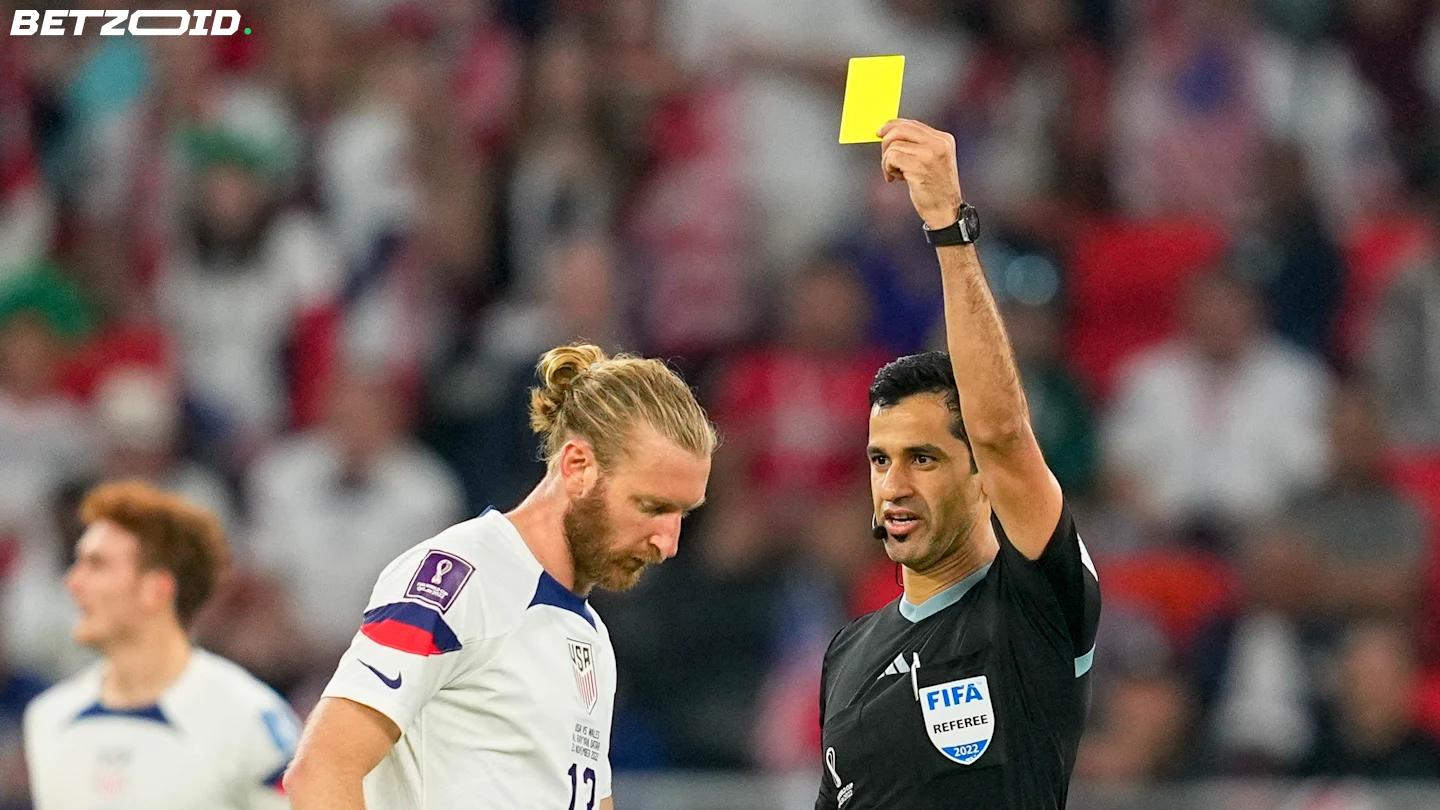
FIFA is closing in on a rule change that could reshape how teams approach discipline at this summer's World Cup — and it's one of the more sensible tweaks the governing body has floated in years.
The proposal, set to be discussed at the FIFA Council meeting in Vancouver on Tuesday, would wipe yellow cards at two points in the tournament: at the end of the group stage, and again after the quarterfinals. Currently, there's only one amnesty — post-quarterfinal — meaning players can miss the round of 16 and the quarters themselves through accumulation. With the tournament now expanded to 48 teams and a brand new round of 32 on the schedule, the old single-amnesty model would leave even more knockout games exposed to suspension-enforced absences.
Two bookings still triggers a ban. Red cards still mean you're watching the next one from the stands. This isn't a get-out-of-jail-free card — it's a structural fix to a problem that got worse the moment FIFA added another knockout round.
Why it actually matters for the knockout stage
Think about what the old rule produced: cautious football in the latter group games, managers rotating players sitting on a yellow, star names missing round of 16 ties for a foul committed in a dead rubber. None of that is good for the product. A World Cup that loses its best players to paperwork rather than performance doesn't serve anyone — not fans, not broadcasters, and certainly not the betting markets where player availability directly shapes the odds on everything from first goalscorer to match result.
The expanded format amplifies the stakes. There are now four knockout rounds before the final, not three. Without a second amnesty, the accumulation window is longer, and the probability of a Mbappe or a Vinicius Jr. sitting out a quarterfinal over two soft yellows goes up considerably.
What else is on the table in Vancouver
The yellow card discussion is one item on a packed agenda. Over 1,600 delegates are in Vancouver this week for a FIFA Council session Tuesday and the full FIFA Congress on Thursday, where all 211 member associations gather.
- Russia's potential return to international football is reportedly on the table
- Future World Cup host selections will be discussed
- Additional rule changes could be tabled, with Canada's domestic league serving as FIFA's testing ground for Football Video Support and Arsène Wenger's new 'daylight' offside law
Vancouver itself hosts seven World Cup games this summer, including two matches for co-hosts Canada, a round of 32, and a round of 16 tie. The city is essentially doing double duty — governance hub one week, tournament venue the next.
The second amnesty hasn't been rubber-stamped yet, but if the FIFA Council signs off Tuesday, it goes to Congress Thursday. From there, it would take effect this summer. The 2026 World Cup is already the most structurally different tournament in the competition's history. Keeping the best players on the pitch for the games that matter most seems like the least FIFA can do.