Barcelona spent €185 million this summer, missed out on the striker they actually wanted, and still scored 12 goals in their first three games. That's either a testament to Hansi Flick's system or a sign that the squad was already good enough — probably both.
The window closed on September 2 with six new first-team additions and one very loud absence. Julián Alvarez stayed at Atlético Madrid, Laporta dragged his feet on alternatives, and the club scrambled at the 11th hour. Some of what they landed was excellent. One of it was not.
The Good: Rodri Is the Signing of the Summer
Start with the headline. Rodri choosing Barcelona over Real Madrid — citing their "way of understanding football and their values" — is the kind of transfer that reshapes a title race before a ball is kicked. Madrid expected him. They didn't get him. That alone makes it significant.
But beyond the rivalry dimension, this is simply a brilliant piece of business. Rodri is the best controlling midfielder in world football right now. His Golden Ball-winning displays as Spain's captain this summer buried any lingering doubts about his post-ACL recovery. He's 30, fully fit, and walking into a Barcelona midfield that needed exactly what he provides. Even when Frenkie de Jong returns, Rodri improves the team. Grade: A.
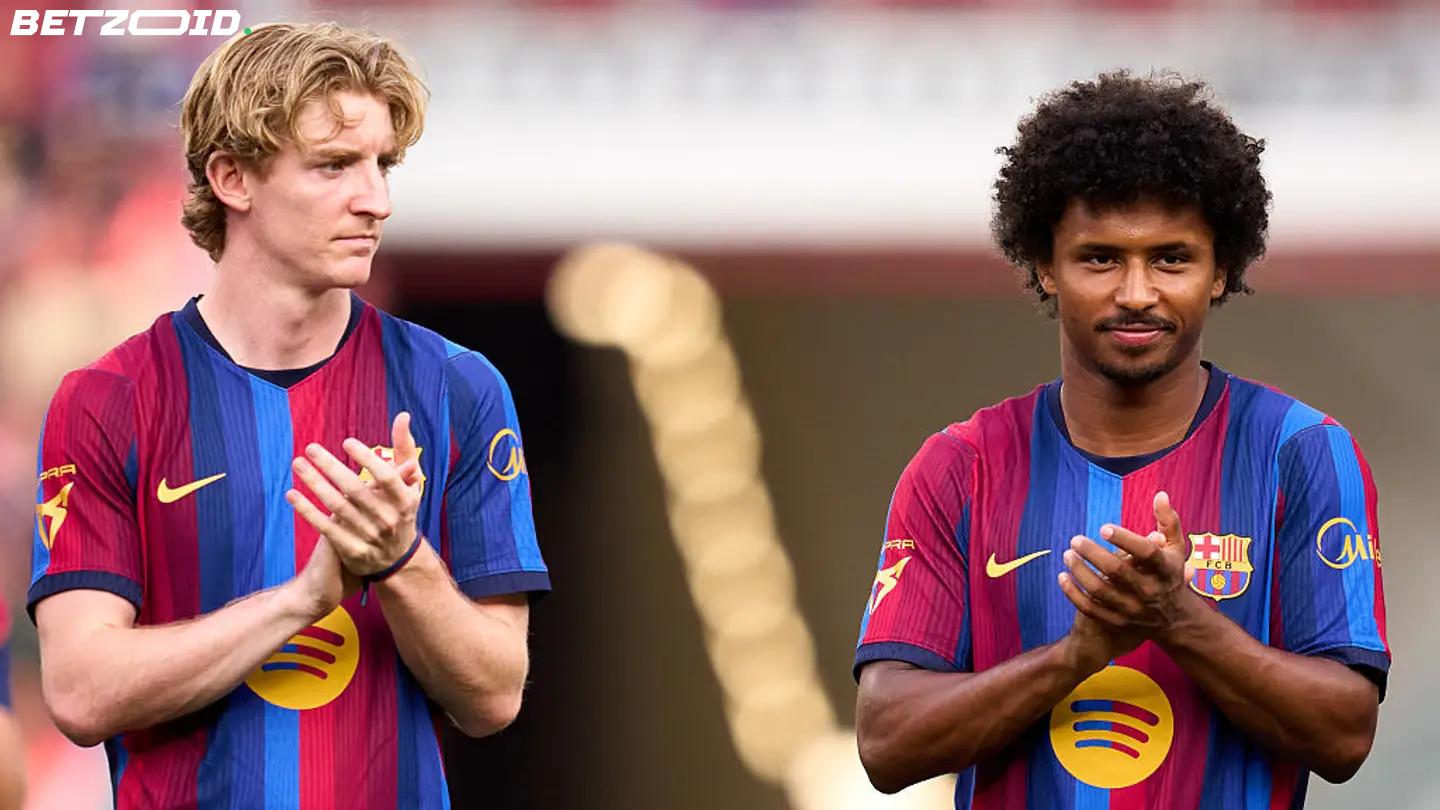
Anthony Gordon has been the other early success story. Barcelona chose him over renewing Marcus Rashford — who contributed 29 goals and assists last season — and paid considerably more for the privilege. Early signs say it was the right call. Gordon is younger, harder-working, and more versatile, and the Camp Nou already loves him. He bagged a backheel assist in the 5-2 win over Rayo Vallecano and supporters are already chanting his name. Mundo Deportivo called him the "Camp Nou's new idol." Three games in, his odds of winning over a fanbase look very short indeed. Grade: A.
The Filler: Cancelo, Livakovic and Adeyemi
Joao Cancelo makes sense as a permanent signing after his loan spell in the second half of last season. He's 32, experienced on both flanks, and provides cover that Alejandro Balde and young Xavi Espart simply can't match yet. Not a gamble. Not a statement. Just solid squad management. Grade: B+.
Dominik Livakovic nearly didn't make it into the 25-man squad at all — Barcelona had to make financial adjustments on deadline day just to register him. He's a capable penalty specialist who will barely play behind Joan García. The fact that his inclusion was this complicated for a backup keeper is slightly embarrassing, but the signing itself is fine. Grade: B.
Karim Adeyemi is harder to read. The 24-year-old was supposed to be Germany's next elite wide forward — that ceiling now looks lower than once advertised. Dortmund barely broke even on him after four years, which says something. He'll serve as backup to Lamine Yamal, bring pace off the bench, and hope that Flick — who gave him his Germany debut in 2021 — can unlock what the Bundesliga couldn't. Possible. Not guaranteed. Grade: C+.
The Problem: Gabriel Jesus Shouldn't Be Here
Gabriel Jesus is what happens when a club spends an entire summer convinced one deal will happen and then wakes up on deadline week with no striker. He has finished behind "Own Goals" in Arsenal's scoring charts in each of the last three seasons. That's not a quirk — it's a pattern.
He is not a bad footballer. He might rediscover some form in Spain. But he is almost certainly not the No. 9 Barcelona needed, and the only reason he's here is that Barça ran out of better options because they refused to look for them early enough. That's a sporting director problem as much as a player problem. Grade: D.
- Rodri — A
- Anthony Gordon — A
- Joao Cancelo — B+
- Dominik Livakovic — B
- Karim Adeyemi — C+
- Gabriel Jesus — D
Twelve goals in three games means none of this is an immediate crisis. But if Barcelona fall short in Europe again this season, the Alvarez saga — and the panic that followed — will be the first thing people point to.