"This ban has not achieved anything, it has just created more frustration and hatred." That's Gianni Infantino — the FIFA president — talking about Russia's football ban. The same Russia whose teams have been locked out of international competition since the 2022 invasion of Ukraine. The same Russia whose president awarded Infantino the Order of Friendship in a Kremlin ceremony.
The timing of that opinion matters. Infantino is facing his re-election next spring and, while he's currently running unopposed, the pressure from UEFA and others is building fast. Every vote is suddenly worth counting. And Russia still has one.
Membership intact, influence preserved
FIFA never revoked Russia's membership after imposing the ban. The Russian Football Union can attend FIFA Congress, cast ballots in presidential elections, and potentially bring a small bloc of geopolitically aligned nations with it. That's not a technicality — in a tight election, bloc voting is how influence is bought and kept.
The RFU declined to publicly confirm whether it has endorsed Infantino for re-election. Given the history — Putin personally decorated Infantino at the Kremlin, to which Infantino responded by promising "fruitful cooperation" on behalf of "four or five billion people" — the silence probably tells you enough.
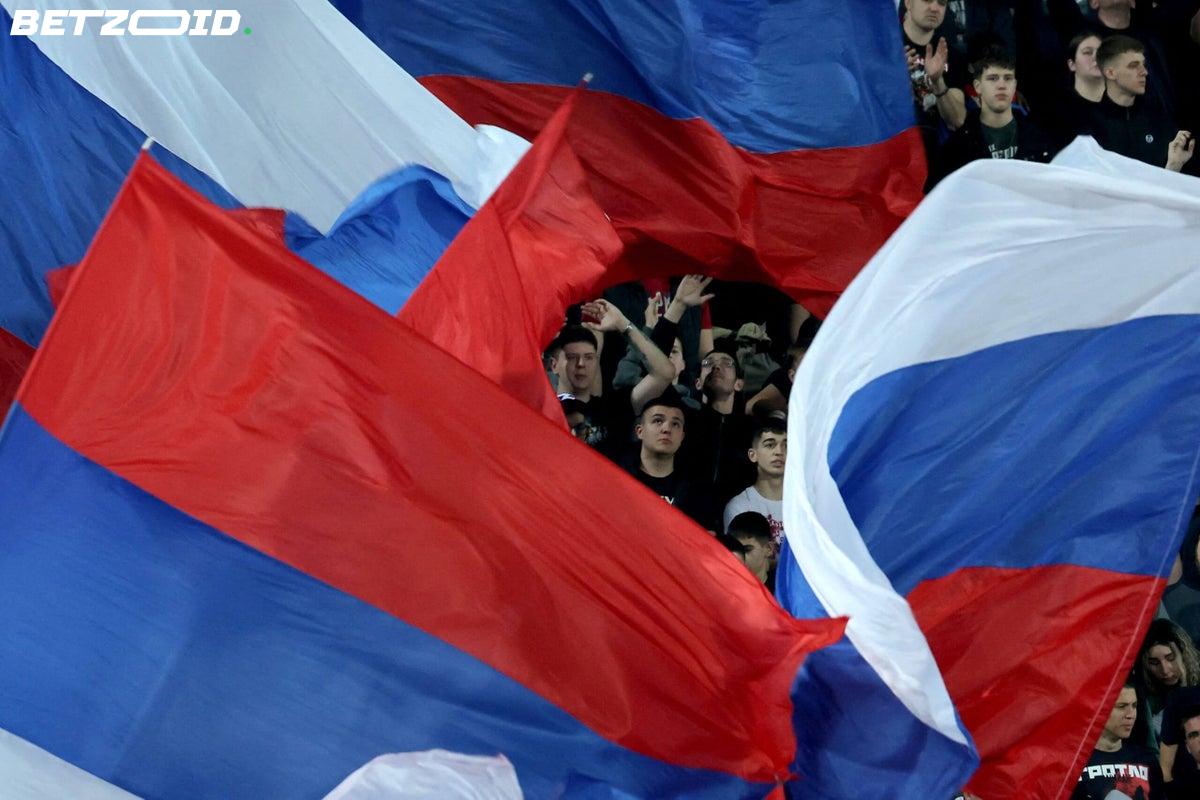
Russia hosted the 2018 World Cup four years after annexing Crimea and sending forces into Donetsk and Luhansk, displacing Shakhtar from their home ground in the process. The FIFA Beach Soccer World Cup followed in Russia in 2021. Then came the full invasion, and suddenly FIFA found the line it was willing to draw.
The partial thaw that suits everyone except Ukraine
Except the line keeps shifting. In 2023, FIFA and UEFA quietly lifted bans on Russian Under-17 teams, allowing them back into international tournaments under a neutral name, with no flag, no anthem, no kit. A compromise that satisfied nobody completely but kept Russia inside the tent.
Infantino has now gone further, suggesting publicly that he wants to explore ending the senior ban entirely — framing it as a matter of principle, arguing that countries should "never" be banned for the acts of their political leaders. He said this, notably, while FIFA was resisting calls to ban Israel over Gaza.
The Russian Football Union joined UEFA's unanimous statement last week opposing Infantino's plan to sell a stake in FIFA competitions — a rare alignment with the European bloc — but issued no individual statement on the matter. Whether that represents genuine solidarity with UEFA or calculated fence-sitting ahead of an election is a question worth sitting with.
Anyone pricing FIFA presidential election dynamics into their thinking should note this: Infantino standing unopposed doesn't mean he stands unchallenged. The question of whether a rival candidate emerges depends heavily on the vote count behind the scenes. Russia's vote, and the votes it can carry, remain part of that calculation — which is precisely why Infantino's position on the ban has shifted in the direction it has.