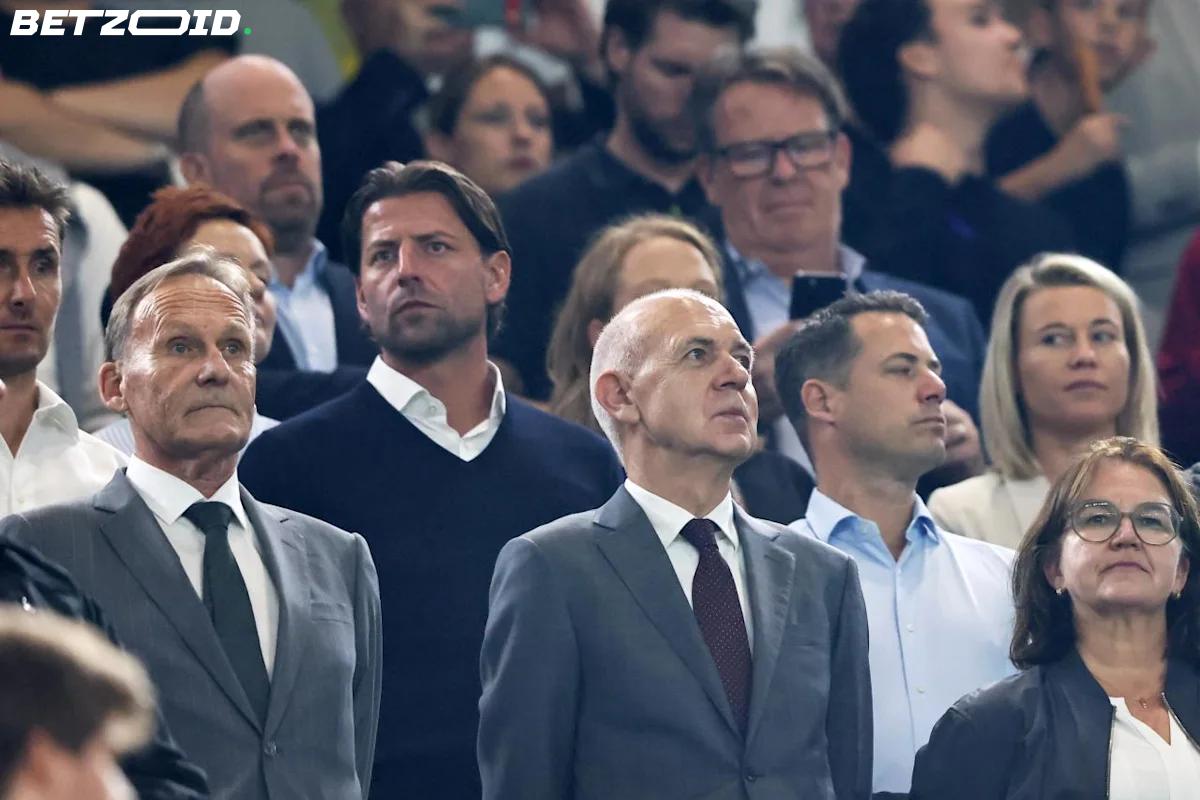
The 50+1 rule isn't going anywhere. Germany's Federal Cartel Office (Bundeskartellamt) ruled on Wednesday that the ownership regulation is permissible under antitrust law — and immediately, every major Bundesliga club had something to say about it.
Most of what they said was contradictory.
Hans-Joachim Watzke, DFL chairman and Borussia Dortmund president, captured the tension best: "It is a significant step that the Federal Cartel Office raises no fundamental concerns regarding the rule. But a rule only makes sense if it applies equally to everyone. I remain skeptical." That last line is doing a lot of work. The ruling validates 50+1 in principle while pointing directly at the clubs that have long operated outside it — and that's where things get complicated.
The Exceptions Are the Whole Argument
Bayer Leverkusen, VfL Wolfsburg, RB Leipzig, and Hannover 96 were all singled out in the ruling as cases requiring closer scrutiny. Bayer AG earned their exemption in 1999 after decades of financially backing Leverkusen. Volkswagen AG followed two years later at Wolfsburg. TSG Hoffenheim got theirs in 2015, though Dietmar Hopp returned his shares to the club in 2023, effectively ending that saga.
Leverkusen's managing director Fernando Carro said the club is "carefully examining the decision" and sees a "promising starting point for a long-term solution." Wolfsburg's statement was more pointed — Volkswagen AG explicitly reserved the right to take "appropriate further steps" to protect shareholder interests. That's not the language of a club ready to quietly comply.
RB Leipzig, which runs one of the most tightly controlled ownership structures in European football with just 22 voting members, said they're open to constructive exchanges with the league. That's the most you'll get from a club that has made restriction of membership an actual strategy.
Hannover 96 and Martin Kind — who has spent years trying to consolidate control of the club — weren't hiding their frustration, questioning why it took the Bundeskartellamt eight years to land on this conclusion.
What Actually Changes
In a word: very little, immediately. The ruling is non-binding, and the exceptions aren't being revoked overnight. But it does reset the pressure on clubs like Wolfsburg and Leverkusen to demonstrate compliance — or at least the intent to work toward it.
For the broader Bundesliga landscape, 50+1 surviving intact keeps German football's ownership model meaningfully different from the Premier League or Ligue 1. Whether that remains a competitive advantage or a structural constraint is a debate that won't end with this ruling.
Schalke 04 and 1. FC Köln both released statements supporting the decision. BVB went further, calling 50+1 a foundation of "club identity, co-determination and a vibrant fan culture." Carsten Cramer, BVB spokesperson, was unambiguous: "Members and fans belong at the heart of the club."
Watzke's skepticism might be the most honest read of the room. The rule survived. Enforcement is another matter entirely.