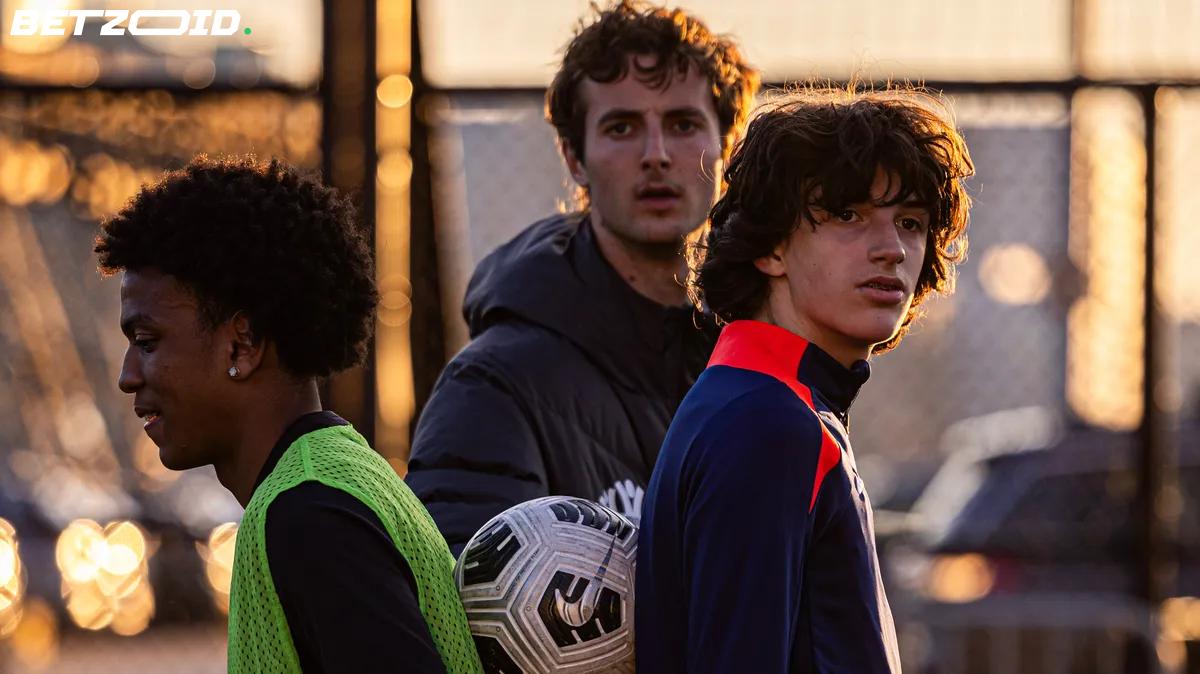
"It's like, wow, this went from 0 to 100 really quick." That's Keanu Stingone, now 21, describing the moment he quit a professional academy at age 12 — burned out, hollowed out, done. His story is not the exception in the United States. It's practically the template.
Stingone grew up playing grassroots soccer in Austria, where the philosophy is developmental, low-pressure, and built around enjoyment. He moved back to the States and found the opposite: cutthroat academies, intense competition for 8-year-olds, and a system that treats winning as the point rather than the byproduct. Europe nurtures. America culls.
A system built on who can pay, not who can play
Team USA's early World Cup exit has cracked open a debate that's long overdue. Landon Donovan put it plainly: the American system doesn't find the most talented kids. It finds the cream of the pool of those who can afford to pay for clubs. His own 8-year-old son was pushed down to a B team — separated from friends he'd trained alongside for years — in the name of development. "I was crying in bed with my son," Donovan said. "And he just said to me, 'I just wanna play with my friends.' And it broke my heart."
That's the rot at the centre of American soccer. The financial barrier keeps hidden gems out entirely, while the kids who do get in are pressured into performing before their bodies and minds are ready. Millions are quitting at 13 or 14, not because they lack talent, but because they're sick of the pressure. Every kid who walks away is a player the national team will never see.
Meanwhile, Norway built a World Cup quarterfinal run on a low-cost, high-participation model. Erling Haaland came through a system built on equal playing time and enjoyment — not on which family could afford the premium academy. The results speak for themselves, even if American soccer administrators aren't listening.
Peer mentorship over pressure
Brando Babini, 21, launched Youth 4 Youth FC at 16 after recognising what he'd been missing throughout his own academy journey: someone just a few years older who'd already been through it. Not a parent guessing. Not a coach with a financial stake in the outcome. A peer.
"I was unguided through the whole process," Babini says. "My parents never really understood what was happening. I didn't have a big brother who played soccer, and that's exactly what I was missing."
The organisation now works with around 1,000 players aged 10 to 18 across New York City, the Northeast, and Dallas. It also runs a free college showcase through a Nike partnership, targeting the overlooked kids — the ones who'd never get in front of college coaches through the traditional pay-to-play pipeline. Babini offers full or partial scholarships to make the service accessible. The model isn't perfect, but it's attacking the right problem.
His advice for parents of young players is disarmingly simple: stop asking what the next move is at age 9. Keep playing. Don't chase the track. "Make sure they love the sport, first and foremost, and then make sure they're getting better," as Donovan put it. The winning obsession — the B teams and A teams and tryouts for children who haven't lost their baby teeth — can wait until high school. Before that, it does more damage than good.
Stingone eventually found his way back to soccer through his high school team, got spotted by a scout from Manhattanville at a game where they'd come to watch someone else, and now plays college soccer while helping coach kids through Youth 4 Youth. A happy ending — but only because he stumbled back in. Most kids who burn out at 12 don't get a second chance.
- Keep kids playing with their friends for as long as possible — social bonds are what keep them in the sport
- Forget about winning until high school; development and enjoyment come first
- Extra touches matter more than club prestige — a kid who practices alone against a wall will outgrow one who only trains in sessions
- Find a mentor who has navigated the system recently, not a parent guessing from the outside
- Don't quit without knowing what you're quitting for — the secondary benefits of staying in sport are real
"There's a reason these European and South American teams are always better than us," Stingone says. "They find the hidden gems. They find the players who can't afford clubs, but they see the potential and they invest in them young." Until American soccer reckons seriously with that gap — financial, philosophical, structural — the World Cup will keep ending in the round of 16.