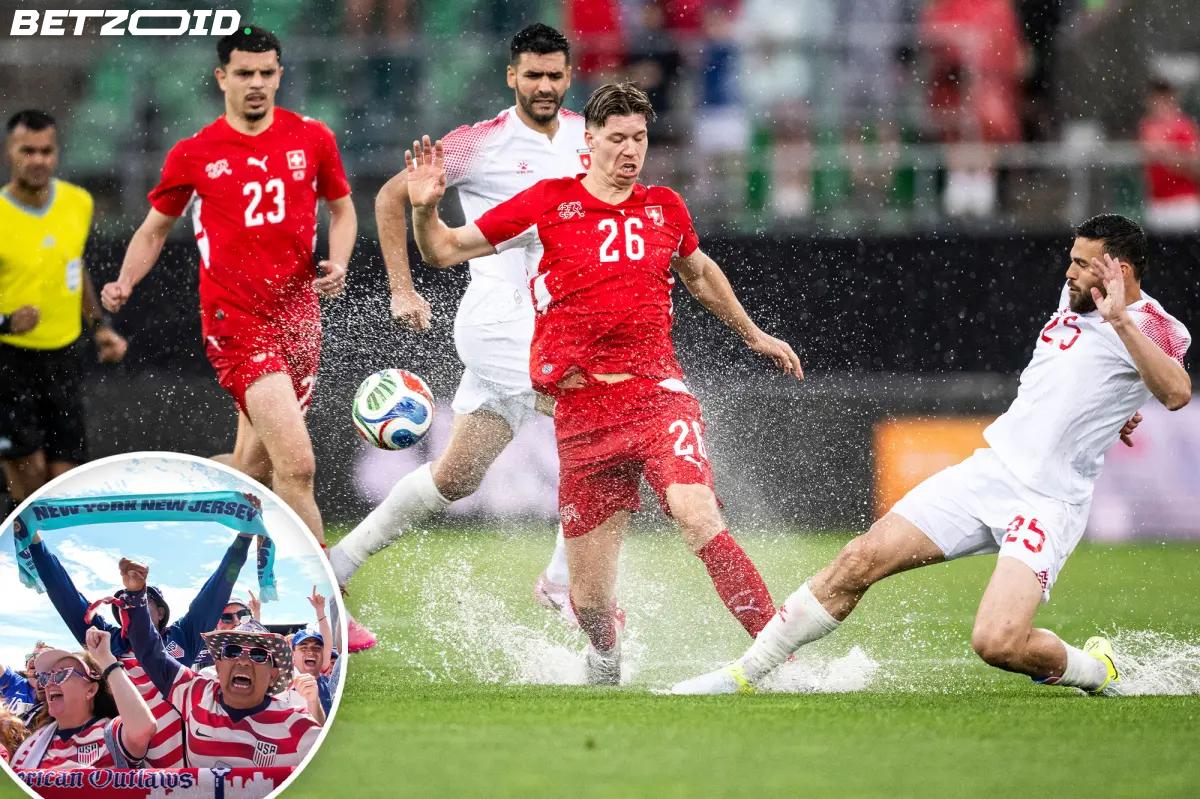
Thirty-two years ago, the US hosted a World Cup and the country mostly shrugged. Soccer was the sport kids played Saturday mornings before the real stuff — baseball, football — took over. The 1994 tournament was a curiosity. What's happening now is something else entirely.
According to Nielsen, Americans consumed 79.8 billion minutes of soccer in 2025 alone. To put that in context: the most-watched soccer moment in US history at the time of the 1994 World Cup was a July 4 knockout match between the US and Brazil that drew 11 million viewers. That was the ceiling then. It barely registers as a data point now.
The numbers that matter for 2026
The 2026 FIFA World Cup doesn't just arrive into a growing market — it lands in one that's already combustible. Nielsen found that 33% of Americans expect their soccer interest to increase over the next 18 months. Among existing fans, that figure is 64%. That's not a passive audience waiting to be convinced. That's an engaged base ready to scale.
Nearly 80% of American soccer supporters use social media for their sports content, well above the general population. Millennials and Gen Z are driving it — streaming matches, scrolling highlights, playing FIFA, ordering delivery to watch games at home. The sport has embedded itself into a daily content loop that no other sport has cracked quite the same way with younger demographics.
MLS launched two years after the 1994 tournament as a direct legacy of that World Cup. In 2026, the league is nearly three decades old and operating in a landscape its founders couldn't have imagined. The consumer market that surrounds it — betting, streaming, sponsorship, merchandise — is now one of the most valuable in global soccer.
Los Angeles is the real story
Among the 11 US host cities, Los Angeles stands apart. The region has an estimated 5.6 million soccer fans — 43% of the local population. Angelenos alone watched roughly 4 billion minutes of soccer in 2025, nearly double New York's 2.5 billion despite New York having a larger overall population.
La Liga, Liga MX, the Champions League, the Premier League — LA consumes all of it, which reflects the city's multicultural makeup better than any demographic report could. Some 83% of LA-based soccer fans use Instagram for their sports content, well above the national average. That concentration of engaged, diverse, digitally active fans is exactly why FIFA gave the city eight matches at SoFi Stadium in 2026, including the quarterfinals.
In 1994, the Rose Bowl hosted the final. In 2026, LA hosts the quarterfinals at a 70,000-seat stadium built for spectacle. The upgrade is not just logistical — it's a statement about where the American soccer market sits.
The real question isn't whether America cares about soccer anymore. That debate ended somewhere around the 20-billion-minute mark. The question is how much of that appetite converts into a lasting commercial and cultural shift once the tournament ends — and whether MLS and the broader soccer ecosystem can hold the audience that the World Cup is about to hand them.