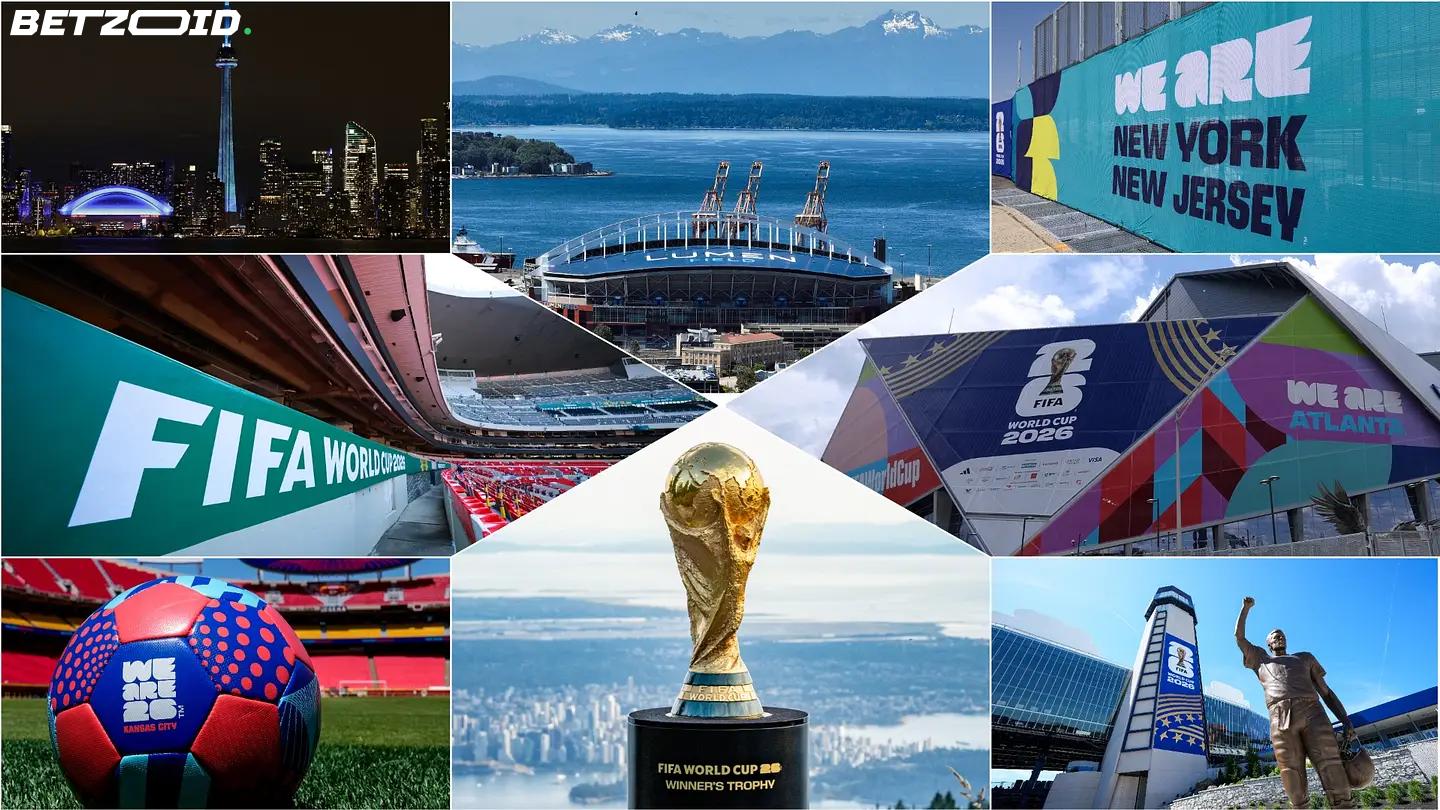
Vancouver is the best city at the 2026 World Cup. It's not particularly close. A downtown stadium, a direct subway to the airport, Canadian dollar pricing that saves European and American fans real money, and two Canada home matches — it checks every box. The rest of the 16 host cities across the U.S., Mexico, and Canada? Considerably more complicated.
With 48 teams and matches spread across three countries, this is the largest World Cup in history. The group stage kicks off June 11 in Mexico, the final lands July 19 in New Jersey, and in between, fans will navigate everything from world-class transit systems to stadium car parks sitting in the middle of a swamp.
The cities that actually work
After Vancouver, Seattle earns its place near the top. Lumen Field — reputedly the loudest venue in American sport — sits within walking distance of downtown, has public transit access, and offers a mild climate that the Houston and Miami crowds can only dream about. The match slate is thin, but the experience isn't.
Toronto brings something no other city can offer: the world's most multicultural population watching the first 48-team World Cup. The stadium is 40 minutes on foot or 10 minutes by train from downtown, capacity has been expanded to 40,000 for an intimate atmosphere, and the fan zones stack up right next to the ground. If Canada goes on a run, that city will be extraordinary.
Atlanta and Mexico City round out the top five. Mercedes-Benz Stadium is climate-controlled, affordable for food, accessible by train, and is hosting a semifinal. Mexico City has the Estadio Azteca — the greatest football venue at this tournament, full stop — and an atmosphere that no U.S. city can replicate. Street food, chaos, noise. The FanFest at Zócalo alone will be worth the trip.
Los Angeles offers the best match schedule of the West Coast cities, SoFi Stadium is genuinely excellent, and the USMNT open the tournament there. Ten separate FanFest zones stretch from Venice Beach to Burbank. Just build in an extra hour for traffic. Always.
The transit disasters and scheduling disappointments
Dallas has the single best match schedule of any venue — eight games including a semifinal, two Argentina fixtures, England vs. Croatia, and Netherlands vs. Japan. It also has no direct public transit to AT&T Stadium in Arlington, 25 miles from downtown. Rideshare, rental car, or traffic. Those are the options. For anyone placing tournament futures on Argentina, knowing their fans face a logistical obstacle course every matchday is worth keeping in mind.
Miami hosts seven matches at Hard Rock Stadium, including games involving Lionel Messi's Argentina-depleted environment — actually, Messi is based there with Inter Miami, which gives the city a unique energy. Pre-purchased parking at $175 and $45 Uber shuttles are the price of admission before you even buy a ticket. The Latin atmosphere will be electric regardless.
New York/New Jersey is hosting the final at MetLife Stadium, which sits in a converted swamp in the Meadowlands. Train tickets are priced at $100 for match days. If you're staying in Manhattan, add a transfer at Secaucus. The city itself will be alive with official events across Rockefeller Center, Queens, and Harrison, N.J. — but getting to the actual final will be an ordeal that the occasion will need to overcome.
- San Francisco (16th): Levi's Stadium is 40 miles from the city, no centralized FanFest, and the match schedule features Paraguay, Australia, and Türkiye. A tough sell.
- Kansas City (15th): Arrowhead is a great venue, but it's car-dependent, FanFest runs only 18 days, and admission isn't free.
- Philadelphia (13th): Lincoln Financial Field has public transit and free 39-day FanFest, but the match schedule, despite featuring France and Brazil, lacks a showpiece knockout game.
- Houston (12th): Big match slate — Portugal, Germany, Netherlands — but $125 parking and a driving-first city. The light rail softens it slightly.
- Guadalajara (11th): Only four games, including Uruguay vs. Spain, but the limited schedule makes it hard to justify as a base.
- Monterrey (10th): Estadio BBVA's mountain backdrop is genuinely one of the best visual settings in world football. The city is car-dependent, but transit options exist and Parque Fundidora's free FanFest across 335 acres is a legitimate draw.
- Boston (9th): Great sports city, poor World Cup logistics. Gillette Stadium is 28 miles out, trains cost $80, and Foxborough offers nothing once you get there.
- Dallas (8th): Best matches, worst transit. The semifinal and Argentina fixtures will sell regardless — but getting there is on you.
The 2026 World Cup will be defined by its scale as much as its football. Forty-eight teams, three countries, climates ranging from Vancouver's 80-degree ceiling to Houston's suffocating summer heat. Pick your city carefully. The matches might be the easy part.