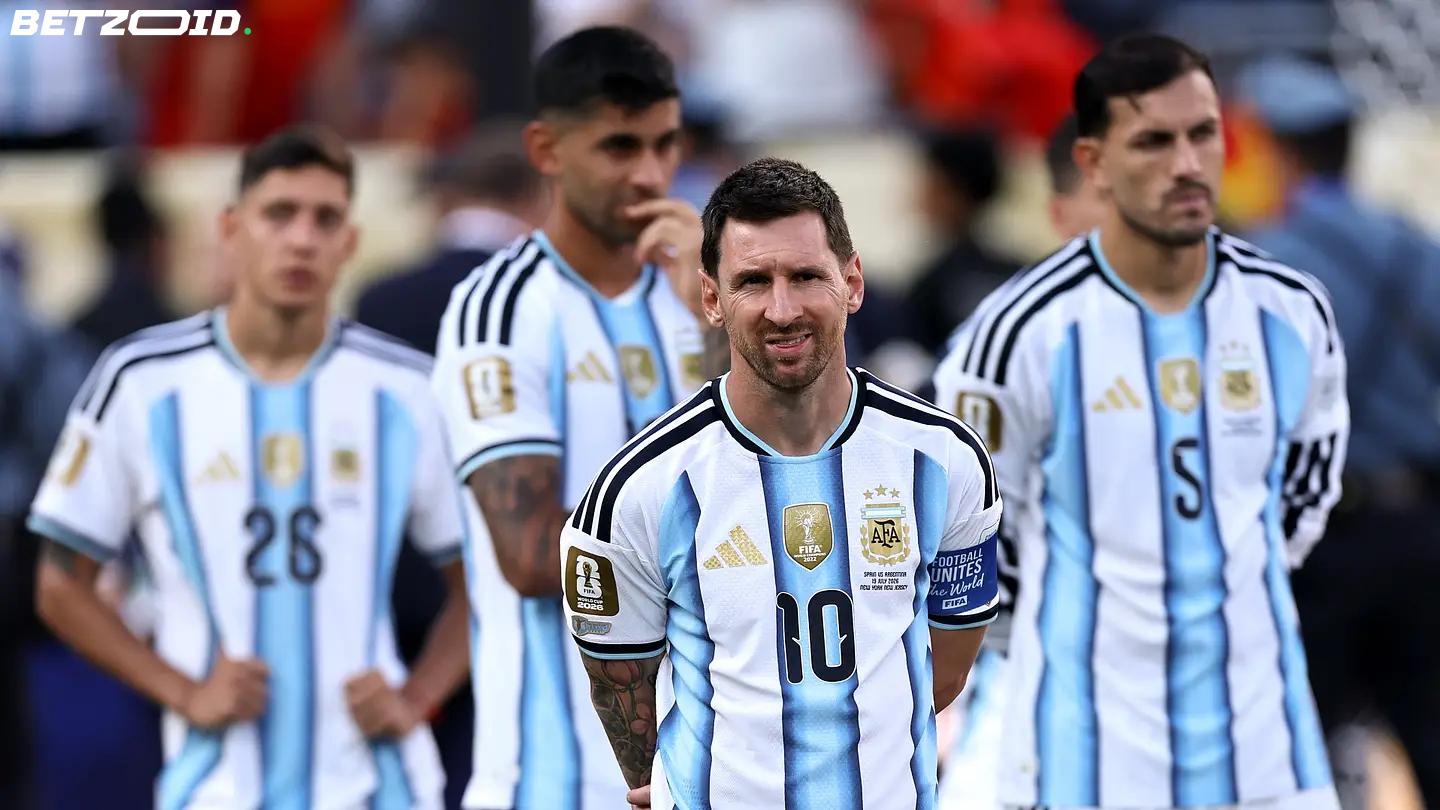
Lionel Messi has retired from international football. The 39-year-old confirmed it himself on Monday in a handwritten note posted to social media: "I swear that I always gave my all, not just in the last few years when we won everything, but before that too." 207 appearances. 125 goals. Two Copa Américas. One World Cup. And a second World Cup final lost 1-0 to Spain this summer — his last act in an Albiceleste shirt.
Argentina now face a problem no squad wants: replacing someone who contributed to 63% of their goals at this tournament. Eight goals, four assists in a single World Cup, at 39 years old. That's not a legacy — that's a dependency. And now they have to kick it.
Álvarez is the obvious answer, but the pressure will be different
Julián Álvarez is the heir apparent in name and in logic. The striker left Manchester City for Atlético Madrid in August 2024 for €95 million, posted 17 goals and four assists in 30 league starts in his first Spanish season, and spent this summer playing alongside Messi on Argentina's front line.
His World Cup was quieter than his billing — one goal, a right-footed strike to break the deadlock with Switzerland in extra time. That said, a lot of Argentina's creative energy ran through Messi rather than Álvarez, which is precisely the dynamic that now has to change. With the No. 10 role vacant and the 2028 Copa América as the next major milestone, Álvarez will be asked to lead rather than complement. That's a harder job. His odds as Argentina's focal point should shorten considerably from here.
Atlético Madrid's other Argentine, Giuliano Simeone, is a different proposition. The 23-year-old — yes, Diego's son — announced himself in qualifying with a goal against Brazil in a 4-1 rout, and played his way into the World Cup squad with consistent performances at club level. Since the tournament ended, he's been in strong form in La Liga: last week he came off the bench for a 10-man Atlético and delivered a goal and an assist to rescue a 2-2 draw against Villarreal, finishing a back-post slide from a run in behind the defence. He's earning his minutes the right way.
The long game: Nico Paz at 21
Then there's Nico Paz, and this is where it gets genuinely interesting. At 21, he was Argentina's youngest player at the 2026 World Cup — and he came on as a substitute for Messi himself in the 80th minute of the group stage opener after the man had already scored a hat trick. That's some apprenticeship.
Paz started the match against Jordan in midfield, pulling the strings behind Álvarez and Lautaro Martínez, and showed enough to suggest his ceiling is well above what Como's league position implies. He registered 12 goals and six assists last season in Serie A, and this year Como make their first-ever Champions League appearance — a step up in competition that will either accelerate his development or expose its limits.
Argentina won't replace Messi with one player. That was never realistic. What they need is a collective that doesn't require one man to account for nearly two-thirds of their attack. Álvarez leads the rebuild now. Simeone adds edge and energy from wide areas. Paz is the creative wildcard who could, in three or four years, become the player they actually build around.
- Julián Álvarez — 17 goals, 4 assists in 30 La Liga starts (2024-25); €95m move to Atlético Madrid
- Giuliano Simeone — 23 years old; scored against Brazil in World Cup qualifying; featured in the semifinal and final
- Nico Paz — 21 years old; 12 goals, 6 assists at Como last season; Champions League football incoming
The next World Cup is four years away. The 2028 Copa América comes first. Argentina arrive at both without the player who made them favourites for everything since 2021. The gap is real, and no amount of promising names changes that immediately.