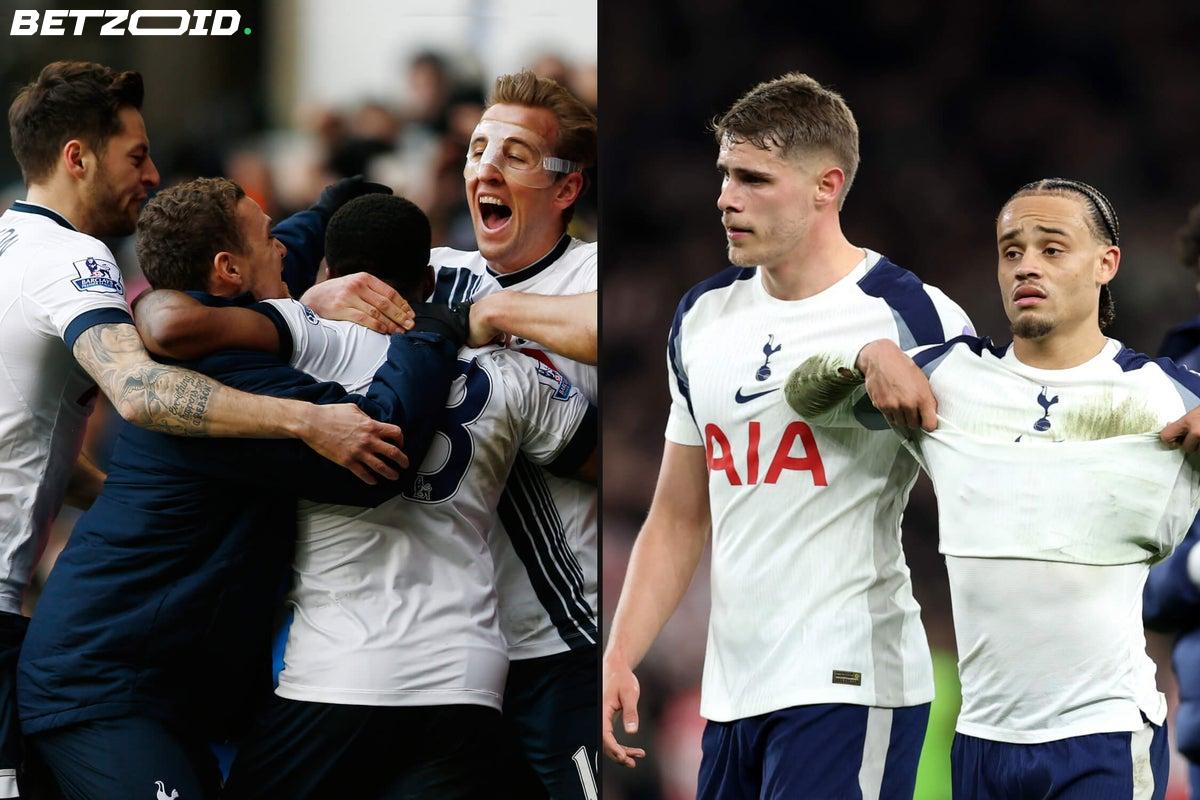
Remember where you were 10 years ago? Tottenham Hotspur were on top of the world.
It was February 28, 2016. Mauricio Pochettino's Spurs beat Swansea City 2-1 at White Hart Lane after going behind. The celebrations were wild. Then the announcement came through - Arsenal had lost 3-2 at Manchester United.
Spurs were now three points ahead of Arsenal and just two behind leaders Leicester City. For the first time ever, the bookmakers made Tottenham favourites to win the Premier League title at 7-2.
Fast forward to today, and those same bookies have Spurs at 9-2 to go down. How did it come to this?
The Squad That Stayed Too Long
The biggest mistake? Not selling players when they should have. Pochettino built a brilliant team on a budget, but every team has a shelf life. People get bored. The energy fades.
Kyle Walker went to Manchester City in 2017, but that was the exception. Danny Rose nearly joined Chelsea but stayed. Dele Alli never got his big move even when staff worried he was losing his edge. Christian Eriksen left for cheap with six months left on his contract.
Chairman Daniel Levy didn't want Spurs to look like a selling club. But holding onto these players meant the project went stale. Staff compared it to needing to refresh the water in a swimming pool.
Not selling also meant Spurs couldn't buy new players. With the new stadium costs, money was tight. After Lucas Moura joined in January 2018, Tottenham didn't sign anyone for 18 months. That gap haunted them for years.
In summer 2018, they tried signing Jack Grealish from Aston Villa. Levy started bidding at just £3 million plus Josh Onomah. By the time Spurs got serious, Villa had new owners who refused to sell. Another missed opportunity.
Managers, Money, and Lost Identity
By November 2019, the Pochettino era was over. Losing the Champions League final to Liverpool broke everyone's spirit. When the new season started poorly, Levy replaced his greatest ever manager with Jose Mourinho.
It made no sense. Mourinho's style was the complete opposite of everything Pochettino built. The appointment showed Levy cared more about looking like a big club than having a clear identity.
In 2021, Levy gave massive power to Fabio Paratici from Juventus. Some signings worked like Cristian Romero and Dejan Kulusevski. But many didn't, and Spurs fell behind their smarter rivals.
The big money signings from the Premier League all disappointed. Richarlison cost £50 million and has 23 league goals in four years. Brennan Johnson cost £47.5 million for 18 goals before being sold at a loss. Dominic Solanke cost £55 million for 11 goals in two years. Mohammed Kudus cost £55 million and has just two league goals from 19 games.
None flopped completely, but none were outstanding either. Meanwhile, clubs shopping in Europe for young talent got better value.
For years, Spurs had Harry Kane and Son Heung-min covering up the cracks. They were world-class. But Kane left for Bayern Munich in 2023 and Son joined LAFC in 2025. There was no plan to replace them or find the next generation of stars.
The wage spending tells its own story. Arsenal now pay €95 million more per year than Spurs on salaries. Chelsea pay €121 million more. Liverpool €191 million more. Spurs' wages-to-revenue ratio is just 42 percent - fans see this as proof the club won't invest properly.
When Spurs won the Europa League last year under Postecoglou, they had a golden chance. Hundreds of thousands turned out for the parade. But instead of building on that momentum, the club sacked Postecoglou and hired Thomas Frank. Then Levy was dismissed mid-season.
A decade ago, Tottenham were two points off top with 11 games to go. Today, they're fighting relegation. It's a cautionary tale of missed opportunities, poor planning, and lost identity. For those betting on Spurs' future, the odds have never looked worse.