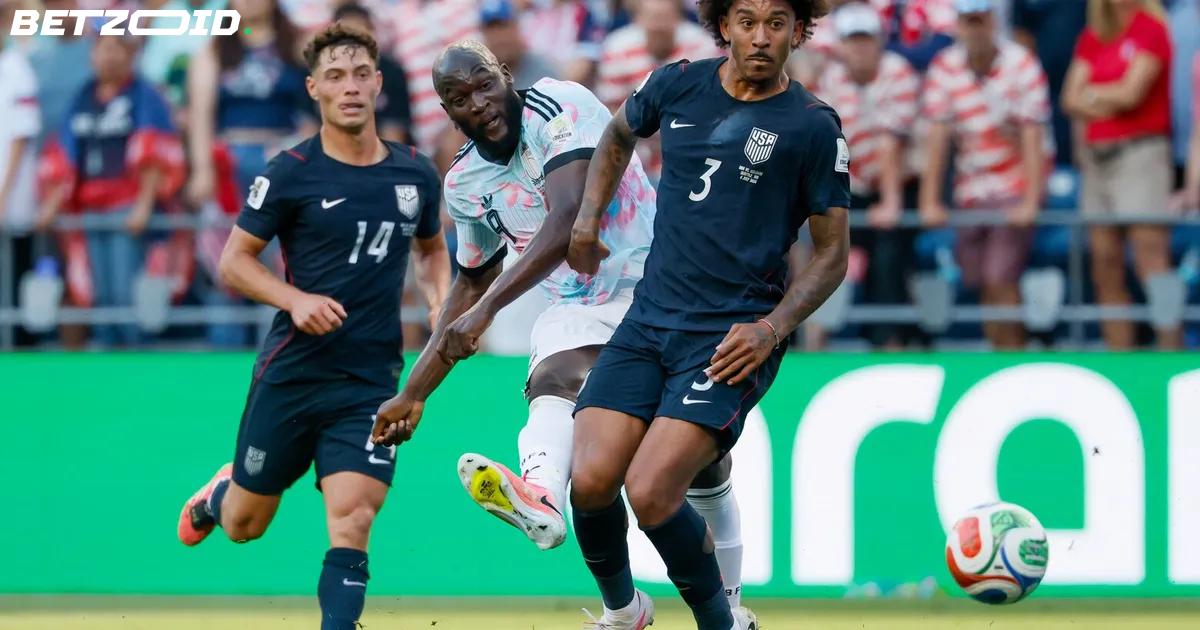
Landon Donovan — arguably the best player the United States has ever produced — says the most important thing for a young player's development is simple: touch a ball and have fun. Not drills. Not formations. Just love of the game.
That's the gap in one sentence. While kids in Brazil, Spain, and Germany grew up playing on every available patch of grass until dark, American kids are being funneled into structured leagues with $7,000-a-year price tags. You can't manufacture that street-level immersion with a coaching manual.
The cost is pricing out future talent
The numbers coming out of Washington State are a useful window into the wider problem. The middle level of competitive youth soccer runs around $7,000 per year. Premier-level — the second-highest tier — can run double or triple that. The logical consequence is that a large portion of the country's best raw athletic talent never gets near a quality soccer environment. They drift toward basketball, football, or baseball — sports where pathways exist that don't require a second mortgage.
Compare that to Norway. The Scandinavian nation caps youth fees around $1,000, bans scorekeeping until age 13, limits travel teams for younger children, encourages multi-sport participation, and mandates equal playing time at younger ages. The result? Norway punches so far above its weight that it regularly wins the Per Capita Cup — a ranking of athletic success per person — and has taken its men's national team to a World Cup quarterfinal. A country of five million people.
The U.S. has 335 million people and hasn't been past the Round of 16 since 2002.
Even Brazil is a cautionary tale now
Brazil's decline offers a warning that cultural soccer roots can erode quickly when money enters the equation. The street pitches where Pelé and Ronaldo developed their touch have been paved over for real estate developments. Around 80 percent of youth academies now charge fees. Last year, Brazil's under-20 side was eliminated from the U-20 World Cup in the group stage for the first time in history. That's what happens when you commercialize the grassroots.
The United States is making the same mistake from a different starting point — it never had those free street pitches to begin with.
There's also the cultural ceiling. Top high school basketball recruits in this country generate genuine hysteria. Bleachers fill. Scouts swarm. Parents drive hundreds of miles. The nation's best teenage soccer player? Quietly funneled into an academy system most fans don't follow and media rarely cover. Until soccer sits alongside basketball and football in the American sporting imagination, the talent pipeline will keep leaking at the top.
- Middle-level competitive youth soccer in Washington State: ~$7,000/year
- Premier-level youth soccer: potentially $14,000–$21,000/year
- Norway youth sports fee cap: ~$1,000/year
- Brazil: 80% of youth academies now require payment
- Brazil U-20: eliminated in group stage of U-20 World Cup for first time ever in 2023
Fixing the youth structure would help. But the deeper issue — that soccer still isn't the sport American kids dream about at age six — can't be solved with a policy overhaul. That takes a generation, at minimum. Maybe two.