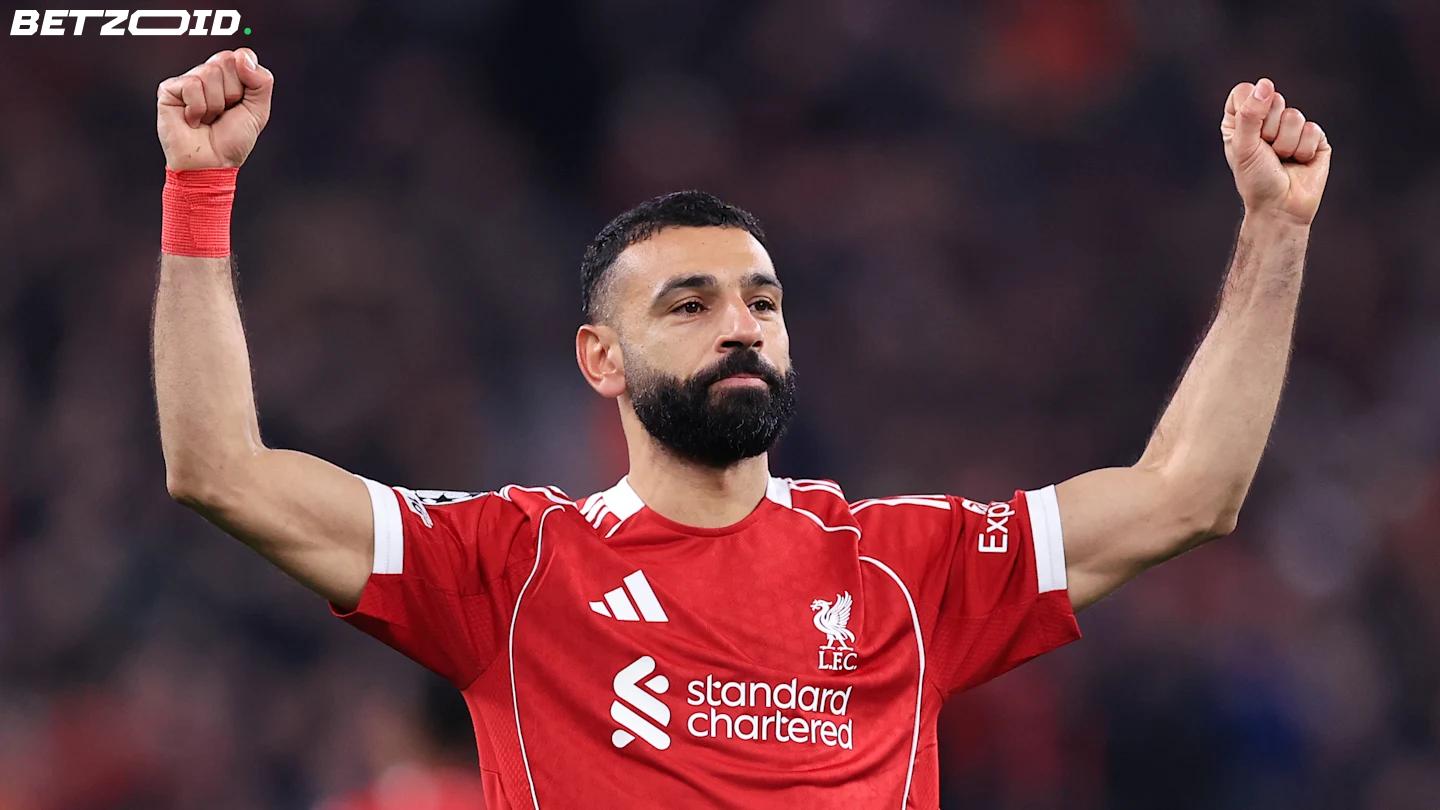
"Positive exposure to outgroup celebrities can reduce prejudice." That's Stanford University's clinical way of describing something quite human — a footballer from Egypt arriving on Merseyside and, over nine years, quietly reshaping the community around him.
Since Mohamed Salah joined Liverpool in 2017, hate crimes on Merseyside have fallen by 19%. Islamophobic comments among the club's own supporters online have halved. These aren't soft metrics. These are documented shifts in behaviour, tracked by four academics at one of the world's leading research institutions.
A legacy built on more than goals
Salah confirmed his Liverpool departure at the end of this season, and the tributes will inevitably focus on the goals — 44 in his debut campaign alone, Premier League and Champions League records shattered, third on the all-time Liverpool scoring list behind only Ian Rush and Roger Hunt. Two league titles, a European Cup, six other trophies. The stats are genuinely staggering.
But Alexandra Siegel, one of the Stanford researchers, framed it differently: "We had been following with interest this rise to fame of Mohamed Salah, this Egyptian soccer player, and we were particularly interested in what was going on with fans on the field during these games."
What they found was a man who changed minds without trying to. No campaign. No speeches. Just excellence, week after week, until the distance between "us" and "them" quietly collapsed for a lot of people in the stands.
What he leaves behind
Nobody predicted this when Chelsea let him go as a flop in 2014. Nobody predicted a 44-goal debut at Liverpool would be the floor rather than the ceiling. The consistency — year after year, regardless of team form, manager, or supporting cast — is what separates Salah from the conversation and puts him inside it.
Liverpool will need to replace a player who scored at one of the highest sustained rates in Premier League history. That alone makes the forward market this summer one of the most-watched in Europe, and whoever carries the number eleven next season faces a benchmark that took a decade to build.
The Stanford study will likely get a footnote in that conversation. It probably deserves more than that.