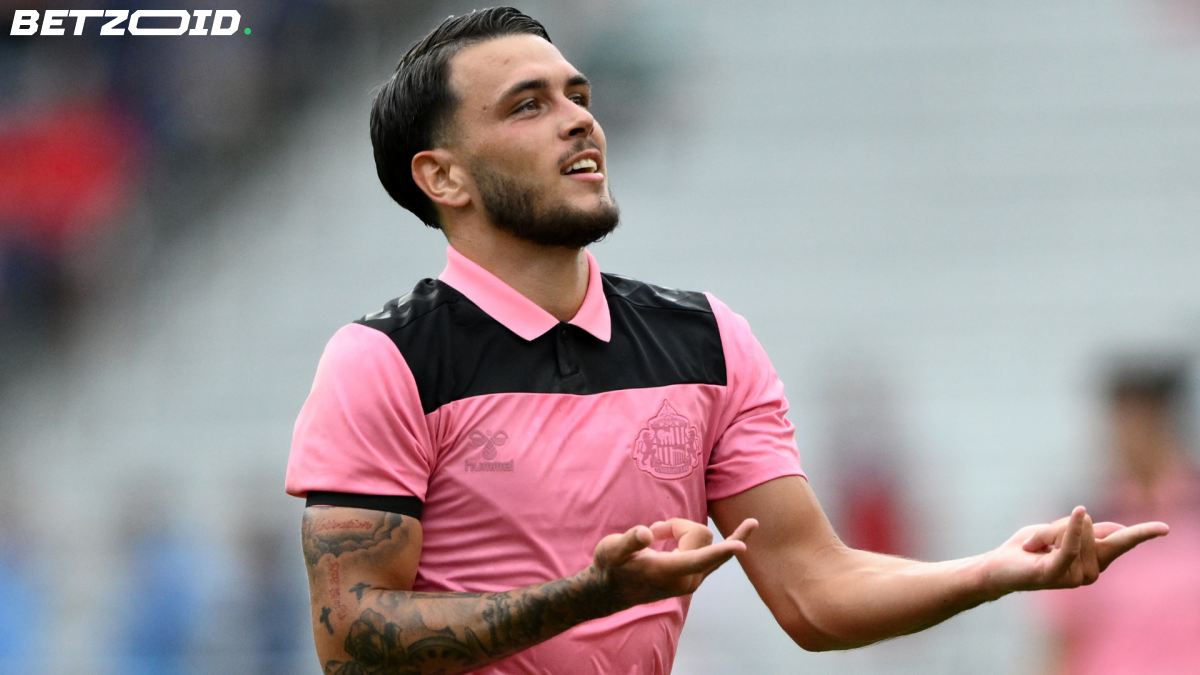
Only the second time in their history. That's how rare European football is at the Stadium of Light, which makes Sunderland's Europa League return feel both earned and slightly terrifying.
Just a few years ago, the Black Cats were rotting in League One. New ownership steadied the ship, a promotion followed, and then last season — their first back in the Premier League — Regis Le Bris guided them to a club-record top-half finish. They even finished above Newcastle. In a city where that matters more than most things, that alone bought enormous goodwill. Now comes year two, and the expectations are different.
Surviving the Premier League was the brief. They didn't just survive.
The squad depth question is real
Le Bris ran a tight rotation last season — only ten players cleared 1,000 Premier League minutes. That approach won't survive a schedule with 50-plus games across two competitions. The manager knows it. Defender Luke O'Nein knows it too. "There are going to be more games and more squad rotation, so we're going to need everybody for every single minute," he said.
That's where Chris Rigg comes in. The 19-year-old attacking midfielder was part of the promotion-winning side but logged just 766 league minutes last season — inconsistent, occasionally erratic, still learning the weight of Premier League football. Le Bris saw the evolution in real time. "He was more composed on the ball... progressively he showed that he was able to keep the ball under pressure and feel when it's the right moment to go forward." That's encouraging. It's also a manager who needs a teenager to take a genuine leap this season, not a gradual one.
Sunderland's academy has produced Jordan Henderson and Jordan Pickford. The pipeline isn't new. But the pressure on it is.
With one of the quieter transfer windows in England, there's no cavalry coming. If their younger players don't step up, the club risks being stretched thin — and a side that looked compact and well-drilled in a 38-game season can unravel quickly across 50-plus. Their odds of sustaining a top-half position will shorten considerably if the squad depth doesn't hold.
Nashville, World Cup fever, and a global play
Preseason took Sunderland to Nashville, New York, and Philadelphia — a US tour built around commercial opportunity as much as fitness. The Music City connection came partly from Japan using GEODIS Park as a World Cup base camp, leaving a template for how to host top-level squads. Nashville's mayor's chief of staff literally flew to Tokyo to make the pitch. Sunderland slotted in to keep that "Summer of Soccer" momentum alive.
The "Sunderland 'Til I Die" docuseries already gave the club a profile in America that most mid-table Premier League sides don't have. Interim CEO Tom Burwell put it plainly: "We very clearly believe that Sunderland AFC can be the Premier League team of choice in Tennessee." Whether that translates into anything tangible commercially is a longer game, but the brand awareness is genuinely there.
Burwell drew the comparison himself — the loyalty of Sunderland supporters mirrors the Eagles in Philadelphia. "No one hates their Eagles more than Eagles fans when the Eagles are not winning; that's the same thing here." It's not a bad frame. This is a club with deep local roots in shipbuilding, now trying to sell that identity globally without diluting what makes it real at home.
O'Nein on the Europa League: "We're not going there just to say we've had our celebrations for achieving that. When we go there, we mean business." Easy to say. Harder to do when you're rotating a thin squad through a Thursday-Sunday grind. But dismissing Sunderland this season based on resources alone would be a mistake — they've already beaten the expectations game twice running.