Spain didn't just win the 2026 World Cup — they did it the same way they've been doing everything since 2008. Methodically. Tactically. Without apology. Back-to-back Euros in 2008 and 2012, the 2010 World Cup, a 2024 European title, and now this. Luis de la Fuente's side weren't shocking anyone who'd been paying attention.
The real question isn't how Spain won. It's what the teams chasing them keep getting wrong.
The USMNT problem isn't talent — it's identity
The gap between Spain and the United States isn't just trophies. Spain have two World Cups and three Euros since 2008. The USMNT have two knockout round wins in their entire history. That's not a development gap. That's a structural one.
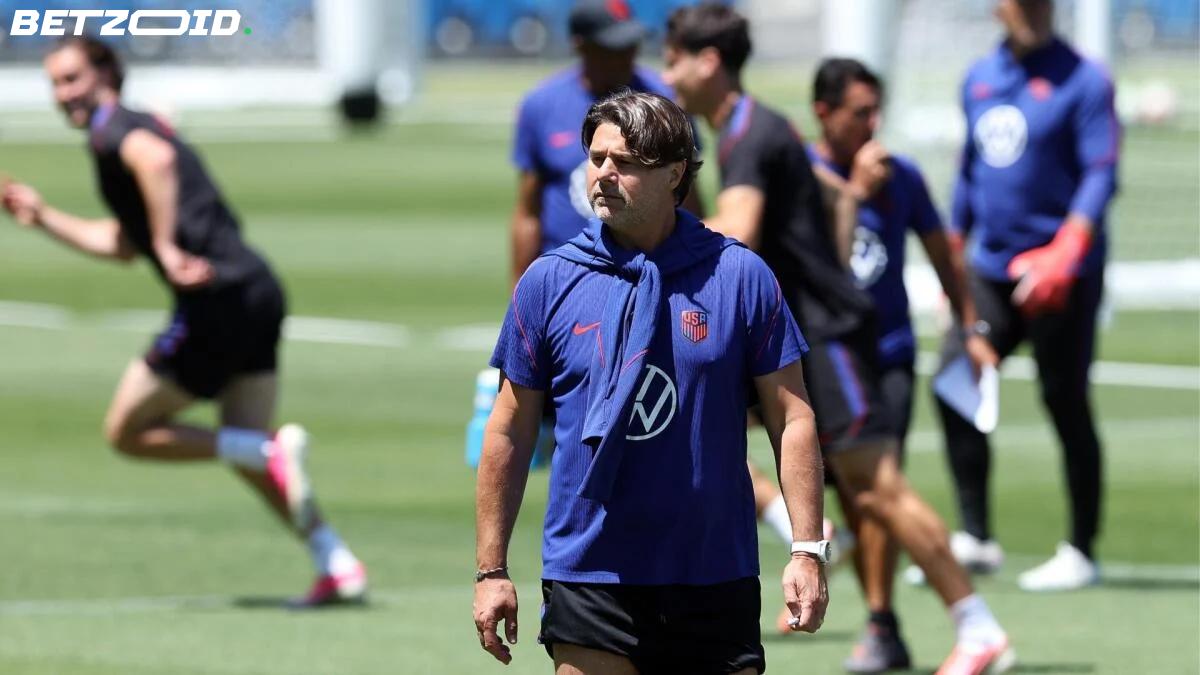
Spain's blueprint under de la Fuente was never about assembling the most impressive names. He built his squad around players who fit a specific system — even when that meant leaving out Champions League regulars. The USMNT have spent years hyping Christian Pulisic, Weston McKennie, and whoever else had a strong club season, without ever building a cohesive identity around any of them. Pochettino has the pieces. The next step is making them mean something collectively.
The Paraguay game in the group stage offered a glimpse — a 4-1 win, fluid, dominant, genuinely surprising. Then it vanished. That's the problem in a sentence: one performance doesn't make a philosophy.
And here's the harder truth. Spain's dominance is the payoff of nearly 20 years of academy investment. Barcelona's La Masia produced a significant portion of that World Cup squad. The U.S. has nothing comparable — not because of talent, but because of structure. Soccer in America is still largely a pay-to-play, twice-a-week hobby for most kids. In Spain, and across much of Europe and South America, it's a full-time obsession from childhood. Closing that gap isn't a coaching hire away. It's a generational project.
England's selection headache and Brazil's loyalty problem
England under Thomas Tuchel showed a willingness to make unpopular calls — leaving out Cole Palmer and Phil Foden in favor of collective fit. That part of the Spain philosophy they understood. The execution, though, is a different conversation.
Spain's most telling selection wasn't even an outfield one. David Raya — Arsenal's first-choice keeper, one of the Premier League's best — didn't start a single minute for Spain. Unai Simon did. And Simon won the Golden Glove. De la Fuente's message was clear: club reputation buys you nothing if the fit isn't right at international level. England's selectors would do well to internalize that, rather than just copying the headline decision-making without the underlying logic.
Brazil went the opposite direction entirely. Carlo Ancelotti included Neymar despite form that didn't warrant a squad place, while Joao Pedro — who had been genuinely excellent at Chelsea — was left out. It was experience and star power over everything else. Ancelotti manages some of the world's biggest personalities with ease, which is probably exactly why he couldn't bring himself to make the call. Spain proved that sentiment is a liability at a World Cup.
- Marc Cucurella over Alejandro Grimaldo
- Alex Baena over Ferran Torres
- Unai Simon over David Raya
- Aymeric Laporte over Dean Huijsen — who wasn't even in the squad
None of those decisions made sense on paper. All of them made sense within Spain's system. That's the point de la Fuente was making with every single one of them.
International tournaments aren't won by the best squad. They're won by the most coherent one. Spain have now proved that twice at a World Cup, and with UEFA Euro 2028 and the 2030 World Cup on the horizon, there's no reason to think they're done making that argument.