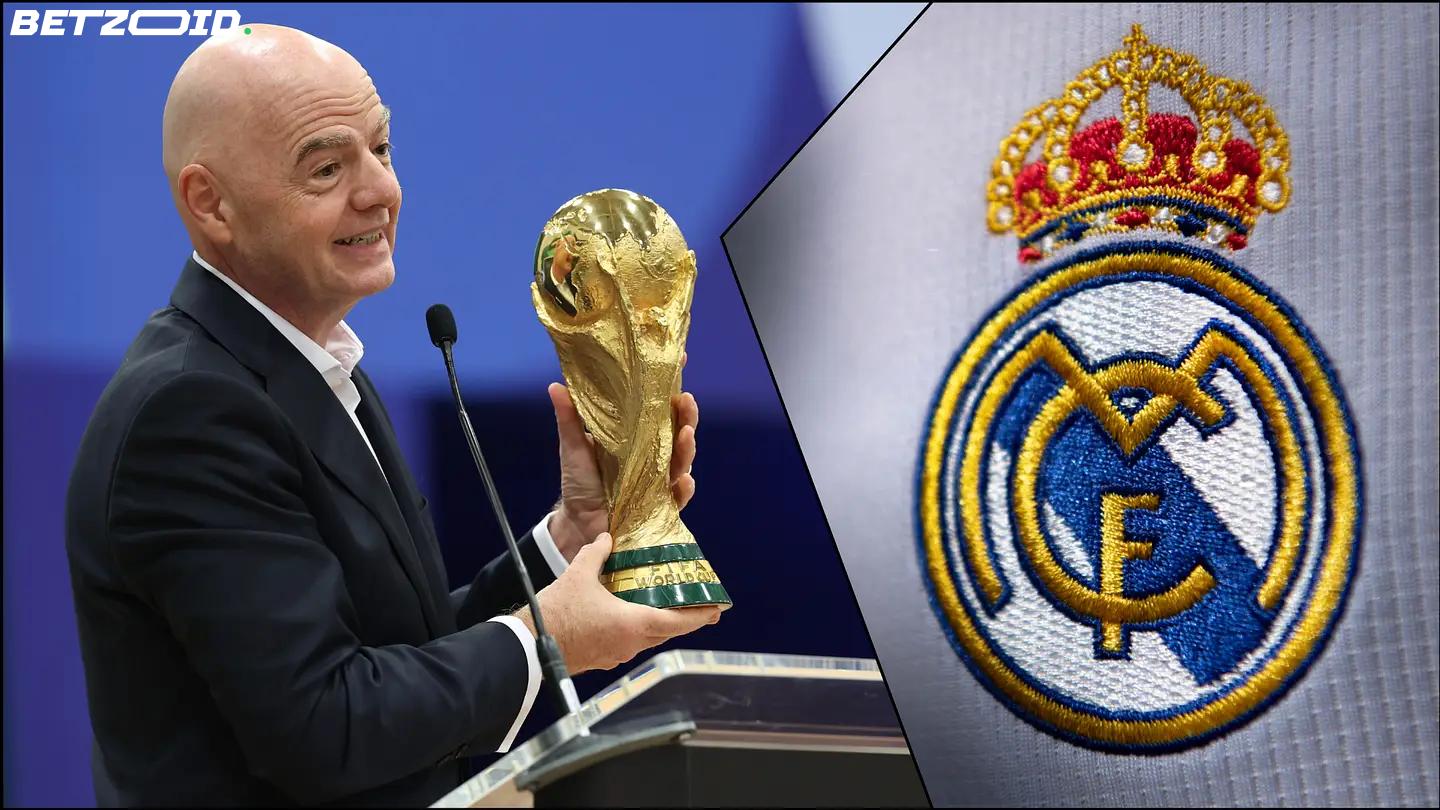
"International football and the World Cup are, above all, events of public interest... and must never be treated as mere financial assets to be commercialized for the benefit of a select few." Real Madrid didn't write that line to be polite. They wrote it to score points — against FIFA, and someone else entirely.
After reports from The Times and the Financial Times revealed Gianni Infantino had been quietly shopping stakes in the commercial rights to the men's and women's World Cups to private investors, the backlash was swift and total. UEFA's member nations agreed to boycott future FIFA tournaments. Infantino dropped the plan. And then Real Madrid stepped in to make sure nobody forgot where they stood.
The Spanish club became the first prominent side to go public, "warmly welcoming" the decision to kill the proposal. On its face, it was a principled statement about football's cultural heritage. Read more carefully, it was a vehicle for a very specific grievance.
The real target: La Liga and the CVC deal
Madrid didn't close the statement without taking a shot at their own domestic competition. The club drew a direct parallel between Infantino's failed scheme and La Liga's 2021 deal with private equity firm CVC — an agreement in which the Spanish league sold 8.2% of its broadcasting and sponsorship income until 2071 for around $2.2 billion.
37 of Spain's 42 professional clubs voted it through. Real Madrid, Barcelona and Athletic Club refused. Florentino Pérez called it an attack on the clubs' financial wealth. Madrid took La Liga to court, lost the appeal, but managed to get themselves excluded from the deal's terms anyway.
That fight is years old. Madrid are still fighting it.
"Mortgaging for half a century revenue that belongs to the clubs, who bear the full costs and risks, sets a precedent that football must not repeat, whether in our country or internationally," the club's statement read. The Infantino crisis was real — but for Madrid, it was also a convenient frame to restate their position on a domestic dispute that never fully went away.
What it means beyond the statement
Madrid's intervention matters in one practical sense: they're the loudest club voice in European football, and their public alignment with UEFA strengthens the governing body's hand if Infantino tries to revive anything resembling this idea in a different form. A unified front from UEFA members was already enough to kill it once. Adding the continent's most decorated club to that coalition makes the political cost of a second attempt even steeper.
Whether any of this changes the underlying tensions between club football and governing bodies is another question entirely. Madrid have their own commercial interests at stake — in the Super League saga, in the CVC dispute, now here — and their statements on football's "public interest" have a habit of aligning precisely with whatever position benefits the Bernabéu most.
That doesn't make them wrong. It just means you should read the footnotes.