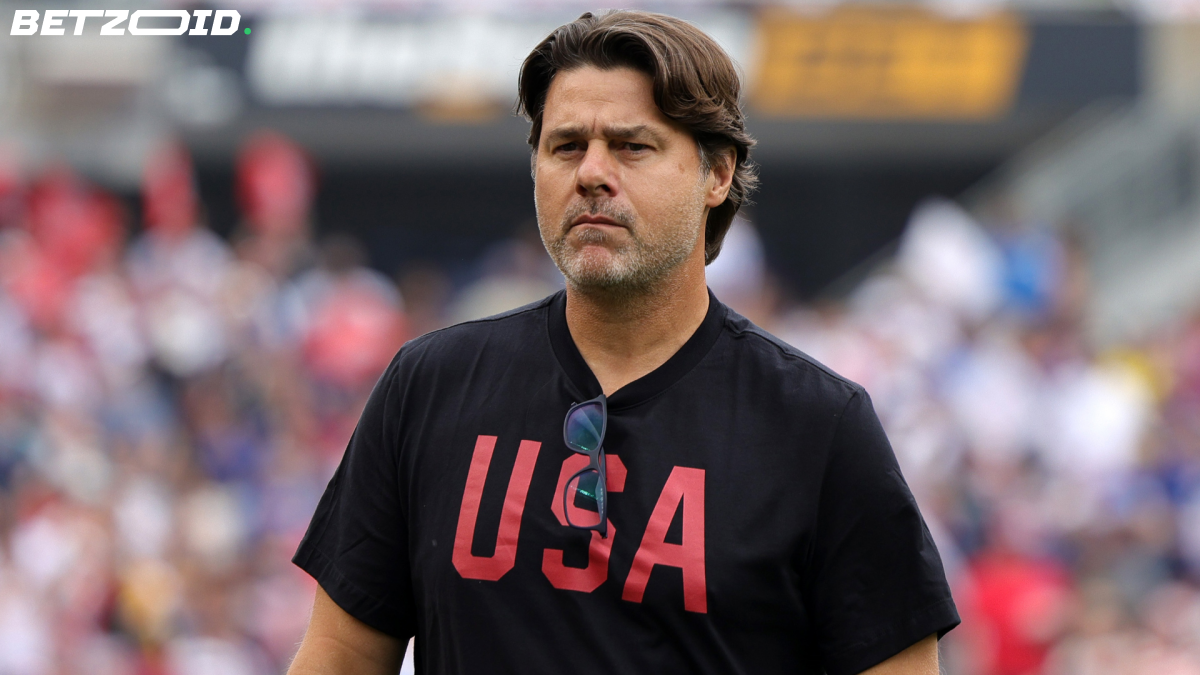
"Culture eats strategy for breakfast." That's the line Mauricio Pochettino has been repeating to anyone who'll listen — on the training pitch, in press conferences, on his Instagram — and it's now the official philosophical foundation of the USMNT's 2026 World Cup campaign.
It's either visionary or a very expensive gamble. Possibly both.
Pochettino was hired in the aftermath of a disastrous Copa America as the man who would finally extract the potential from the most talented generation of American players in history. He's coached PSG to a Ligue 1 title and took a collection of unproven Spurs youngsters to a Champions League final. His credentials aren't the question. The question is whether a team that's been mid-tier on the world stage for decades can hold together long enough to make the kind of run that actually changes the program's trajectory — and whether team chemistry is genuinely the missing ingredient or just a compelling story.
What "vibes guy" actually means in practice
Pochettino isn't naive. When he talks about culture over tactics, he doesn't mean he's winging the game plan. His sessions are gruelling — Tim Ream described players finishing training with "hands on their knees" — and he's been unapologetically ruthless on his non-negotiables. Christian Pulisic found that out the hard way last summer when he wanted a partial commitment to international duty. Pochettino said all or nothing. Pulisic sat out entirely.
"I was disappointed with him," Pochettino said. Direct, unspun, no diplomatic softening. That's not a vibes coach — that's a man who happens to also believe in atmosphere because he's seen what it produces.
The template he keeps referencing is Argentina's 2022 World Cup win. Not the Messi factor — he's explicit about that. What he admires is how tightly that squad fought for each other. Malik Tillman, who spent years collecting splinters under Gregg Berhalter, credits Pochettino with shifting his entire mindset: "He always says they were fighting for each other, basically die for each other on the pitch."
For a player who previously felt disposable, that message lands differently.
A squad built almost from scratch
Over 60 players received call-ups across the 24 games Pochettino managed before naming his World Cup roster. Half the squad were in Qatar in 2022. Several others feel like they materialized out of nowhere — including starting goalkeeper Matt Freese, who earned his first cap just a year ago and promptly displaced 2022 starter Matt Turner.
Freese's own description of Pochettino is telling: "For him to preach the focus and the importance of teamwork... and have that actually be what he believes" — the surprise in his voice says everything about how rare that authenticity apparently is at the top level.
Hugo Lloris, who played under Pochettino at Spurs, put it plainly: "He is not scared to give [young players] the responsibility to put them on the field." In a tournament where the host nation carries enormous expectation, that willingness to play the best available rather than the safest choice matters.
The 17-day pre-tournament camp — made possible by a FIFA rule change Pochettino maximized to the fullest — has been the culmination of everything. He even let Brenden Aaronson skip a training day to get married, framing it not as an exception but as exactly the kind of human moment that generates the commitment he wants. A team that celebrates together, as the logic goes, competes together.
Whether the USMNT's opener against Paraguay at SoFi Stadium on Friday proves the theory right is the only thing that matters now. The pre-tournament warmups — a 3-2 win over Senegal, a 2-1 loss to Germany in which the team went down after two minutes and still dominated long stretches — suggest the identity is there. The discipline is there. The belief, against all recent evidence, seems genuine.
"Now it's about to give our best," Pochettino said Saturday. After nearly two years of friction, false starts, and philosophical speeches, the World Cup is finally here to answer whether any of it was worth it.