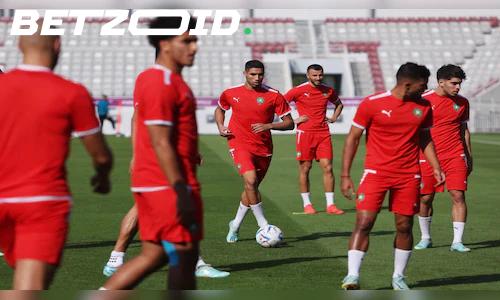
Morocco are heading into the 2026 World Cup as African football's most compelling story — not because of what happened in Qatar three years ago, but because of the extraordinary mess that followed.
The Atlas Lions were crowned Africa Cup of Nations champions in March. Not by winning the final, but by winning a ruling. Senegal beat them 1-0 in extra time in Rabat on January 18, claimed the trophy, and then paraded it in Paris. Two months later, the Confederation of African Football stripped Senegal of the title because their players walked off the pitch in protest over a penalty call — briefly, but long enough for CAF to hand Morocco a 3-0 default win. Senegal have appealed to the Court of Arbitration for Sport. The case is still open. Morocco's celebrations remain, appropriately, on hold.
A new coach, a complicated inheritance
Into this legal fog steps Mohamed Ouahbi, who guided Morocco's under-20 side to the Youth World Cup title in 2025 and is now tasked with carrying the senior team into the biggest tournament on the planet. His predecessor Walid Regragui — the man who took Morocco to the 2022 semifinals past Spain and Portugal — quit after the Africa Cup final before CAF had even made its ruling. He left under criticism for the team's style of play and a poor showing at the 2023 AFCON in Ivory Coast.
Ouahbi's early results were respectable: a draw with Ecuador, a win over Paraguay in March warmups. Modest evidence, but it's something.
The bigger personnel concern is Achraf Hakimi. The right back is sidelined with a right thigh injury and is in a race against the clock. He arrived late to the Africa Cup campaign too — ankle this time — but recovered to contribute in the knockouts. Morocco's defensive shape and their ability to press wide corridors are noticeably different without him. Any group-stage odds on Morocco should factor in how much of the tournament Hakimi is actually available for.
Brahim Díaz: hero, villain, benched
Then there's Brahim Díaz. He was extraordinary during the Africa Cup — five goals across the tournament, barely getting minutes for Real Madrid but thriving at the center of Morocco's attack. Then came the final, the controversial penalty, and the moment that defined everything: a soft Panenka attempt that Édouard Mendy collected without breaking a sweat. Senegal won in extra time. Morocco fans jeered Brahim when he collected his runner-up medal.
He didn't start either of Morocco's warmup games under Ouahbi. Whether that's tactical caution or something deeper, it's a problem. Morocco without a firing Brahim Díaz is a structurally different team.
Their group draw at the 2026 World Cup is unforgiving. Brazil at New York New Jersey Stadium on June 13. Scotland in Boston on June 19. Haiti in Atlanta on June 24. The opener against five-time world champions sets the tone immediately — and with Hakimi potentially absent and Brahim's form and confidence both unclear, Morocco's path out of Group C is harder than it looks on paper.
Co-hosting the 2030 World Cup with Spain and Portugal means Morocco has long-term footballing ambitions baked into national policy. A deep run in 2026 would validate that project. An early exit — especially mired in ongoing AFCON controversy — would raise serious questions about where the program actually is.
The CAS appeal verdict, when it comes, will either legitimize the title or reopen the wound. Either way, Morocco will be playing their World Cup group stage games with that ruling still hanging over them.