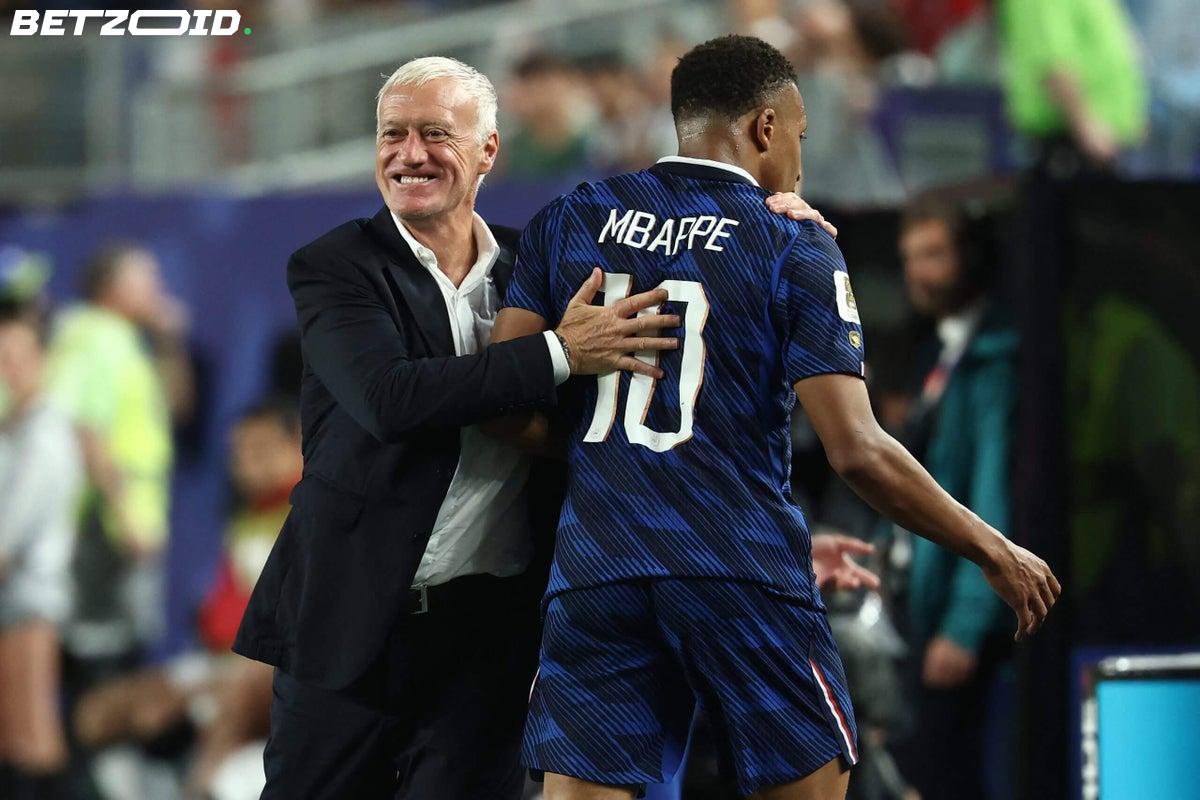
Didier Deschamps has spent his entire managerial career being told he's too cautious. Right now, France are scoring goals in bunches and playing the most exciting football of his tenure. The question isn't whether it's working. It's whether he'll trust it when the tournament actually starts.
Ten goals in the group stage. Four from Mbappe, who broke Giroud's all-time France record in the process. A Dembele hat-trick against Norway. Olise threading through balls and beating defenders. Doue contributing from the left. Four genuine attackers, all clicking — and Deschamps, for once, looking like he's actually enjoying himself.
Compare that to his previous group stage returns with France: eight, four, three, four, six and two. Whatever argument you want to make about the quality of the opposition — yes, Iraq and Norway's reserves aren't England — the attacking fluency is real.
What history says about four-attacker systems
The problem is what happens next. World Cup history is not kind to teams that enter the knockout rounds with four outright attackers.
Argentina in 1986 started with that profile, then Bilardo pulled a second striker before the quarter-final against England — dropping Pasculli despite him scoring in the previous round — and pushed Burruchaga into a third-attacker role rather than a fourth. France's own 1998 winners did the same thing: Thierry Henry started wide, played some brilliant football, then got dropped from the quarter-finals onwards as Jacquet brought in Karembeu for discipline. Brazil in 2002 sacrificed creative midfielder Juninho for the more defensive Kleberson once the knockout rounds arrived. Argentina in 2022 ditched the expansive approach entirely after Saudi Arabia beat them in their opener, going with three natural central midfielders from then on.
The last team to win a World Cup with something resembling four attackers was Brazil in 1970. That side is still the benchmark by which every other World Cup team gets measured. Deschamps is not, historically, a man who invites those kinds of comparisons.
Who gets dropped?
The most likely casualty is Doue. He's the youngest and least established of the four, and in a system that needs compressing in the knockout rounds, he's the easiest to remove without the decision looking catastrophic in retrospect. A more disciplined central midfielder coming in — someone to actually protect the backline rather than just hope for it — is the Deschamps playbook, and everyone knows it.
The irony is that France's odds of going all the way probably look healthier right now than they have at any point under Deschamps. Ten group stage goals does that. But if he reverts to type and sacrifices Doue — or anyone in that front four — and France win, he'll be celebrated as a tactical genius who knew when to pull back. If he keeps all four and it unravels against a compact, well-organised side in the last eight, the criticism will be that he should have known better.
Deschamps has been in this position before. He almost always blinks. His 2018 World Cup-winning team featured Blaise Matuidi running himself into the ground in a wide role specifically to provide midfield cover — not exactly an advertisement for attacking ambition. He reached two finals and won one playing it safe. The template exists. He built it himself.
The most likely outcome: France reach the quarter-finals with all four attackers, then Deschamps makes his move. Doue sits. A midfielder comes in. France become harder to beat and harder to watch. And Deschamps, for the third time in his career, goes deep into a major tournament by playing the percentages rather than the football purists.
That approach has won him a World Cup before. It might win him another one. Whether it should is a different conversation entirely.