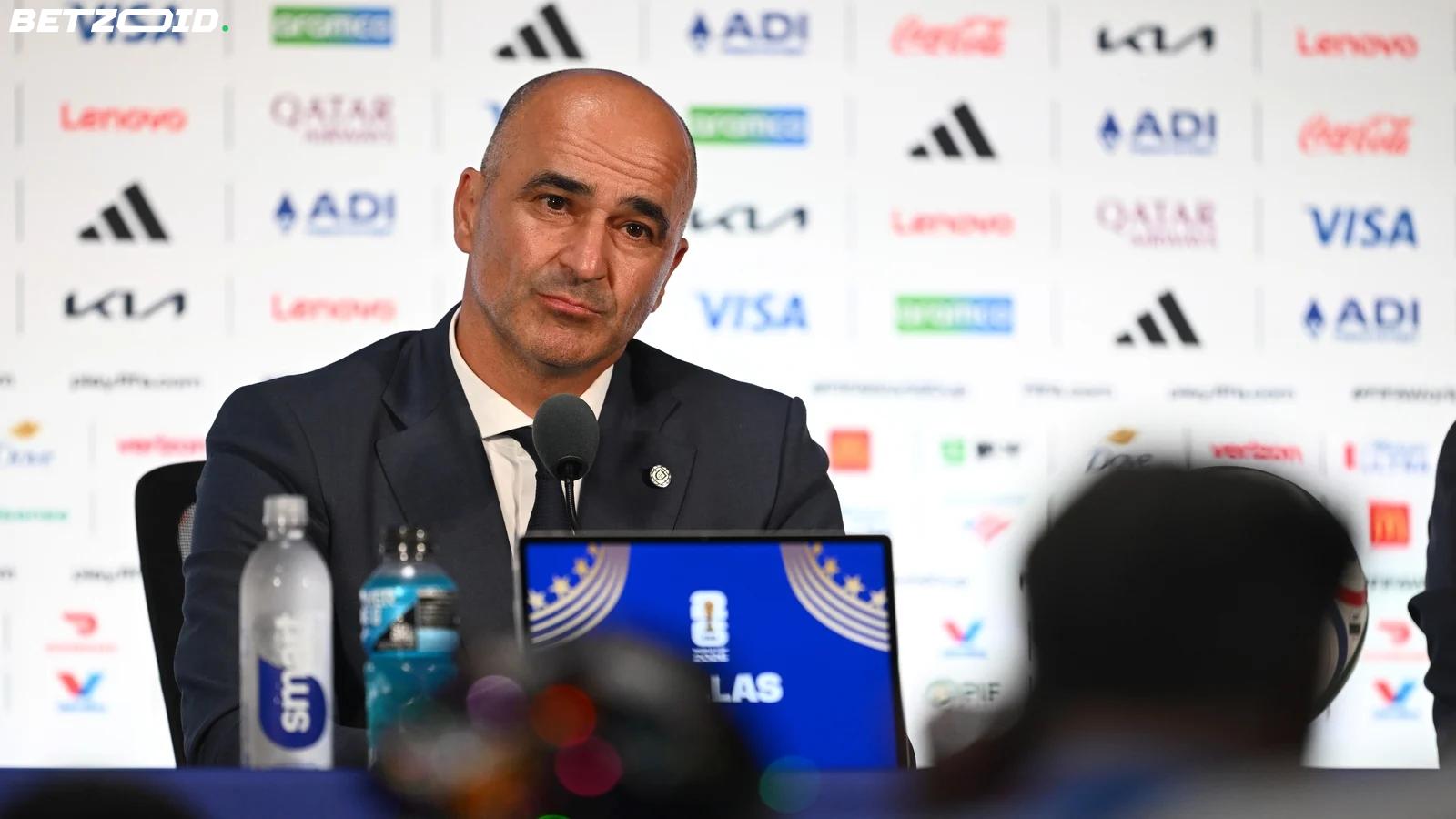
"I came to Portugal to win the World Cup and I think that, without winning it, there's no point in continuing." Roberto Martinez said it plainly, and then he was gone — resigned on the spot after a 1-0 loss to Spain in Dallas ended Portugal's World Cup in the round of 16.
No negotiation. No waiting period. The Belgian walked into a press conference and effectively handed in his notice in real time, confirming his contract ended that day and the Portuguese FA was free to start the search for a new manager immediately. Three and a half years, a warm reception from a nation that doesn't always embrace foreign coaches easily, and it ended in a quiet exit from a tournament he came specifically to win.
It was a clean break, at least. Martinez had apparently not committed either way before the tournament, but the Spain result made the decision for him. "It had not been decided previously," he said. "I came with the goal to win the World Cup, and because I did not win, it does not make sense to continue."
Brazil take the opposite approach
Five hundred miles north in New Jersey, Brazil were going through something slower and uglier. Erling Haaland scored twice at the New York/New Jersey Stadium as Norway beat the five-times champions 2-1, extending Brazil's wait for a sixth title to at least 28 years. The inquest started before the players had left the pitch.
Much of the criticism landed on Carlo Ancelotti, who had only one year to actually work with the squad after the Brazilian FA spent the previous cycle waiting for him to leave Real Madrid. He allowed Bruno Guimaraes to take an early penalty — which he missed. He left Casemiro and Danilo, both 34, on the pitch as Brazil ran out of legs and ideas. His decision to bring on Neymar mid-second-half changed nothing, beyond the veteran converting a late consolation penalty that made the scoreline marginally less embarrassing.
It was the kind of performance that ends coaching tenures. In Brazil, it usually does.
Not this time. Football director Rodrigo Caetano was direct: Ancelotti keeps the job through the 2030 World Cup cycle, full stop. "He is our manager and will be throughout this cycle," Caetano said, before making the argument that the real failure wasn't Ancelotti's — it was the instability that came before him.
"One of the main reasons we failed in this World Cup was not to have proper, stable guidance long term that would have prepared our national team the way it should for a World Cup and we cannot make the same mistake again."
What this means for both national team markets
Portugal now enter a genuine transition. The Martinez era showed the squad could perform — the pipeline of talent is real — but they've now exited consecutive World Cups without getting past the round of 16. Whoever comes in will inherit a golden generation that's aging, with Ronaldo's long-term future at international level still unresolved. The new manager appointment will tell you a lot about whether Portugal are building toward 2030 or simply patching.
Brazil's situation is harder to read. Backing Ancelotti is a defensible call, particularly given how little runway he actually had, but the optics of watching a tactically flat side lose to Norway while carrying 34-year-olds late into a knockout match won't vanish quickly. He has four years to prove the faith was warranted. Brazil's fanbase — and their betting market — will be watching every qualifying game like a referendum.
"The experience of my life," Martinez said of his time in Portugal. Warm words from a man who, whatever the result, leaves with his reputation largely intact. Ancelotti doesn't have the luxury of a clean exit. He has to go again.