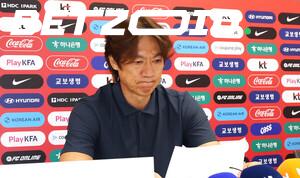
"If an incompetent person is selected as the commander by placing importance on your side more than ability, the outcome will be clear." That's not a pundit's hot take. That's South Korean President Lee Jae-myung, publicly torching the national team and head coach Hong Myung-bo after Korea crashed out of the 2026 North American World Cup without reaching the round of 32.
When the head of state is firing shots, things have gone badly wrong. And the companies who signed cheques to sponsor the Korea Football Association are now staring at a disaster they didn't budget for.
Sponsors paid for a World Cup bounce — they got a reputational sinkhole
Nike, Hana Bank, KT, Hyundai Motor, Coupang Play, Korean Air, Coca-Cola, Nexon, OB Beer Cass, HDC Hyundai Industrial Development, Kyobo Life Insurance — the KFA's partner list reads like a who's who of Korean corporate Korea. The total sponsorship pot is estimated around 10 billion won. These companies weren't writing charity cheques. They wanted eyeballs, goodwill, and a World Cup halo effect.
They got none of it.
Peak viewership for Korea's games hit 17.7%, recorded during the Mexico and South Africa matches. At the 2022 Qatar World Cup, peak viewership was 41.7% for the Uruguay game. That's not a marginal dip — that's the floor falling out. Granted, only JTBC and KBS broadcast the games this time versus full terrestrial coverage in 2022, which partly explains the gap. But even accounting for that, public interest simply wasn't there.
One company official put it plainly: "The popularity of the World Cup has cooled compared to the previous year, and the overall atmosphere is not good."
The KFA's credibility problem goes deeper than football
The on-pitch failure is one thing. The institutional rot underneath is what makes this unsalvageable in the short term. Hong Myung-bo's appointment in 2024 is now the subject of a police investigation over alleged procedural violations. A public petition calling for his immediate dismissal and a systemic overhaul emerged on June 27, days after the exit. Culture Minister Choi Hwi-young announced an expert committee to investigate and promised accountability — not the kind of statement that makes sponsors feel warm about their logo placement.
Sponsors pay for association with success, or at least with institutions that don't face criminal scrutiny. The KFA is currently delivering neither. The brand risk calculus has flipped entirely — being seen next to the KFA badge right now is a liability, not an asset.
- KFA's 2026 budget: 138.7 billion won
- Estimated partner sponsorship: approximately 10 billion won
- Peak Korea viewership at 2026 World Cup: 17.7%
- Peak Korea viewership at 2022 World Cup: 41.7%
- Current KFA status: under police investigation over Hong Myung-bo's appointment
Renewal conversations for these sponsorships are going to be uncomfortable. Hyundai and Korean Air aren't going to walk away overnight — the contracts don't work like that — but the leverage has completely shifted. The KFA will be negotiating from a position of weakness for the foreseeable future, and the companies holding the receipts know it.