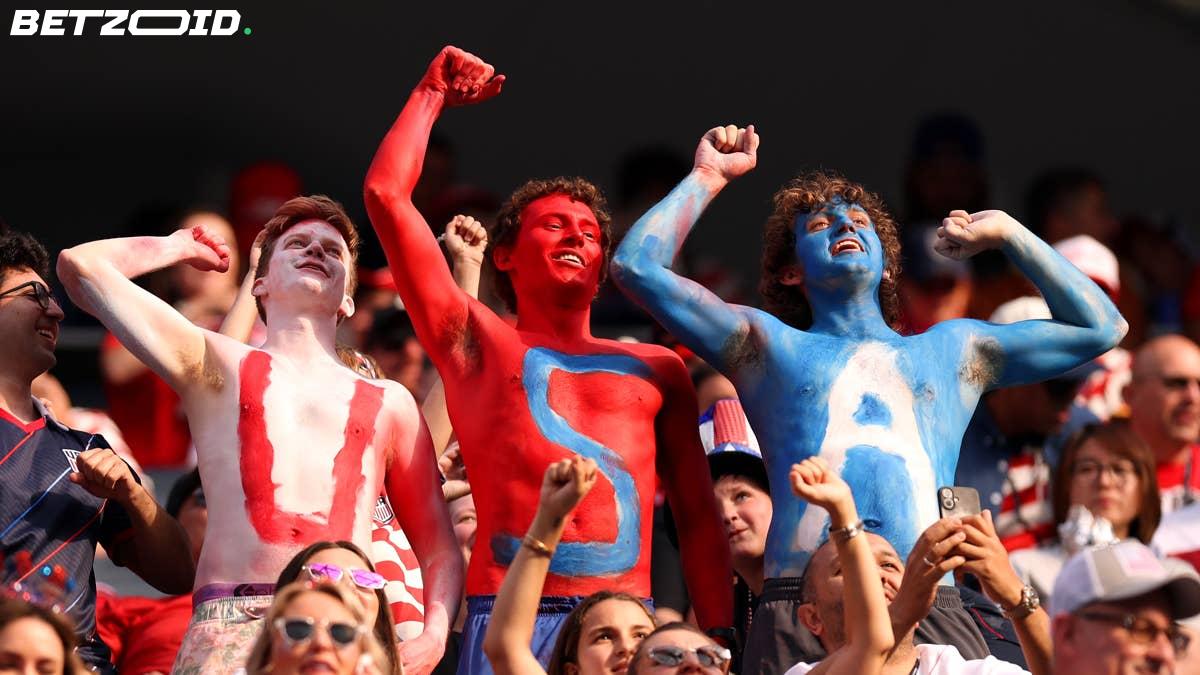
"I believe that we will win" sounds like a team hoping not to embarrass itself. Jason Kelce thinks so too — and he said it out loud on the Unfiltered Soccer podcast alongside Landon Donovan and Tim Howard, two men who've actually played in World Cups.
The former Philadelphia Eagles center didn't mince it. The chant reflects, in his words, a "loser mentality." Not because the sentiment is wrong, but because the framing is all wrong. Belief implies doubt. The best teams — and their supporters — don't spend ninety minutes convincing themselves victory is possible. They walk in already knowing.
His comparison point: Brazil. He recalled hearing Brazilian fans chant something that roughly translates to "we came here to f**k you up." That's not belief. That's a statement of intent. There's a reason opposition fans feel the weight of Maracanã before a ball is kicked.
A chant that outlived its moment
"I believe that we will win" didn't start in the terraces — it was adopted, popularized during the 2014 World Cup, and turned into a set-piece ritual by groups like the American Outlaws. For a team that spent decades just trying to qualify and compete, it made sense. It captured where U.S. soccer was: scrappy, optimistic, punching up.
But the USMNT isn't that team anymore, at least not in the same way. Pulisic plays for AC Milan. Dest, Adams, McKennie — they're regulars in top European leagues. The roster has genuine quality. The chant hasn't kept pace with the ambition.
Global soccer culture has noticed too. European and South American fans have long mocked American supporter culture for its lack of edge — the rhythm feels rehearsed, the words polished. There's no grit in it, no menace. Whether that critique is fair is debatable. But the volume of it isn't.
What this means heading into 2026
With the World Cup coming to U.S. soil in 2026, this conversation matters more than it would in any other cycle. Home advantage is real — atmospherically, logistically, psychologically. The USMNT will need their fans to generate pressure, not recite mantras.
Kelce isn't calling for anything complicated. He wants the chants to project certainty rather than hope. The difference between "I believe we can" and "we are coming for you" is small in words and significant in message.
The chant has been around for over a decade. Whether it gets retired or not, Kelce's read on what it communicates is hard to dismiss — and Donovan and Howard were in the room and didn't push back.