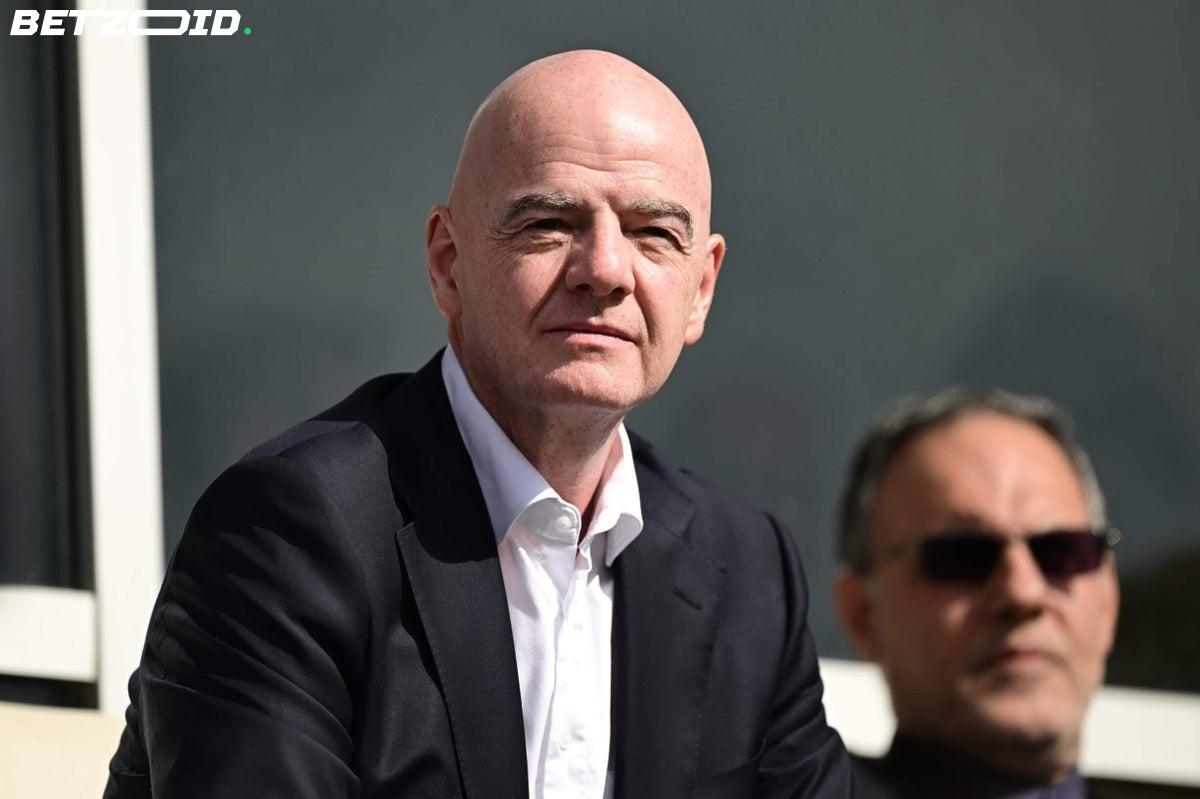
"Without FIFA, there would be no football in 150 countries in the world." That's what Gianni Infantino told the World Sports Summit in Dubai in late December, and it's the kind of line that sounds authoritative until you actually think about it for five seconds.
England and Scotland were playing international football in 1872. FIFA was founded in 1904. Thirty-two years of football happened before the governing body existed. The idea that kicking a ball would cease in 150 nations without FIFA's blessing is, to put it plainly, nonsense — and Infantino knows it.
But here's where it gets more honest: FIFA's own spokesperson walked the claim back to something more defensible, saying "without FIFA's financial support, more than 50 per cent of FIFA's member associations could not operate." That's a different argument. A fairer one. And it's worth understanding what that money actually looks like.
What FIFA actually puts in
Through its FIFA Forward development programme, each of the 211 member associations is entitled to up to $8 million over the current four-year cycle (2023–2026). That breaks down into operational costs ($1.25m annually), tailored infrastructure projects (up to $3m per cycle), and travel and equipment support for smaller associations with annual revenues under $4 million. The six confederations — UEFA, CAF, AFC, Concacaf, CONMEBOL, OFC — each get $60m over the same period.
FIFA says the total investment across this cycle will exceed $5 billion. Impressive headline. But spread across more than 200 associations over four years, you're looking at roughly $2 million per association per year. That won't build a stadium. It will, however, pay salaries, keep the lights on, fund women's and youth football that would otherwise disappear, and send national teams to tournaments they couldn't otherwise afford to reach.
For places like Comoros — an archipelago off Africa's east coast — FIFA Forward has delivered over $20.6 million in allocated funds, including a technical centre and stadium infrastructure. That's tangible. That matters. And without it, competitive international football there probably doesn't happen.
The transparency problem FIFA can't shake
The audit system FIFA uses is real: member associations must submit annual financial reports to an independent auditing firm, and the Governance, Audit and Compliance Committee can freeze or suspend funds if misuse is found. Bangladesh Football Federation officials were banned and fined in May 2024. Panama, Venezuela, Equatorial Guinea, the Maldives — sanctions have hit officials in all of them.
But those annual audits are never made public. FairSquare, an advocacy group, flagged this directly in an October 2024 report: "There does not appear to be any public repository of these audits." FIFA promised independent external audits of all member associations back in 2019. The transparency never followed.
Alan Tomlinson, Emeritus Professor of Leisure Studies at the University of Brighton and author of What is FIFA For?, frames the deeper problem bluntly: "FIFA needs football more than football needs FIFA. These monies have escalated so spectacularly over the last decade. What it does is it creates the potential for a system of patronage — 'we will give you our vote if you give us that money.'"
That context matters, particularly because Infantino's Dubai speech came ten days after the 2026 World Cup ticket prices triggered a global backlash — and just five days after FIFA scrambled to introduce a $60 supporter tier covering roughly 1,000 tickets per game. The revenue-generation argument feels a lot more self-serving when it's delivered as a defense of pricing that locked out ordinary fans.
The honest version of what Infantino should be saying is this: without FIFA's redistribution model, organised international tournament football would not exist in a significant number of smaller nations. That's true. It's also a much smaller claim than "football would not exist" — and it's the one FIFA's own spokesperson retreated to when pressed. The distinction matters, even if Infantino would rather you didn't notice it.