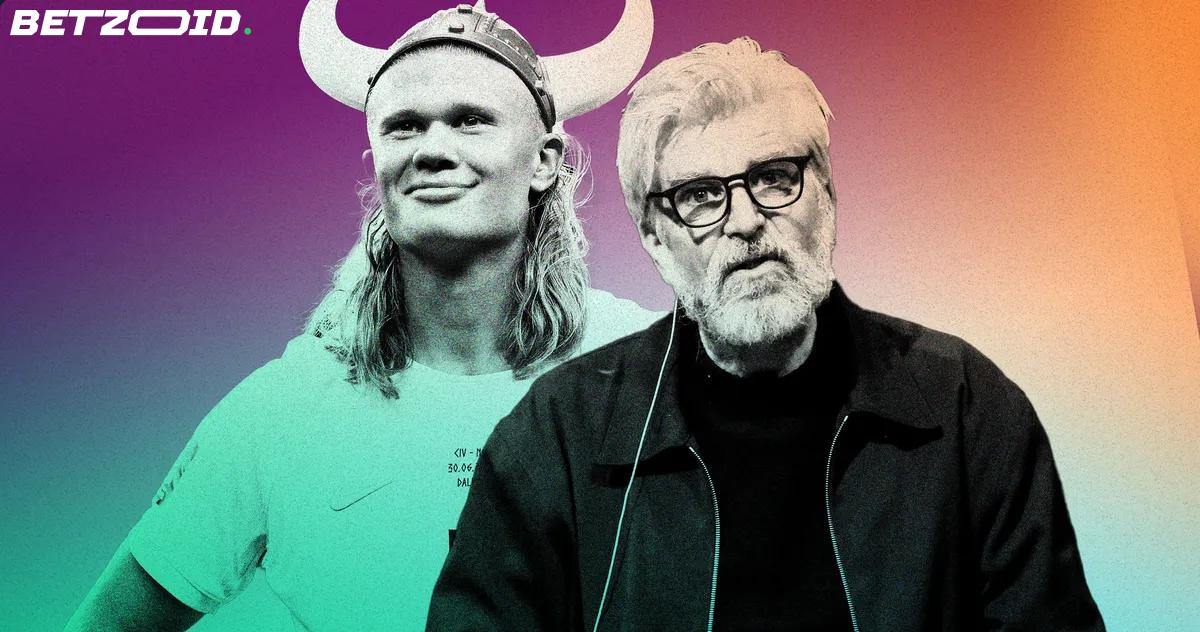
"It's almost better when your team is not in the World Cup — then you can just enjoy the football." Karl Ove Knausgaard said it with a vape in hand, but every Norwegian watching this tournament knows exactly what he means.
Norway's run to the Round of 16 has been equal parts thrilling and excruciating — a 2-1 grind past Senegal, a deeply uncomfortable victory over Ivory Coast, and now a date with Brazil that most of the world would consider a death sentence. Knausgaard, Norway's most celebrated living writer and a lifelong football obsessive, doesn't see it that way.
"Brazil has a very slow midfield and didn't play particularly well against Japan," he points out. "And when it's Brazil, there's no expectation whatsoever." For a Norwegian fan, apparently, low expectations are a feature, not a bug.
What Haaland means beyond the goals
Five goals into this tournament, Haaland trails only Mbappé and Messi in the Golden Boot race. But Knausgaard's read on him goes deeper than the numbers.
"The genius of him is the presence he's got," Knausgaard says. "When he's in the box, he's probably the most aware man on the planet." He points to the Senegal match — Haaland down on the ground, head in hands after a miss, then back up and nearly scoring a second later. That toggle between devastation and total focus is what separates him from strikers who merely score goals.
Knausgaard draws a comparison to old-school British centre-forwards from the 1970s — physically imposing, technically blunt in the best way, dangerous in the air and on the ground. He's also a fan of the human being. Haaland apparently spent a small fortune buying a rare Snorri Sturluson Norse saga manuscript — and donated it to his hometown library. "He cares about the people around him," Knausgaard says.
The commercial machine surrounding Haaland gets a gentle pass. "Maybe he's got ten years — there's a window. You can't blame him, really."
The players beyond the poster boy
Norway aren't a one-man team, even if it sometimes looks that way. Knausgaard singles out Martin Ødegaard as his type of player — a Pirlo-esque passer who can unlock defences with a single weighted ball rather than pace or trickery. The through-pass to Haaland against Senegal was the example: two defenders split, perfectly weighted, goal.
- Julian Ryerson — right back, injured but playing through it, "absolutely 100 percent solid"
- Sander Berge — the midfield anchor who looks unremarkable until you notice what breaks down without him
- Patrick Berg — Bodø/Glimt captain who was Norway's best player against Ivory Coast, tactically sharp and largely unheralded outside Norway
- Ørjan Nyland — the goalkeeper who pulled off a crucial save from Amad's free kick
- Oscar Bobb — whose through-ball effectively decided the Ivory Coast game, and who, as Knausgaard notes with evident delight, is the only squad member known to have read Dostoevsky
That squad depth matters. If Haaland is neutralised — and Brazil will certainly try — Norway need others to step up. Berg and Bobb showed against Ivory Coast that they can.
The Viking thing: fun or fascist-adjacent?
Norway's Viking branding — runic shirt lettering, horned hats, the post-victory rowing celebration — has split the country along predictable lines. The intellectual press thinks it's vulgar at best and carries uncomfortable echoes of how Norse imagery was weaponised by Nazi ideology in the 1930s and '40s. Knausgaard acknowledges the history but comes down on the other side.
"I think it's good to take those aesthetics back to something fun instead of the right-wing thing." He calls the rowing a kind of metaphor — everyone in the same boat, pulling together. "It is a bit corny. I agree."
Would he join in if he were in the stands? Long pause. "I probably would. Yeah, I would."
After the Senegal win, tens of thousands gathered outside the royal castle in Oslo and did the Viking row in the dark. For a country that hasn't been at a World Cup in 28 years, that moment lands differently than corny. Norway last shocked Brazil at a World Cup in 1998 — a 2-1 group stage win that sent people into the streets in delirium. Knausgaard wrote about it in My Struggle. He's now watching Norway chase a second chapter of that story.
"Where were you then?" That's the question Norwegians have been asking each other for nearly three decades. Sunday gives them a chance to make it worth asking again.