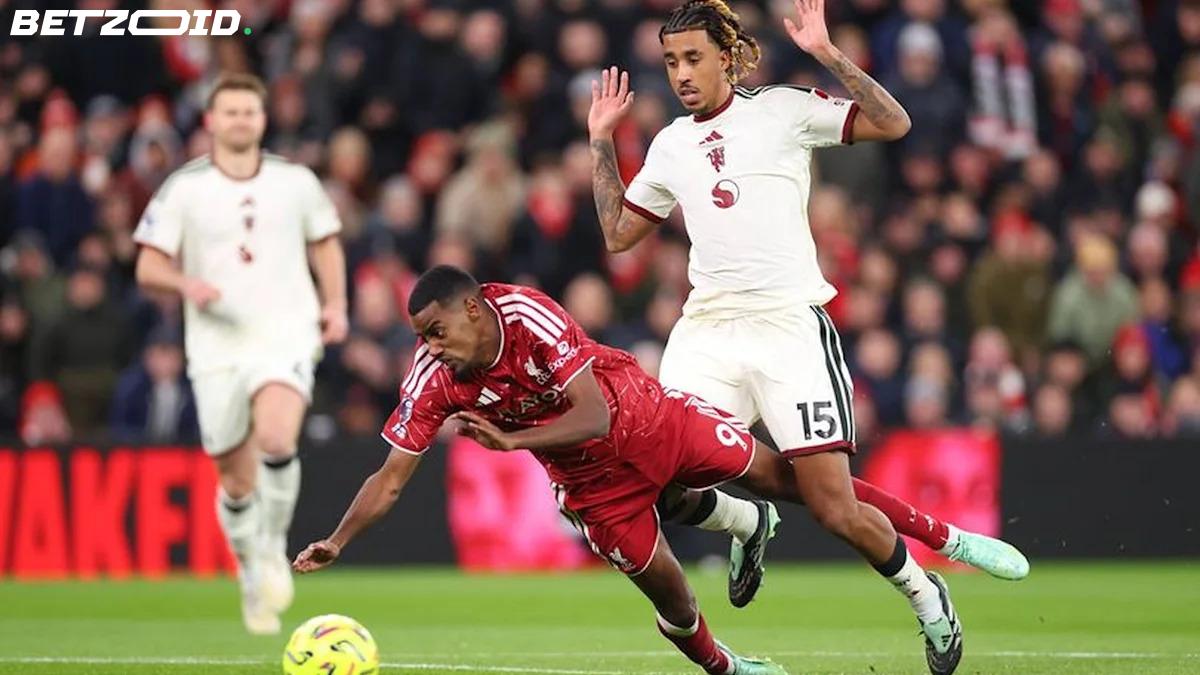
Referees' chief Howard Webb has defended the red card shown to Manchester United's Leny Yoro, calling the decision "certainly not wrong" even though United successfully appealed it. Yoro was sent off at Anfield on Sunday after fouling Liverpool striker Alexander Isak, with referee Sam Barrott ruling it a denial of an obvious goal-scoring opportunity. The Football Association confirmed on Tuesday that both the suspension and the red card would be rescinded, following an appeal lodged by United after manager Mauricio Pochettino expressed deep frustration with the call.
United had previously notified the FA of their intention to challenge the sending-off, with the one-match ban initially threatening to rule Yoro out of Saturday's match against Brentford.
Webb, Chief Refereeing Officer of Pro Ref, addressed the incident on the Mic'D Up show, as quoted by The Mirror. He praised referee Sam Barrott's decisiveness and broke down the four factors officials must weigh when assessing a denial of an obvious goal-scoring opportunity: direction of play, proximity to goal, the location of other defenders, and the attacker's control or likelihood of keeping the ball.
Webb said: "Firstly, I want to say, I think this is a really decisive decision by the referee, Sam Barrott. We know it's clearly a foul. I don't think there's any dispute about that. And we also know that it's outside the penalty area. We're thinking about the sanction, aren't we? That's why we're talking about this."
He continued: "Is it a denial of an obvious goal-scoring opportunity? Four considerations officials have to think about. Direction of play: It's definitely going towards the goal. It's not going out wide. Proximity from goal: Well, it's just outside the penalty area. The location of other defenders: Well, there's only Yoro there. The keeper is moving back towards his own goal."
Webb explained that the key question was whether Isak, who had control of the ball and was moving at pace before being fouled, would have reached the ball before Liverpool goalkeeper Senne Lammens. He said: "He has to put the brakes on and possibly come back out. The reason we're talking about it is the fourth consideration: That's control, or likelihood of keeping on or gaining control of the ball. Isak's got control of the ball, he's got possession, he's got the touch, he knocks it past Yoro. He's moving at pace at that moment, and a foul comes in and knocks him down."
Addressing the VAR review, Webb said: "And there's a question mark, I guess, around whether or not he would get onto that ball before Senne Lammens. Now, in the moment, the referee looked at it and felt he would. That was the referee's call made on the field, and then the VAR checks that to see whether that decision made on the field was clearly and obviously incorrect, and formed the opinion that it wasn't, that if there was any doubt, then it was doubt."
He concluded: "It wasn't going to be something that was clearly and obviously wrong, and therefore allowed that decisive on-field decision to stand. And I think by and large, most people would see that as a correct decision, with Isak moving quickly on towards that ball. The alternative view is that Lammens might get there first, but I think it's a little bit debatable, I guess. Certainly not clearly wrong."