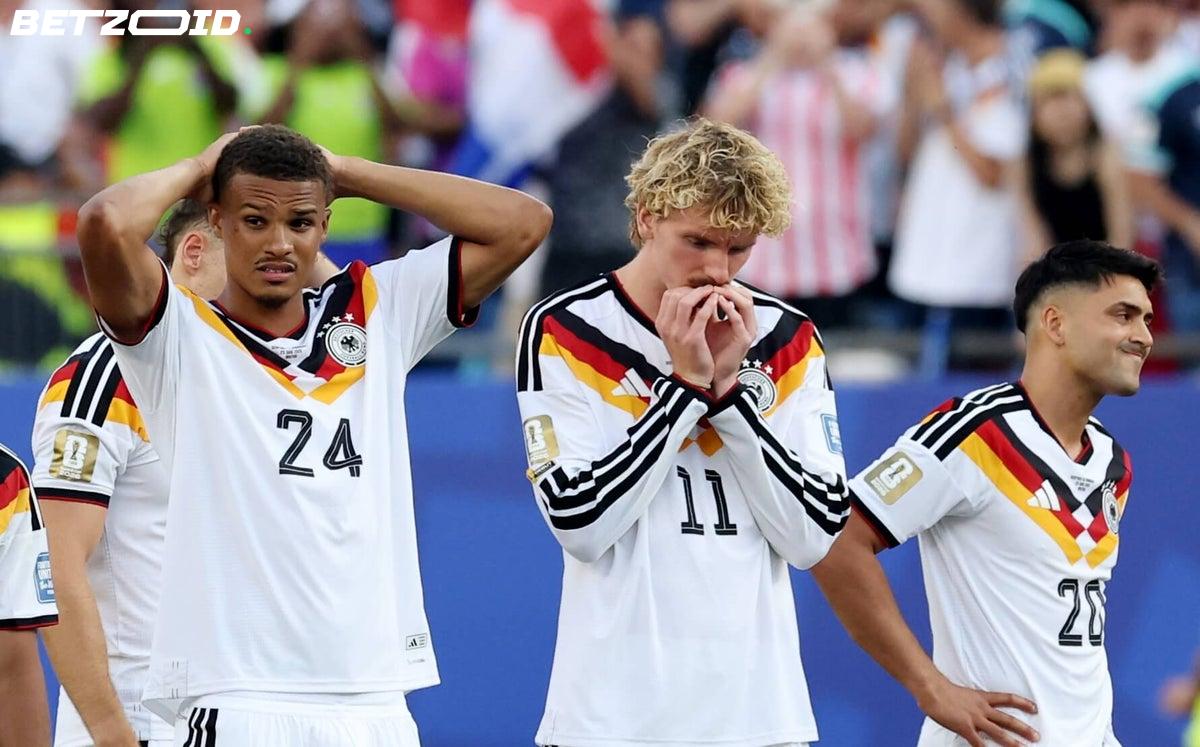
Germany have lost a World Cup penalty shootout for the first time in their history. Let that land. The nation that turned spot kicks into a cultural identity, a source of dread for every opponent they faced in knockout football, finally felt the other side of it.
It was dramatic, cruel, and completely compelling — as shootouts always are. But it's also reopened the oldest argument in football: is this really the right way to decide who advances at the biggest tournament on earth?
The 2026 World Cup has its first shootout on the books. The debate is officially back.
The case for changing nothing
The honest answer is that penalties work. Audiences love them. The tension is real, the skill is genuine, and anyone who's ever stood over a spot kick — or watched their team's season end on one — knows it's not a coin flip in any meaningful emotional sense. It's the ultimate test of nerve under maximum pressure. That's not nothing.
From a betting perspective, shootout outcomes also carry genuine unpredictability that makes markets interesting. But that same unpredictability is exactly what critics hate about them — a 120-minute game reduced to five kicks each, with the goalkeeper essentially guessing.
The alternatives actually worth considering
The most compelling ideas floating around involve some version of the golden goal — sudden death extra time — combined with progressive player removal to open up space as fatigue sets in. Start 10-v-10 in extra time, drop to 9-v-9 after 15 minutes, continue until someone scores. No safety net of penalties means teams can't park the bus and wait for kicks. They have to play.
The old MLS hockey-style shootout — a player running from 35 yards with five seconds to beat the keeper — also deserves more credit than it gets. It was scrapped too quickly. It looked like football, rewarded individual skill, and created genuine one-on-one drama without reducing everything to a static spot on the penalty spot.
- Golden goal with player removal: Forces attacking play, eliminates the defensive penalty-wait strategy, creates naturally escalating tension
- Hockey-style run-up: More skill-based than a static penalty, tests dribbling and decision-making under pressure
- Continuous overtime (no penalty safety net): Teams must play to win — but risks 180-minute marathons and player welfare concerns
The wilder proposals — 5-v-5 on a half-pitch, card games, eating contests — are fun to think about and absolutely will never happen. Though watching Marko Arnautovic demolish a plate of scotch bonnet wings for a World Cup place does have a certain appeal.
The real problem with every alternative is the same one that killed the golden goal in 2006: fear. Teams facing sudden death don't attack — they freeze. Remove the penalty option entirely and that might change. But football governing bodies have never trusted teams enough to find out.
For now, Germany join the long list of sides who've discovered that tournament football can end in the cruelest possible way. Their shootout invincibility is gone. Whether the format that ended it should survive is a conversation that's going to keep going long after 2026 is over.