UEFA has told Gianni Infantino to resign or face a vote of no confidence. That's not a negotiating tactic. That's a confederation of 55 nations telling the FIFA president his time is up.
The trigger was the FIFA Forward Enterprise proposal — a financial scheme cooked up without consultation, rushed through on an artificial deadline, and condemned by multiple confederations as a symbol of exactly what's wrong with how Infantino runs the organisation. CONCACAF called it "a symptom of leadership that has stopped putting football first." The AFC pointed to failures in governance and meaningful consultation. The language across the football world has shifted from frustration to something closer to open revolt.
Infantino hasn't blinked. No resignation, no reversal, and by all accounts he still plans to run for a fourth term at the March 17, 2027 presidential election. Given that his first three-year stint in 2016 doesn't count toward the term limit — it was a special election following Sepp Blatter's dismissal — he remains technically eligible. If he wins, he's in charge until 2031.
The candidates ready to run
Whether Infantino is pushed out early or survives to face a ballot, the field is already taking shape. None of these candidacies are formally declared, but the positioning is unmistakable.
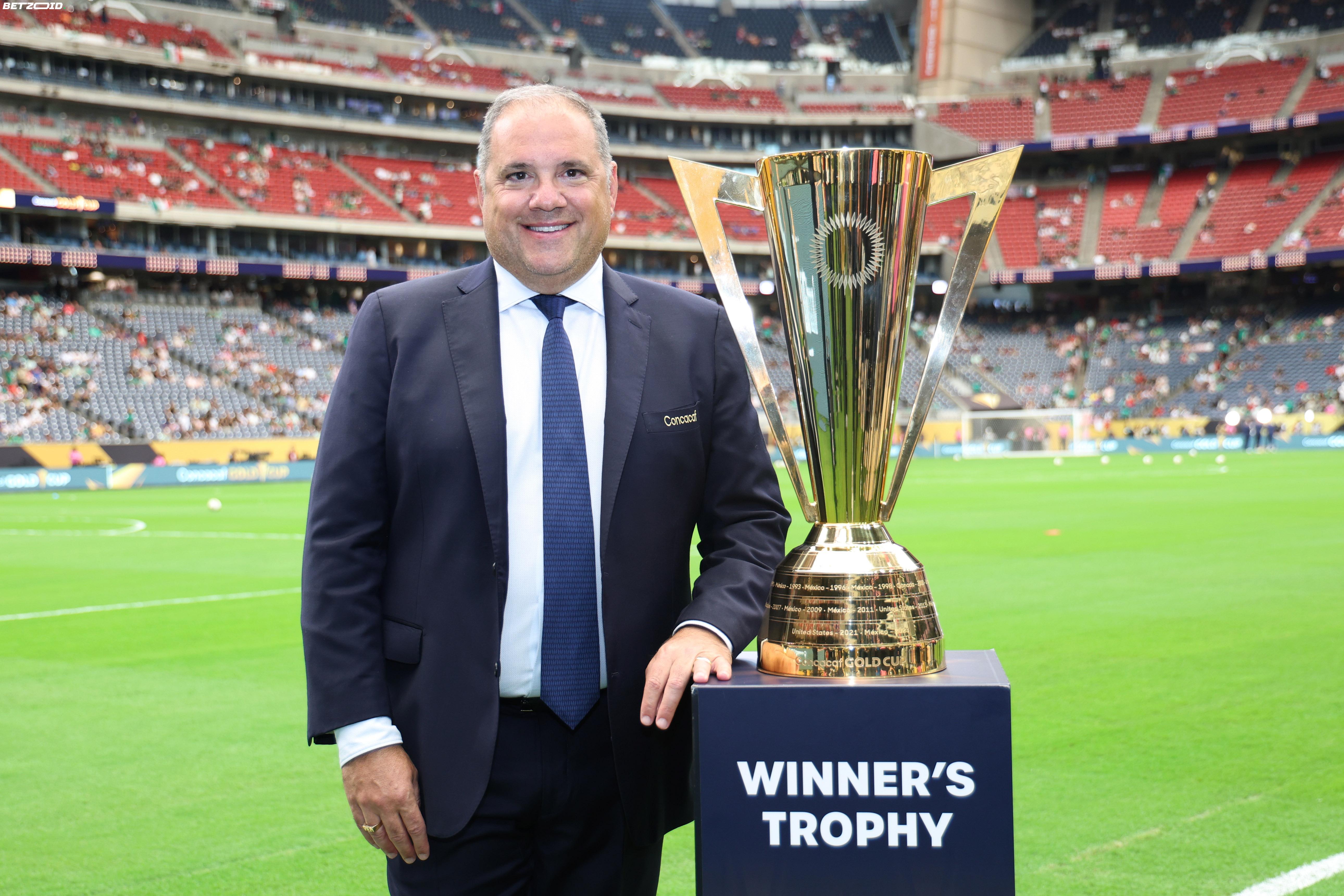
Victor Montagliani is the name that keeps coming up first. The 60-year-old CONCACAF president spent years as a quiet Infantino ally before the FFE controversy apparently changed his calculation. Reuters reported on July 31 that he was already "making moves" toward a presidential run, and CONCACAF's statement the following day — among the most scathing of any confederation — read like a campaign launch speech. Montagliani's appeal is straightforward: he's not European, he has executive experience at confederation level, and he gives the anti-Infantino coalition a credible figurehead that doesn't scare off African or Asian voters with fears of European dominance. The 54-member African bloc has historically kept Infantino afloat. Montagliani is the kind of candidate who might peel some of them away.
Sheikh Salman bin Ibrahim Al Khalifa has been here before. The AFC president ran against Infantino in 2016 and came within 27 votes of winning — 115 to 88 in the final count. He knows the campaign terrain, he knows the voting blocs, and his decade running the Asian confederation gives him the institutional weight to mount a serious challenge. He hasn't declared, but his name surfaces every time this conversation starts. Odds-wise, a candidate who nearly beat Infantino once, in a field now stacked against the incumbent, deserves serious consideration.
Nasser Al-Khelaifi would be the wildcard. PSG's chairman has never held a FIFA position, but he wields more actual influence over European club football than most people with official titles. Qatari by background, deeply embedded in European football through the Champions League wins PSG have accumulated — he theoretically bridges the confederations better than anyone. His spokesperson said on July 29 he has "no interest" in running. That may be true. It may also be the kind of denial that gets revisited when the right people make the right calls.
Aleksander Ceferin rounds out the conversation, though his path is the steepest. The UEFA president has been Infantino's most vocal critic for years — opposing World Cup expansion, opposing overseas competitive fixtures, leading the charge on the FFE backlash. The problem is that UEFA's dominance in global football makes Ceferin a difficult sell outside Europe. Confederations that already feel overshadowed by European money and influence aren't going to hand the keys to the most powerful European administrator in the sport.
Can Infantino actually survive this?
Possibly. A no-confidence vote is a precedent that makes many member nations nervous — set it once, and the tool exists forever. Infantino also retains meaningful support in Africa, where 54 votes represent the largest single bloc in FIFA. If the opposition fragments behind multiple candidates rather than uniting behind one, he could walk through the middle of a divided field in 2027 exactly as he did in 2019 and 2023, both times running unopposed.
That's the structural problem for everyone lining up against him. The football world is loudly united in its frustration. It's considerably less united on who should come next. Until one candidate consolidates the opposition, Infantino's survival odds are better than the noise suggests.
The next few months will determine whether this is a genuine changing of the guard or another cycle of outrage that the FIFA president simply waits out. He's done it before.