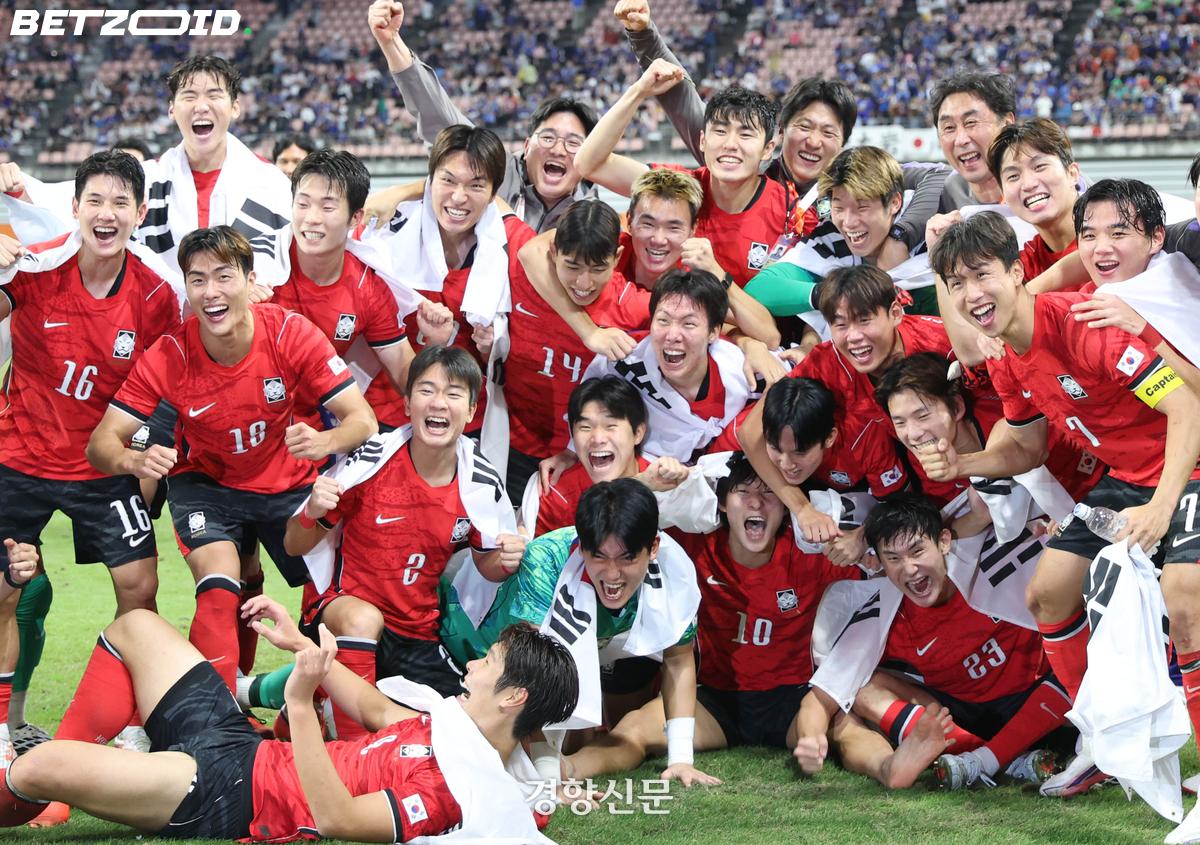
South Korea's national football team defeated Japan on October 3 to win the men's football gold medal at the 2026 Aichi·Nagoya Asian Games, held at Toyota Stadium in Aichi Prefecture. The win came after a World Cup campaign in which the team's abilities had drawn considerable debate and criticism, making the Asian title a notable turnaround.
The celebrations quickly turned controversial. Team captain Lee Ki-hyeok, speaking to media after the match while holding his gold medal, said, "I am not going to the army." Separately, player Park Seung-su posted a photo on social media of himself wearing a 'discharge cap' from a military service he had not actually completed.
The remarks triggered immediate public backlash in South Korea. Politicians from across the political spectrum criticized the players, and the episode widened into broader calls to abolish military service exemptions for national team athletes altogether.
A Decades-Old Debate Reignited
The exemption system, formally called the 'Arts·Sports Personnel system,' was introduced in 1973 under the Park Chung-hee administration to enhance national prestige. Its criteria have repeatedly expanded and contracted since then amid fairness concerns, including temporary additions tied to the national soccer team's 2002 World Cup semifinal run and the baseball team's 2006 World Baseball Classic semifinal appearance, the latter later removed in 2007.
The system has faced renewed scrutiny in recent years, including comparisons to K-pop group BTS, whose members all completed military service despite contributing to South Korea's global profile; special exemptions available in traditional fine arts do not extend to pop-culture artists.
A public consent petition has reportedly appeared before the National Assembly calling to "abolish or fundamentally overhaul the current exemption system that incorporates gold medal winners into the arts·sports personnel."
Young People Weigh In
Reactions among men of conscription age have been mixed. Mr. Lee, 24, discharged in February, said, "It seems the era when the activities of national-team athletes were seen as 'enhancing national prestige' has now changed," adding, "That is why I thought people were getting angrier." He also said the players "should have acted prudently in light of their status."
Mr. Moon, 22, discharged on the 6th, offered a more sympathetic view, saying, "Many soldiers around me saw the controversy and cursed the players," but questioning, "They are athletes who won medals and brightened the country, so is it right to strip them of the exemptions over a single ill-chosen remark?"
Others pointed to a deeper issue. Mr. Lee said, "The fact that the players' alternative service looks like a privilege seems to be because military service is considered something that imposes a large personal cost." Jeong Young-jo, 20, who is about to enlist, said, "Overall, there seems to be a lack of respect for the duty of military service," adding that it "seems to be regarded as if it were a punishment."
Jeong added, "It would have been better if the players had shown more respect for the position of men who go to the military," and argued, "We should think about fixing attitudes toward military service and the military-service system; merely cutting back the rewards that had been given to players seems inappropriate."